



Is Israel a US state?
In an analytical note about the relations between the United States and the Zionist regime, the American magazine pointed out that, contrary to what is displayed by Washington and Tel Aviv, the relationship between the two is not like two equal partners and allies, but rather a relationship based on hierarchy in which the Zionist regime needs Washington’s approval and support for all its affairs. This strategic dependence of the Israeli regime has become a semi-imperial relationship, which will put this regime in a difficult and dangerous situation if the balance of power in the world changes.
According to Isna, whenever the special relationship between the United States and the Zionist regime is discussed, the question is raised whether Israel has become something like a state in an unofficial American empire. Although this question is uncomfortable for the American and Israeli elites, it needs serious consideration. Because the evidence suggests a relationship that increasingly resembles a dependency rather than a strategic partnership. Although this relationship is generally known as “strategic partnership”, the evidence shows that the level of dependence of the Israeli regime on the US has increased in such a way that it can be considered a modern form of a kind of strategic citizenship. The structural analysis of these relations shows that Israel has become a regime with a limited capacity to make independent decisions, especially in the field of foreign and security policy.
The architecture of Israel and America’s dependence
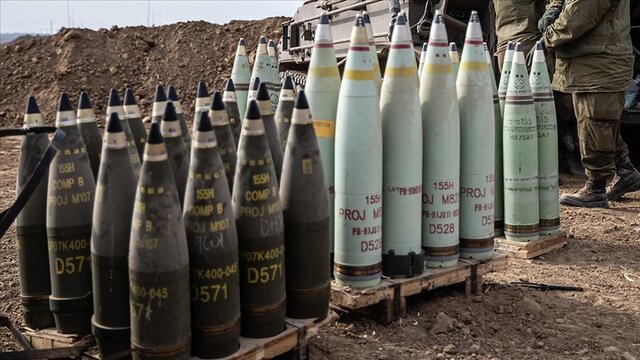
The National Interest published this introduction and wrote: Israel receives approximately $3.8 billion in military aid from the United States annually, which is more than any other country in the world. And that aid comes with requirements, not just in the form of requirements to buy American weapons systems, but also in deeper integration of Israel’s military-industrial complex with American defense contractors. Decisions about Israel’s military procurement are also made not in Tel Aviv, but increasingly in consultation with—or at the behest of—Washington.
Beyond the financial dimension, there is a more fundamental dependency here: Israel’s diplomatic isolation in international forums, compensated only by American support. Whether in the UN Security Council or the International Criminal Court or other multilateral bodies, Israel relies on US vetoes, US pressure and US diplomatic cover to protect itself from international criticism and sanctions. Without this support, Israel would face a level of isolation that would fundamentally limit its freedom of action.
Israel’s lack of strategic independence
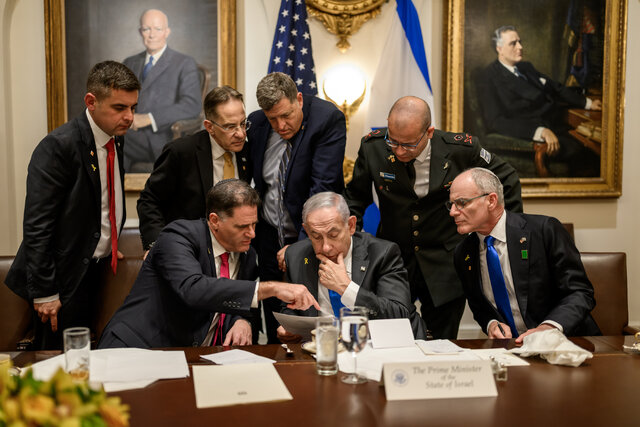
This relationship has gradually undermined Israel’s strategic independence and created a legacy similar to “classic imperial relations”. Israel needs at least tacit US approval for any military operations. Major actions in the field of foreign policy – from the attack on Iran to agreements to normalize relations with Arab countries – are coordinated with and often designed by Washington. When Israel has tried to act independently, such as some settlement expansion efforts or offers to sell arms to China, American pressure has been decisive in changing course.
Although Israel tried to maintain relations with other great powers in the past, today it has become increasingly “single-ally” in these relations and is putting all its eggs in the American basket at the exact moment when the hegemony of the United States is facing unprecedented challenges.
The American publication went on to point out that “defenders of the status quo insist on describing this relationship as a partnership between equals or even as a partnership in which Israel gives more value to the United States than it receives,” describing the rhetoric and the Washington-Tel Aviv relationship as hierarchical and writing: This narrative is popular both in Washington political circles and among Israeli officials, according to which partners negotiate but states petition. they give Partners can disagree without existential consequences, but clients risk abandonment.
This issue reveals the nature of this relationship. Israeli officials speak of American “friendship” and “support” not as one of many diplomatic ties, but as a necessity for survival. This is not the language of participation, but the language of dependence. When Israeli President Shimon Peres admitted that “we need the friendship of the United States of America for our existence,” he meant the recognition of a supporting power by a dependent power, not a partner’s appreciation of an ally.
Costs of the state of Israel
Analyzing the effects of this relationship for the Zionist regime and the United States in the international arena, National Interest wrote: This relationship imposes costs on Tel Aviv that are rarely acknowledged in the mainstream discourse. First, it limits Israel’s diplomatic flexibility at a time when the international system is becoming increasingly multipolar. With the decline of American power vis-à-vis emerging powers such as China, India and regional actors, Israel finds itself limited in developing relations with these emerging centers of influence. Washington’s concerns about Israel’s technology transfer to China or Israel’s neutrality toward Russia show how statehood constrains its foreign policy.
Second, America’s unconditional support has certainly weakened Israel’s self-management. When an affiliated force knows that it will be shielded from the consequences of its actions, it loses the discipline that comes from navigating international relations without net (protection). Settlements in the West Bank, military operations with high civilian casualties, and the rejection of diplomatic initiatives all occur in a context in which US support is hypothetical, not acquired.
Third, this relationship creates a moral hazard for American foreign policy. The United States jeopardizes its diplomatic leverage in West Asia by unconditionally supporting Israel’s positions. The Muslim-majority Arab countries see Washington not as an honest mediator, but as Israel’s lawyer and guardian. This perception harms US interests and reduces US influence in a region that is undergoing deep changes.
Perhaps the most worrisome issue is what happens to the people who depend on it when a great power enters its decline. America’s relative decline is no longer a hypothesis, but an observable reality. Military over-expansion in Iraq and Afghanistan, the financial crisis and its aftermath, the emergence of China as a peer competitor, and growing political disruption in Washington all point to an American with a diminishing capacity to keep its commitments.
What happens to states when a power withdraws? History shows that dependent powers often find themselves abandoned or, worse, caught in the crossfire of great power competition. Israel’s relationship with America looks increasingly dangerous in a world where US dominance is no longer conceivable.
end of message

News>RCO NEWS
RCO