


The Chinese government has imposed strict new rules forcing automakers to use physical buttons for vital car functions. This action is taken to deal with the dangers of focusing too much on touch screens.
While many companies have been moving toward eliminating manual controls entirely, China’s Ministry of Industry and Information Technology (MIIT) has developed new standards that will take effect this summer. According to this decree, equipment such as lights, indicators, wipers and emergency systems must have a physical car button so that the driver can access them without taking his eyes off the road. This decision is a reaction to the extreme trend of brands such as Tesla, who even moved the steering lever and gear shift into the display or touch buttons.
Details of new safety standards in China
According to published reports, the law covers four key areas including lighting, gear shifting, driver assistance systems and safety/emergency equipment. In addition, the dimensions and placement of these buttons should also be standard so that car manufacturers cannot hide them in inaccessible places.
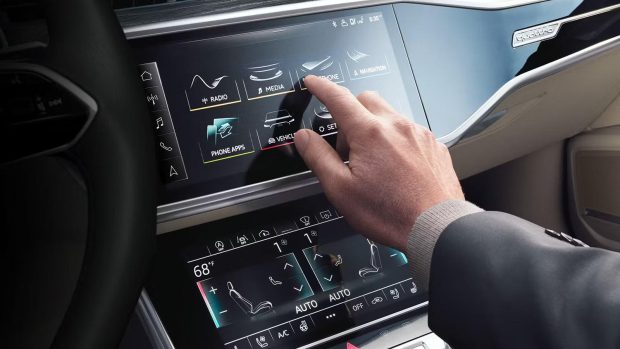
The important thing is that these equipments should still be able to be used manually even if the power goes out after the accident. This law has been issued following the ban on hidden car door handles and yoke-shaped steering wheels to seriously ensure the safety of new cars.
Europe and Australia join the anti-touch movement
China is not the only country that has taken action against excessive digitalization of the cabin; The European Union has also announced through the Euro NCAP Institute that from 2026, cars without physical controls for basic functions will not receive a full safety rating. In the United States, there are similar discussions about the removal of Tesla’s physical button and the dangers of all-touch systems. It is expected that with the implementation of these laws from July 1, 2027, the automotive industry will once again return to ergonomic and practical designs to establish a balance between technology and security.

RCO NEWS