

In recent years, one of the biggest challenges for content producers, especially in the field of video, has been the creation of Persian subtitles. Many users in their experience with old tools spend a lot of time typing, syncing and editing subtitles and often do not get a result that is high quality and accurate. Not only is this time-consuming, but it also requires technical skills that are difficult for many vloggers, small businesses, and even educational channels.
But with the growth of artificial intelligence technology and natural language processing, now subtitler artificial intelligence tools are available that can read audio and video, process speech and produce accurate Persian subtitles, without the user needing to do time-consuming steps manually. These tools not only greatly reduce the time of creating subtitles, but with the help of machine learning, they can also minimize speech recognition errors and even recognize accents and colloquial expressions better.
In this article, we will thoroughly discuss how it works, introduce top tools, compare features, and best choices for different needs so that you can use AI technology to produce professional subtitles without confusion.
How do subtitle creation artificial intelligence tools work?
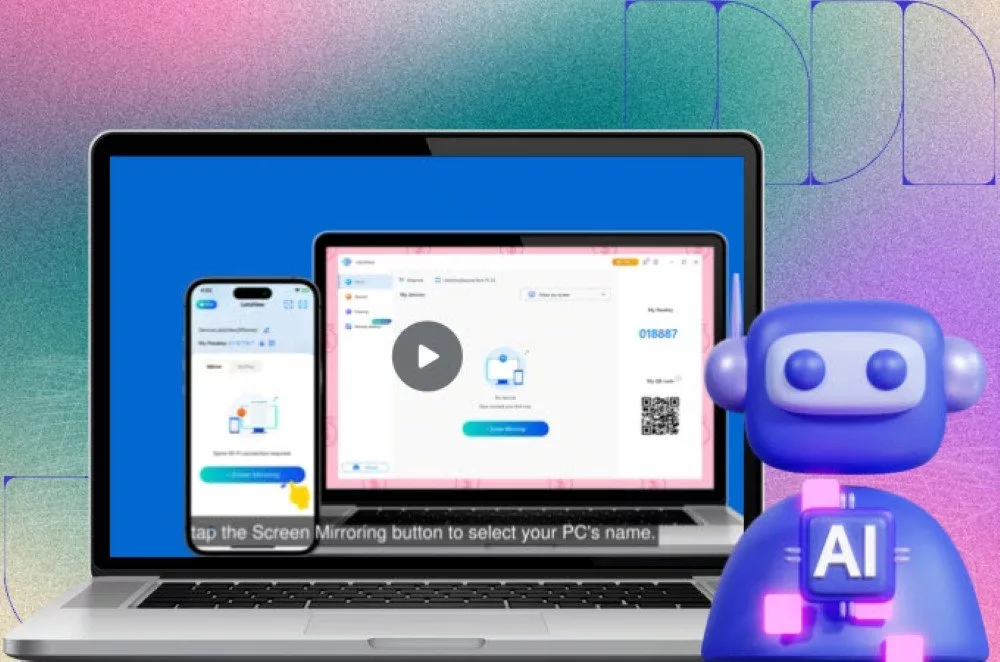
These subtitle creation artificial intelligences are based on two key technologies that are based on machine learning: Speech Recognition and Natural Language Processing (NLP). In the first step, the artificial intelligence converts the audio of the video into text (Speech-to-Text), then synchronizes this text with the exact time of the speech so that it can be presented as subtitles in standard formats such as SRT or VTT.
A step-by-step guide to using artificial intelligence subtitling tools
Using “Persian Subtitles with Artificial Intelligence” tools is simple on the surface; You upload a video file and a few minutes later you receive an SRT file or a sticky subtitle is added to your video. But if your goal is to produce accurate, professional and suitable subtitles for publishing on YouTube, Instagram or educational platforms, you need to do the process in a structured and step-by-step manner. In the following, we present a comprehensive and professional guide that applies to almost all popular tools on the market.
First step: choosing the appropriate tool for the purpose of the project
First of all, you need to determine for what purpose you are producing the subtitle. There is a big difference between captioning a short Instagram video and captioning a 60-minute documentary. Pay attention to the following when choosing a tool:
- Real support for Farsi language and accurate recognition of homophonic and polysemous words
- The ability to recognize colloquial terms and the variety of accents and dialects
- The possibility of simultaneous translation (if you need to translate subtitles with artificial intelligence)
- The ability to professionally edit the timeline and divide sentences
- Output in standard formats such as SRT, VTT and ASS
- The ability to directly attach subtitles to the video for social networks
If your goal is to generate Farsi YouTube subtitles with artificial intelligence, choose a tool that can directly process the YouTube link or provide the standard YouTube-accepted output.
The second step: preparing the file to increase the accuracy of artificial intelligence
One of the most important parts that is often overlooked is the quality of the input. No matter how advanced the algorithms based on machine learning and natural language processing are, if the audio file or video sound is of low quality, the accuracy of the output will decrease.
To optimize results:
- Eliminate background noise as much as possible.
- Use files with appropriate bitrate.
- If possible, upload a separate and cleaner audio file.
- If you have multiple speakers, enable the speaker recognition tool.
The input quality has a direct effect on the output quality of Persian artificial intelligence subtitles.
The third step: set the source and destination languages accurately
In professional tools, you usually need to specify the speech language (Language Input) and subtitle output language (Language Output). If the video is Persian and you intend to create Persian subtitles with artificial intelligence, select the source language “Persian” or “Farsi”. If the video is in English and you want to translate the subtitles into Farsi with artificial intelligence, first the English transcription is produced and then the machine translation is done. In multilingual projects, it is recommended to receive and verify the original language transcription first, then enable translation to have more quality control.
The fourth step: automatic production of subtitles and initial analysis of the output
After loading the file and initial settings, the system will start processing. At this stage, the speech recognition engine converts the audio into text and then puts the text on the video timeline using synchronization algorithms. After the processing is finished, you should carefully check the initial output. Errors are usually seen in this section:
- Error in recognizing homophone words
- Moving punctuation marks
- Incorrect division of long sentences
- Failure to recognize colloquial terms correctly
Professional tools allow you to display the audio wave next to the text so you can edit more precisely.
Fifth step: professional editing and optimization of subtitles
This step is the most important part of the work and the difference between a normal output and a professional subtitle is formed exactly at this step. In professional editing, you should pay attention to these things:
- Shortening sentences for better readability
- Appropriate division of dialogues into lines of maximum two lines
- Adjusting the display time of each subtitle according to the audience’s reading speed
- Correction of semispaces and Persian writing rules
- Eliminating unnecessary speech repetitions such as “umm” and “ie”
If your goal is to produce formal or educational content, it’s best to change the language from fully conversational to semi-formal. This step plays a key role in making the output look professional.
The sixth step: Setting the style for social networks
If the subtitle is going to be published as a stick on the video (especially on Instagram or Tik Tok), the visual settings are very important. You should pay attention to the following:
- Choosing a readable font compatible with Farsi
- Adjusting the size of the text to fit the dimensions of the video
- Using a suitable color contrast with the background
- Correct text placement to avoid covering important image elements
Some AI subtitling tools also offer ready-made templates for vertical videos.
The seventh step: standard output and final test
In the end, you should choose the output type depending on your needs.
- If you plan to publish on YouTube, SRT or VTT file is the best option.
- If subtitles are to be pasted over the video, get rendered MP4 output.
- If you are submitting to an editor, keep the editable version.
It is recommended to watch the video once in full with subtitles before final release to ensure accurate sync and proper readability.
The best artificial intelligence tools for creating Farsi subtitles
Choosing the best tool for creating Farsi subtitles with artificial intelligence depends on your needs. Some users are looking for Farsi YouTube subtitles with artificial intelligence, some are social network content producers, and some others work on professional and long-term projects. In this section, we introduce the tools based on the actual application, accuracy of Persian language processing, editing facilities and the most suitable usage scenario.
VEED
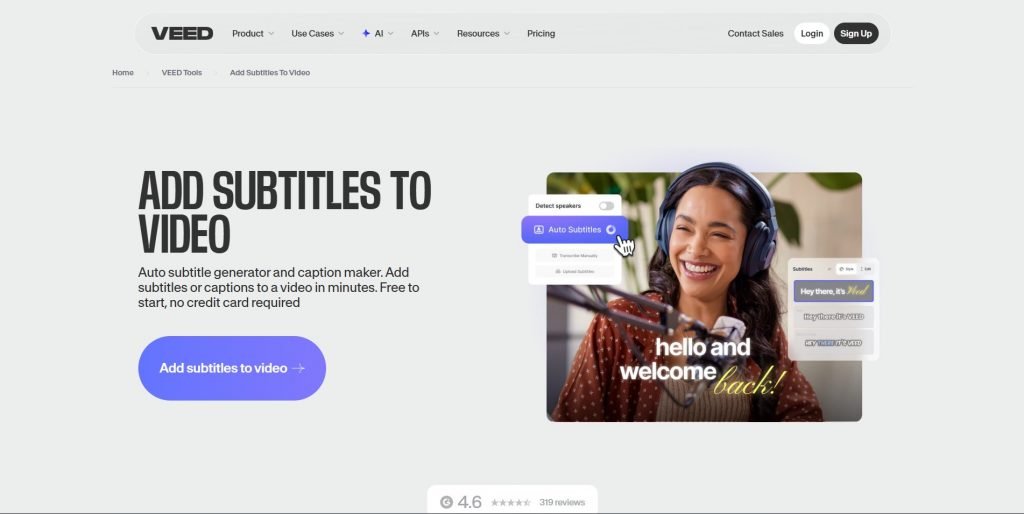
VEED is one of the most balanced options for creating subtitles with artificial intelligence. The reason for the presence of this tool in the list is the combination of three key features: acceptable accuracy in Farsi detection, professional editing environment and fast output for social networks.
In addition to converting speech to text, this platform provides the possibility of editing directly on the timeline, setting the style of subtitles and outputting in SRT or embedded video format. If your goal is to produce Farsi YouTube subtitles with artificial intelligence, VEED is one of the logical options; Because the process of uploading to the final output is simple and fast.
benefits
- Adequate accuracy in Persian speech recognition in standard audio conditions
- Simple and understandable graphic editing environment for non-expert users
- The possibility of directly pasting subtitles to the video with ready-made templates
- Support for standard outputs such as SRT and VTT
- High processing speed for short to medium videos
Disadvantages
- For long projects or large files, subscription fees can be high
- In some cases, it is not accurate to recognize colloquial terms or non-standard accents
- Advanced project management capabilities for large teams are more limited than more specialized tools
Maestra
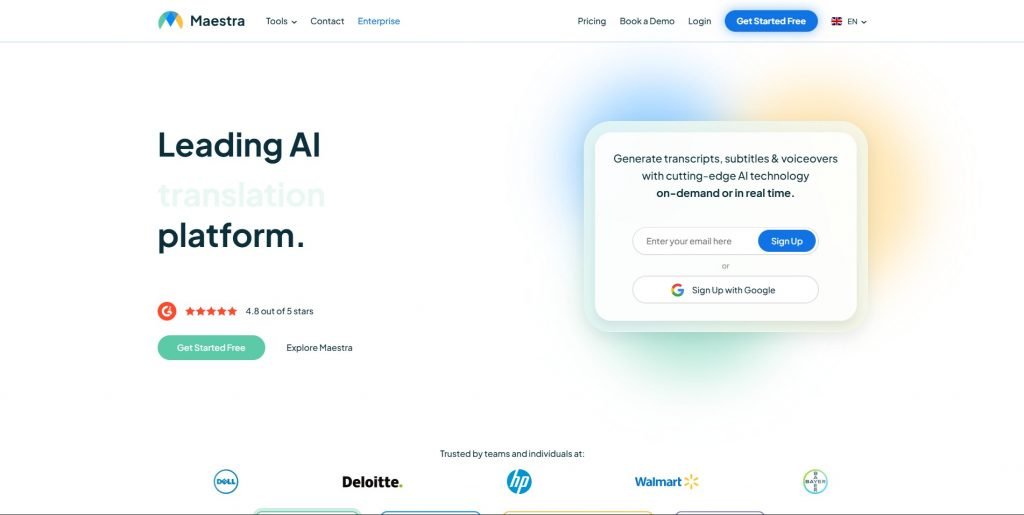
Maestra is more than a simple subtitle maker tool. This platform is designed for projects that require multilingual translation and team management in addition to the production of artificial intelligence Persian subtitles.
The reason for choosing Maestra is its high power in processing different languages and the possibility of professional editing and team collaboration. If you’re a content agency or course creator who wants to publish a video in multiple languages at the same time, this tool will be a better choice than simpler options.
The great thing about Maestra is that it manages files and different versions of subtitles much better than social-oriented tools in long formal projects.
benefits
- Extensive language support and the possibility of simultaneous translation
- Professional project management and teamwork
- Accurate editing of the timeline and separation of speakers
- Suitable for official, long and multi-version projects
- Various outputs and compatible with different platforms
Disadvantages
- The user interface may be a bit complicated for novice users
- The subscription fee for professional use is relatively high
- There is still a need for human editing in recognizing some subtleties of the Persian language
HappyScribe
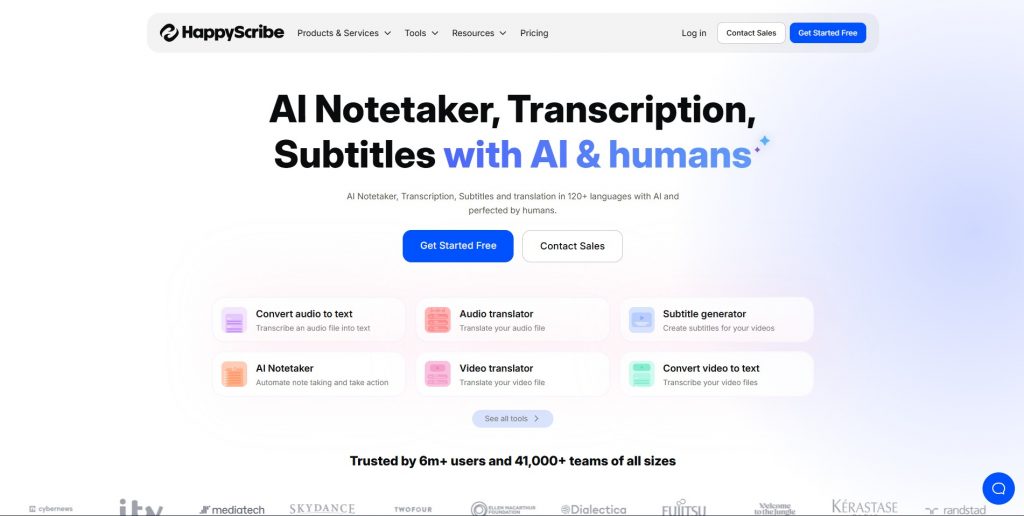
HappyScribe has a special focus on accurate transcription and professional projects. If the quality of speech recognition is your first priority, this tool is considered a serious option.
The reason for its presence in this list is the high accuracy in converting speech to text and the possibility of professional review of the output. This issue is of great importance for documentary producers or official interviews; Because mistakes in synonyms or specialized terms can question the validity of the content.
For projects that require AI subtitle translation in multiple languages, HappyScribe performs reliably, although it costs more than lighter tools.
benefits
- High accuracy of speech to text conversion in high quality audio files
- Ability to review and edit professional output
- Support for multiple subtitle formats
- Suitable for archiving and managing large projects
- High stability in processing long files
Disadvantages
- The workflow is slower than social-oriented tools
- It focuses more on transcription than visual design of subtitles
- The cost of use for normal users may not be economically justified
Dubverse
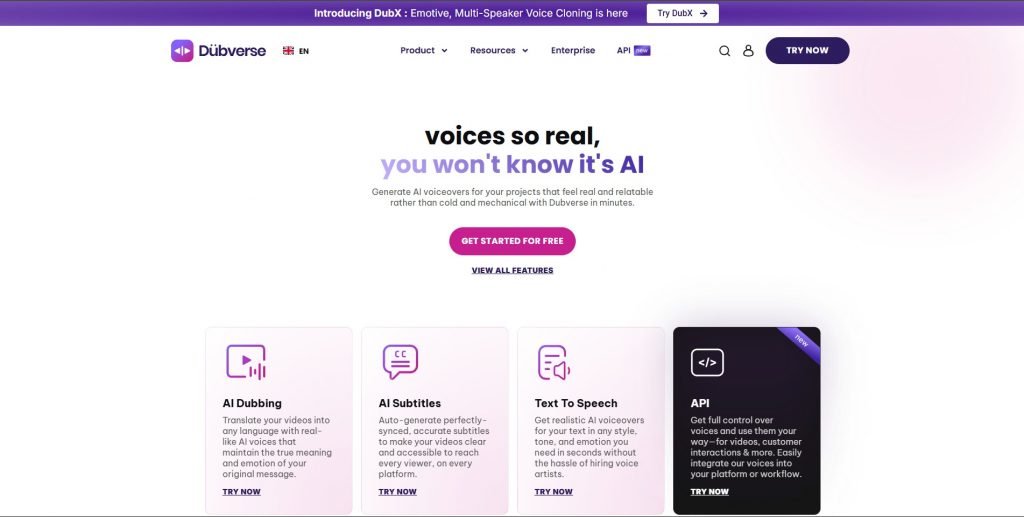
Dubverse isn’t just a subtitling tool; Rather, it operates in the field of dubbing and localization of content. The reason for choosing this tool in the list is its focus on multilingual projects and content conversion for different markets.
If your goal is not only to create Persian subtitles with artificial intelligence and you are thinking of expanding the video market internationally, Dubverse is considered a more professional option. This tool also provides the possibility of producing subtitles and then converting it to a dubbed version.
It might be too professional for simple social media projects, but it’s a smart choice for brands and companies.
benefits
- Combining subtitles and dubbing with artificial intelligence
- Suitable for publishing content in multilingual markets
- Support for translation and cultural adaptation of content
- Professional structure for organizational use
Disadvantages
- It may be too complicated for personal content creators
- Its focus is more on the global market than specific optimization for Farsi
- The cost of professional plans is relatively high
quso.ai
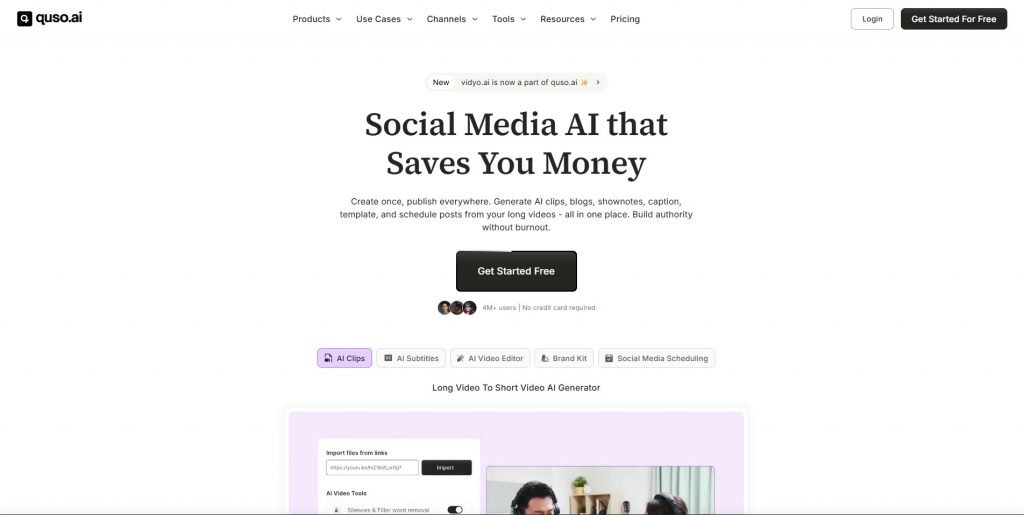
quso.ai focuses more on social media content creation. The reason for its inclusion in the list is its visual features and subtitle styling, which are very useful for vertical videos.
If you are a content producer on Instagram or Tik Tok and you want to have artificial intelligence Persian subtitles with an attractive and trendy style, this tool is more suitable than the classic transcription platforms.
The focus of this tool is on speed, rapid design and release; Not managing long projects.
benefits
- Quickly generate subtitles for short videos
- Attractive ready-made templates suitable for social networks
- The possibility of advanced styling and word highlighting
- Optimized for 9:16 videos
Disadvantages
- Not suitable for long or formal videos
- The possibilities of project management are limited
- Accuracy in recognizing Persian speech in various dialects may need to be improved
Submagic
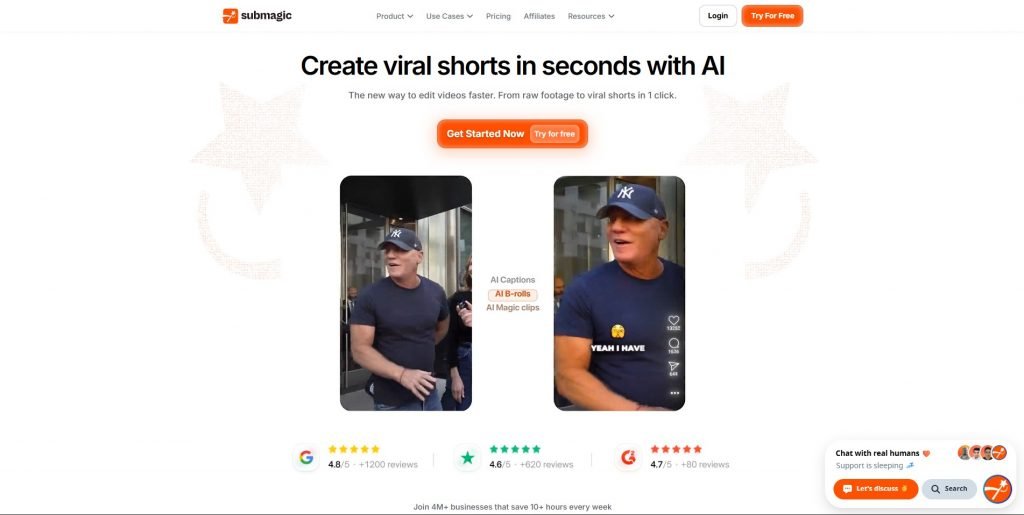
Submagic is designed for those who want subtitles to be not only readable, but also interactive. The ability to highlight words while speaking and the ready-made templates for short videos are the main reasons for choosing it on this list.
If your goal is to increase the engagement rate and keep the audience in the first few seconds of the video, Submagic is a practical choice. But for official or long projects, more professional tools are recommended.
benefits
- Focus on the visual appeal of the subtitle
- Highlight keywords while speaking
- High processing speed for short videos
- Ease of use for non-professional users
Disadvantages
- It is not an ideal option for long official and educational projects
- Timeline editing features are more limited than more professional tools
- The focus is more on design than deep linguistic accuracy
Comparison table of artificial intelligence tools with Persian subtitles
| tools | Farsi support | Automatic translation | Professional timeline editing | Styling and pasting to video | Pricing model | suitable for |
|---|---|---|---|---|---|---|
| VEED | Good to very good | has | has | advanced | shared | YouTubers, teachers, Instagram content producers |
| Maestra | very good | has (multilingual) | advanced | average | Professional subscription | Content production teams, multilingual projects, training courses |
| HappyScribe | very good | has | very advanced | limited | Pay per use/subscription | Documentary, interview, official and long projects |
| Dubverse | good | Very advanced (localization) | advanced | average | Organizational / shared | Brands, companies, international content publishing |
| quso.ai | good | has | average | very advanced | shared | Reels, vertical videos, viral content |
| Submagic | good | limited | average | Advanced and trendy | shared | Creators of short videos with a focus on engagement |
summary
Until a few years ago, making Farsi subtitles for a video was a time-consuming, tedious and manpower-dependent process. Today, however, with the significant progress of artificial intelligence, machine learning and natural language processing, subtitle production has reached a stage where a usable output close to the professional standard can be obtained in a few minutes. It can be said that the future of artificial intelligence in automation processes is very bright. However, one important point remains: AI ensures speed, but final quality is determined by human selection and editing.
In the review of tools for creating Persian subtitles with artificial intelligence, we saw that there is no “absolute best” option. Each tool makes sense based on the usage scenario. If you’re a YouTube or Instagram content creator looking for speed, simplicity, and ready-to-publish output, social media tools are a more logical choice. If you have multilingual, educational or enterprise projects, professional transcription and localization platforms add value. And if your focus is strictly on the Farsi language and users inside Iran, native options can provide a smoother and more accessible experience.
Read more: The best site to download subtitles
Frequently asked questions about Farsi subtitles with artificial intelligence
How to create Farsi subtitles with artificial intelligence?
To create Persian subtitles with artificial intelligence, just upload your video or audio file to one of the subtitle maker tools based on speech recognition. Using speech-to-text technology and natural language processing, these tools convert the audio content into Persian text and place it on the video in a timed manner.
What is the best tool for creating Farsi subtitles with artificial intelligence?
If you are a YouTube or Instagram content creator and speed is important to you, tools like VEED or vidyo.ai are the right choice. If you have a formal, educational or multilingual project, platforms like Maestra or HappyScribe are a more professional option.
How to increase the accuracy of Persian subtitles with artificial intelligence?
Use a high-quality audio file without noise. Clear sound and standard recording can significantly reduce the error rate. Also, set the input language correctly so that the speech recognition engine processes correctly. After auto-generation, review the text and correct homonyms, colloquialisms, and punctuation.
Is it possible to automatically create subtitles for videos without subtitles on Instagram and YouTube with artificial intelligence?
yes Today, almost all modern subtitle maker tools provide the ability to automatically generate subtitles for videos without subtitles. Just upload the video file or enter the YouTube link so that the system automatically extracts the speech and produces subtitles.

RCO NEWS