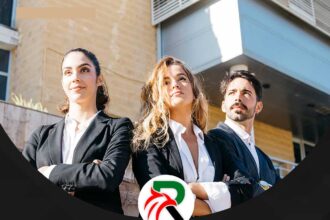


In the era of artificial intelligence, university professors are faced with a big problem: how to know if the student really learned the lesson or if the artificial intelligence just did the homework? While some have turned to (highly flawed) artificial intelligence detection software, a group of professors have pulled an old and forgotten solution from the heart of history: oral exams. This method, once popular in ancient Greece and the old Oxford universities, is now recognized as the most powerful weapon against modern fraud.
According to the Washington Post report, in the oral exam, the student must sit face to face with the professor and answer the questions; Thus, no chatbot can speak for him. Kathryn Hartman, professor of religious studies at the University of Wyoming in the US, says that this method allows her to get out of the role of detective (who is constantly looking for fraud) and back into the role of coach. Statistics show that 85% of students use artificial intelligence in their lessons. Returning to the oral exam is a way to gauge deep understanding.
Oral exams to beat AI in college
Professor Hartman has an interesting analogy to justify banning artificial intelligence in his classes. “The classroom is like a gym and I’m your trainer,” he tells his students. The goal is to strengthen your mental muscles. “Using AI to write an essay is like going to the gym with a forklift and lifting weights.” You might lift weights, but you won’t build muscle. This phenomenon, which is called “cognitive drain”, makes students leave the trouble of thinking to artificial intelligence.

Of course, it is also possible to cheat in oral exams in Zoom or Google Meet, but it is very difficult and has a high risk. Judy Halsten Laychak, a professor at the University of Illinois, narrates a strange experience. Administering the oral exam via Zoom video call, he noticed that a student was behaving strangely while answering. “The light from the screen was on his face and you could see it reflected in his glasses,” he says. The student was trying to type the teacher’s questions for the AI to answer, but because the AI could not combine the concepts of the class, it gave unrelated answers and the student was finally rejected.
You might think that students hate this method, but the reality is something else. Many students, like 20-year-old Lily Lehmann, were terrified at first, but felt satisfied after the exam. “I prefer the oral exam to the written exam,” he says. There is only you and your knowledge; “There is no way to use AI.”
Oral exams have even worked in technical fields such as data science. Mark Chin, a professor at Vanderbilt University, uses an oral exam for his R programming language course. He shows the student some code and asks, “What does this code do?” This method proves that the student did not just copy and paste the code, but understood the logic behind it. Reports show that even in 600-person classes in Canada and engineering classes at the University of California, this method has been successfully implemented.
However, the use of artificial intelligence in universities is still a big problem that cannot be solved with oral exams and another solution should be considered.

RCO NEWS