


Google Dipmind has unveiled a new artificial intelligence called Alphaevolve, which goes beyond ordinary chat. This advanced system not only can invent new algorithms, but have been able to significantly reduce Google’s processing costs. This transformation can transform the future of mathematical research, engineering and even hardware design.
Google’s Artificial Intelligence section, Deepmind, has announced the company’s latest artificial intelligence or artificial intelligence agent has taken an important step towards using technology to solve major issues in mathematics and science. The system, known as Alphaevolve, is based on large Jina language models and adds an evolutionary approach that is capable of evaluating and improving algorithms across a wide range of applications.
Alphaevolve Google’s artificial intelligence transforms problems
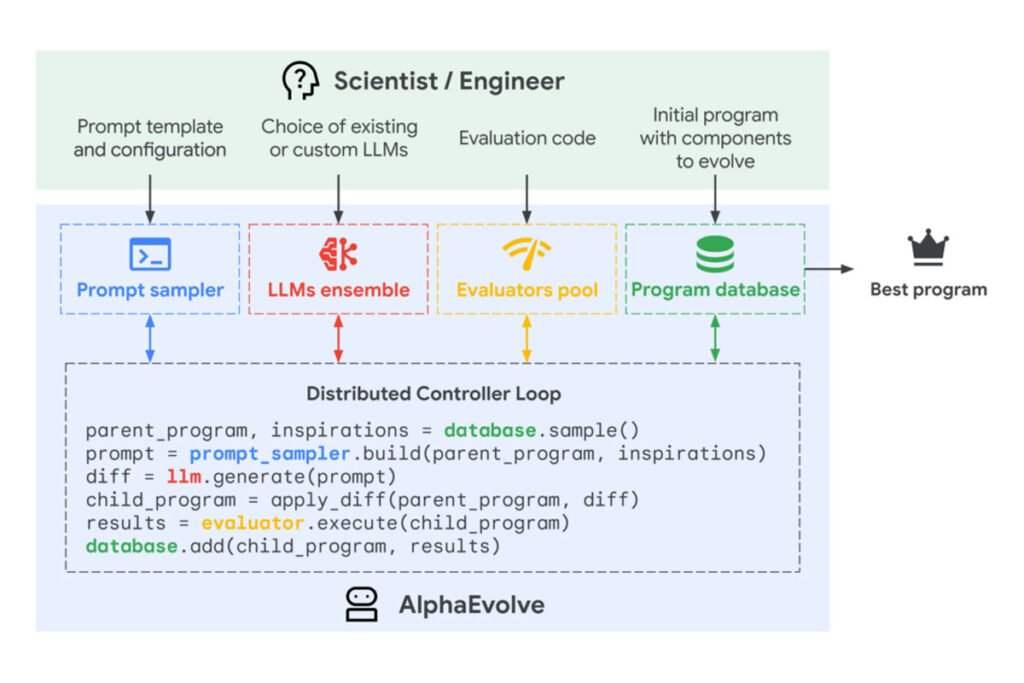
Alphaevolve is essentially a factor of coding artificial intelligence, but it acts much beyond ordinary chats like a Jina. When you talk to Jina, because of the uncertain nature of language models, there is always a risk of hallucination or unrealistic information, but Alphaevolve has taken an interesting approach to increase the accuracy of complex algorithmic problems.
According to Deepmind, the technology uses the automatic evaluation system. When the researcher interacts with Alphaevolve, it gives it a problem with several paths and solutions. Then there are several different solutions using Flash and Peru‘s Jina. After that, the assessment system examines each solution. The evolutionary framework allows Alphaevolve to focus on and improve the best solution.
Unlike previous Deepmind models, such as Alphafold (to predict the structure of proteins) that were widely trained in a particular area, alphaevolve is dynamic. Dipmand says the artificial intelligence system can help researchers in any programming or algorithm issue, and Google has already started using it in its various sectors and has achieved positive results.
The Deepmind team has used this intelligent factor on its Borg cluster management system in Google datasers. Alphaevolve has suggested changes in the Scheduling Heuristics algorithm that implemented them by reducing the consumption of Google processing resources across the company by 0.7 percent. For a company as big as Google, this numerical savings are huge and financially important.
The Role of Artificial Intelligence Algorithms in Google’s Resource Optimization
Alphaevolve may also be able to increase the efficiency of generative AI. The internal operations of these systems are based on multiplication of matrixs; For example, the most effective method of multiplying 4*4 matrices with mixed numbers was presented by a mathematician in 1969, which remained the best method for decades, but now Dipmand has announced that Alphaevolve has discovered a new algorithm that is more efficient. Dipmid had previously worked on other artificial intelligence agents such as Alphantensor, but Alphaevolve has offered a better solution, although it is a general model.
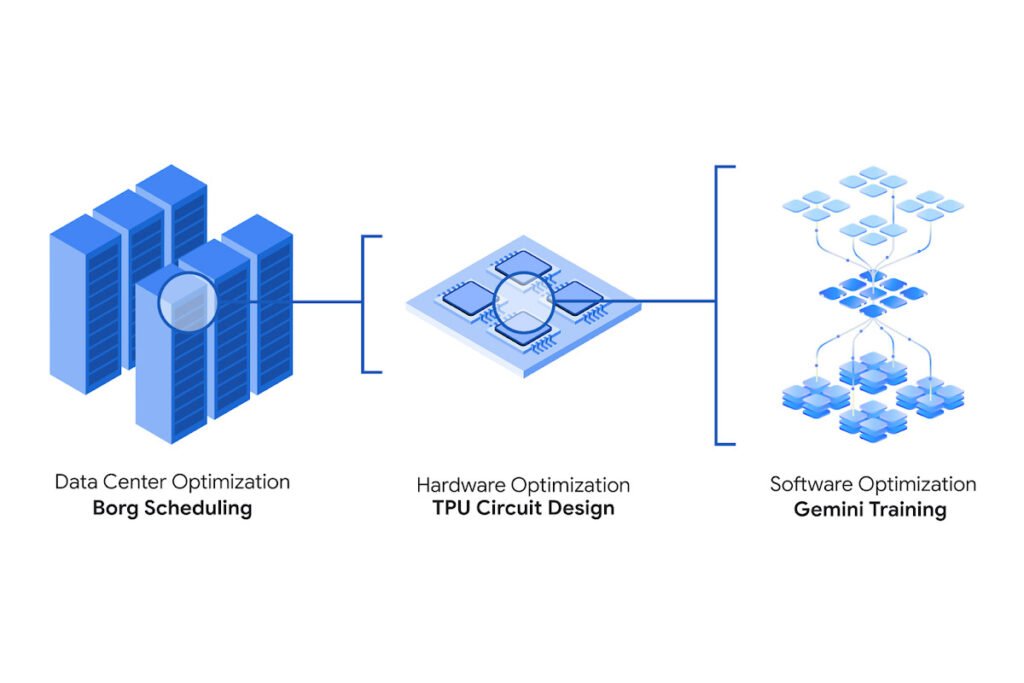
On the other hand, the next generation of Google’s Tensor hardware will also benefit from Alphaevolve’s ability. Dipmand reported that the AI has suggested that the Verilog hardware description has proposed that it has enhanced the efficiency of the chip by removing unnecessary bits. Google is still reviewing these changes, but it expects to implement it in the next generation of processors.
At present, only Google itself can work with Alphaevolve. Although the system consumes less computational resources than Alphatensor, it is still very complicated and is still not suitable for public release. It is expected to be used in the future in smaller tools for research purposes.
Alphaevolve is an important achievement of Deepmind that extends the boundary of artificial intelligence capabilities to solve algorithmic problems. Unlike specialized tools used only in a particular field, this multipurpose artificial intelligence agent has been able to optimize the consumption of datacenters, better processor design and even discover new algorithms. Although not yet available for public use, it promises a future in which artificial intelligence tools will be not only assistant, but also a colleague of researchers and engineers in solving fundamental problems.

RCO NEWS