Over the past few years, Samsung, as one of the leading brands in the mobile industry, has played a prominent role in the development of foldable phones. The previous generation of Samsung foldable phones such as the Galaxy Z Fold 6 and Z Flip 6 paved the way for the newer models, the Z Fold 7 and Z Flip 7, to come to the market by correcting past flaws and improving the user experience. In this article, we want to put the new generation of Samsung foldable phones under the microscope and see what changes these phones have had compared to before.
The main advantages of Samsung S series phones
The biggest strength of the Fold series is the large screen and providing an experience close to a tablet. When closed, the Samsung Z Fold 7 has the same dimensions as a regular phone, but when opened, it provides the user with an 8-inch screen. This wide space makes it easier to work with the device and turns it into a practical tool for work and productivity.
Multitasking or Multi Window has also matured in Z Fold 7. This feature allows you to run multiple apps at the same time, quickly switch between them, and even drag and drop content between apps, offering an experience unattainable on regular phones.
In contrast, the Flip series has followed a different path. The main advantage of this series is its compact design and unique form factor that reminds users of classic folding phones; When folded, the Samsung Z Flip7 fits easily in a pocket, but offers a large and modern display when in use. Also, Samsung’s commitment to providing long-term software updates, including up to seven years of Android updates, is one of the important strengths of this series.
Advanced design, display quality and durable hinge
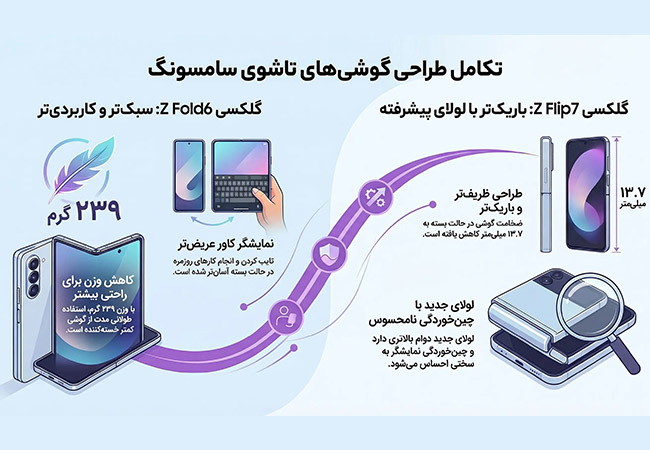
In the new generation of its folding phones, Samsung has focused a lot on the elegance of the design and improving the ergonomics of these products. The Samsung Z Fold6 phone is lighter than the previous generation and with a weight of 239 grams, it makes the user less tired during long use. In addition, the widening of the cover screen has made typing and daily work easier in closed mode.
We also see significant progress in the Samsung Z Flip 7 phone. The thickness of this model when closed has reached 13.7 mm, which is thinner than Flip 6. In the seventh generation of this phone, Samsung has used a new hinge that is not only more durable, but also hides the creases of the screen better, so that even when moving the hand on the middle part of the screen, users hardly feel this part.
Disadvantages and weaknesses of the Samsung S series
Despite all the improvements, some weaknesses are still visible in Samsung’s foldable phones. One of the most important criticisms of the Fold series is the camera. Z Fold 6 uses old cameras that we have seen many times in previous generations. Even though the Galaxy Z Fold 7 has a 200-megapixel main lens, it supports 3x optical zoom, which is less than the zoom of other phones in this price range. As former PCMag editor Mike Miller says:
Overall, the Samsung Z Fold7 is without a doubt the most functional foldable phone I’ve ever tried. If you ignore the screen crease and don’t have too much sensitivity on the camera zoom, this phone can meet your expectations.
In the Flip series, most of all, hardware performance is the Achilles’ heel. The Galaxy Z Flip 7 is equipped with an Exynos 2500 chip, which appears weaker in some benchmarks compared to the Snapdragon 8 generation 3 in the Samsung Z Flip 6. This issue is not limited to performance and its effect can be seen in heat management, performance stability and even charging speed. Galaxy Z Flip 7 supports 25W charging, which is not a high number for a phone in this category. On the other hand, in long-term use, the device will face an increase in temperature and a drop in performance relatively soon; An issue that affects the user experience in heavy use.
In terms of software, the limitations of the cover screen in the Flip series have not yet been completely overcome. Even in Z Flip 7, which has a much larger screen, users have to use additional tools such as Good Lock to run many non-system programs on this panel, which complicate the user experience.
summary
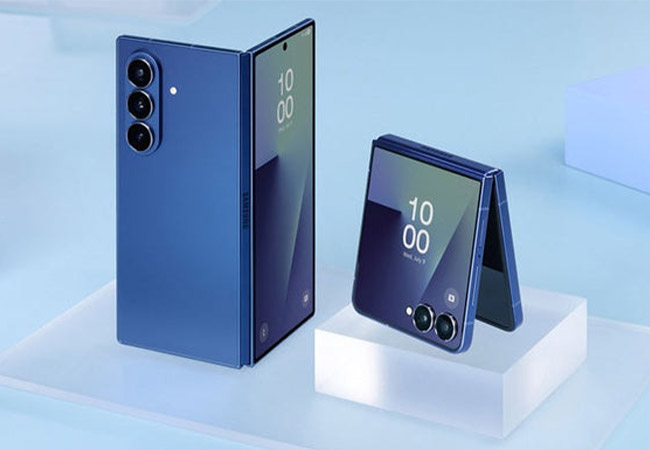
Samsung’s new generation of foldable phones are closer than ever to a reliable product. The Fold series is a suitable choice for professional users, and the Flip series is designed for those who prefer compact dimensions and different designs. However, the high price, some hardware flaws and software limitations show that these phones have not yet reached their peak.
| phone series | benefits | Disadvantages |
| Galaxy Z Fold | Large screen, simultaneous running of programs, DeX support, suitable for work and content creation | Visible creases, poorer camera performance than non-folding flagships, high price |
| Galaxy Z Flip | Compact design, large cover display in the new generation, long software support | Relatively slow charging, cover screen software limitation, poor performance of Exynos chip in Flip 7 |
If you are looking for a different experience, the Fold and Flip series are still very attractive; But if you care a lot about the camera, the non-folding flagship phones are worth buying.
Frequently asked questions
1. Is the Z Fold 7 phone weaker than regular flagships in terms of camera?
Yes, this model supports 3x optical zoom and at far distances the images may not have enough detail and clarity.
2. What is the cause of heating and slow charging in flip phones?
The slow charging is due to the use of the 25-watt standard, which is low compared to competitors. Also, the Exynos 2500 chip has a weaker performance than Qualcomm’s flagship chips.
3. Has Samsung been able to solve the folding screen folding problem?
No, the creasing is still there, but it’s much improved from before and will be visible at certain angles.

RCO NEWS