

When looking at the evolution of armored warfare, tanks truly revolutionized modern warfare, creating decisive technological leaps, influencing future tank design, and transforming battlefield outcomes.
The five tanks that we discuss below cover different eras, from the first combat tank of World War I to the most advanced models of the late 20th century; But each set new standards in protection, mobility, firepower, or mass production. Their legacy lies not only in their numbers, but also in changing armies’ expectations of armor strength and the way they fight.
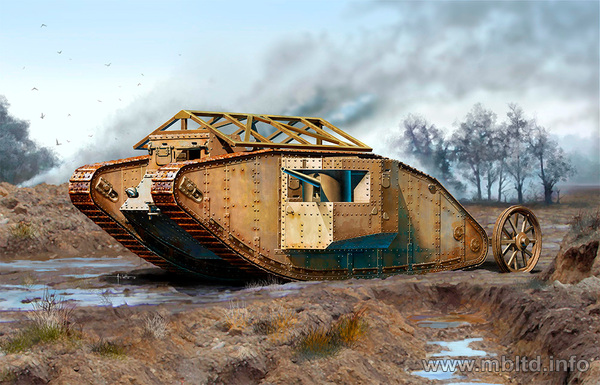
Mark I tank: Britain, 1916
Tank Mark I was introduced by Britain in 1916 and weighed about 28 tons. Its armor thickness was about 12 mm and its maximum speed reached 3.7 km/h. Armed with two 57 mm naval guns and several machine guns, the tank was slow and mechanically unreliable, but its lozenge-like shape with tracks encircling the hull allowed for the first time to pass over trenches and barbed wire barriers. At the Battle of Fleurs-Courcelette, the Mark I made its debut, demonstrating for the first time that armored vehicles could break through trench systems. This development changed the stalemate of World War I and inspired the worldwide development of tanks as a means of penetrating enemy lines rather than merely a static defense.
Renault FT tank: France, 1917-1918
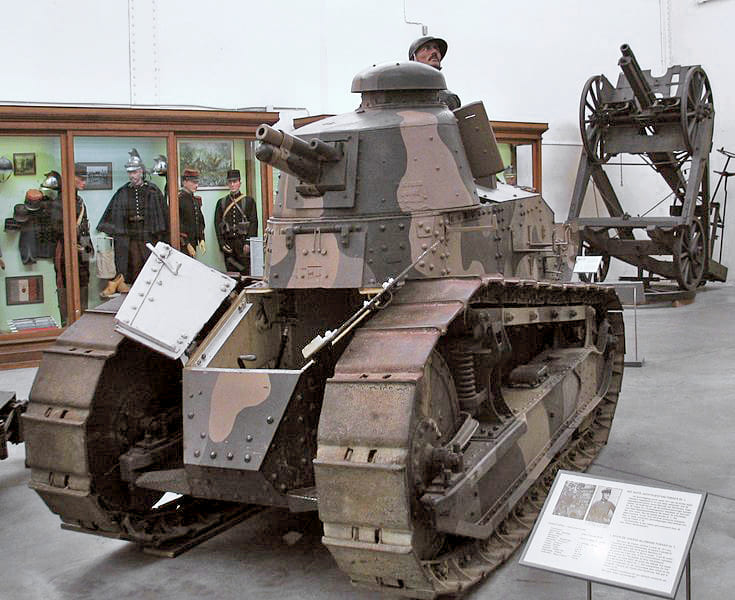
The Renault FT tank with a weight of about 6.5 to 7 tons, two crew positions, armor thickness between 8 and 16 mm and a maximum speed of about 7 km/h was one of the prominent military vehicles of its time. The revolutionary feature of this tank was its internal layout: the driver’s cabin in the front, the engine in the rear and a fully rotating turret that could carry a 37 mm cannon or a machine gun. This arrangement became the approximate standard for all future tanks. The FT entered the battlefield in May 1918 and was used in large numbers in France and was subsequently exported to other countries. Its main legacy is the concept of modern tank design, mobility, rotating turret and rear engine, which inspired other designers worldwide.
T-34 tank: Soviet, from 1940 onwards
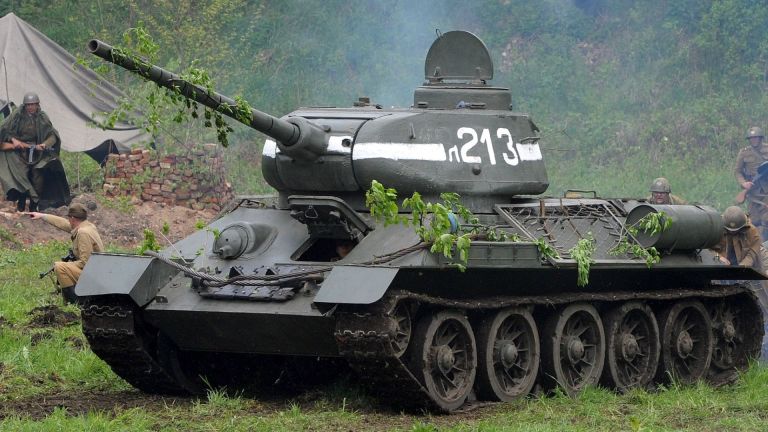
The T-34 medium tank weighed about 26.5 tons and provided a power ratio of 18.9 horsepower per ton with a V12 diesel engine with a power of 500 horsepower. Its 45 mm armor with a 60 degree slope increased its effective thickness, it was equipped with the 76.2 mm F-34 cannon (in the early model) and Christie suspension for better mobility. On the Eastern Front, the T-34 showed that a balanced tank with mobility, sufficient firepower and mass production capability could change the fate of armored warfare. The design of this military vehicle influenced all tanks worldwide. The sloping armor, wide tracks and ease of production made this tank a turning point in history.
M4 Sherman tank: America, 1942 to 1945
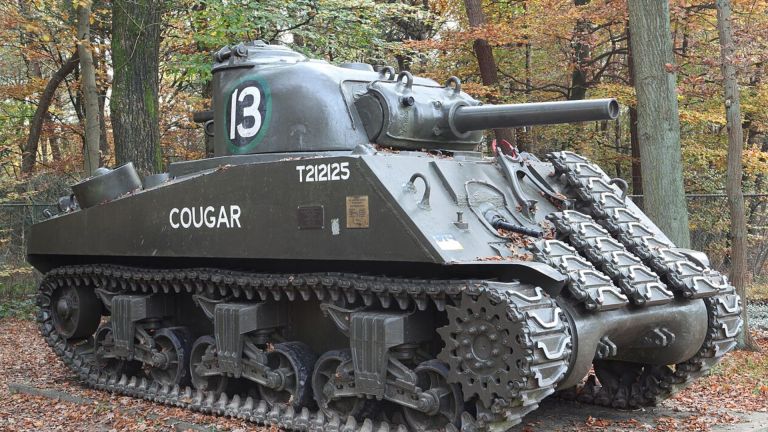
The M4 Sherman tank weighed about 30 to 33 tons, offered five crew positions, had a maximum speed of 38 to 47 km/h, and had an armor thickness of between 12 and 75 mm depending on the model. With more than 49,000 units produced, it was the most used Allied tank in World War II. What changed modern warfare was not necessarily the most advanced weaponry, but the tank’s ease of production, repair, logistical support, and global deployment on multiple fronts, enabling massive mechanized operations. Its standardization allowed the Allies to deploy armored divisions globally, enabling mobile warfare on a global scale.
M1 Abrams tank: America, 1980s to present
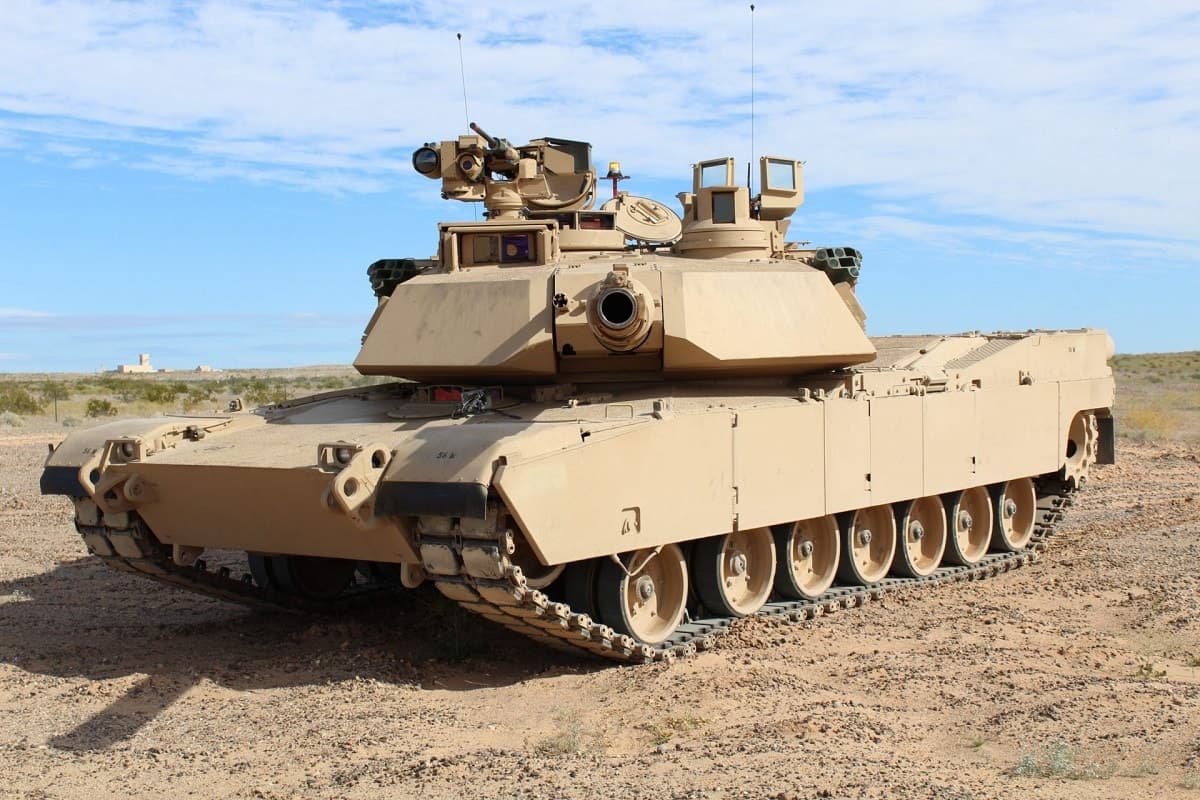
The M1 Abrams tank weighs up to 73.6 tons (SEPv3 version), supports up to four crews, is equipped with a 120mm tankless gun, and has a 1,500 hp multi-fuel turbine engine. The tank introduced optimized composite armor, separate ammunition storage in the compartment, advanced fire control systems and crew protection features. In the 1991 Persian Gulf War, the Abrams demonstrated its mastery of desert operations, tank-to-tank combat, and crew survival, changing the modern military’s view of the role of main tanks. Although the M1 Abrams was not the first digital tank, its integration of digital systems is considered a leap in tank design of the late 20th century.
Appreciated tanks and the future of armored wars
In addition to the above five tanks, iconic tanks such as T‑14 Armata (Russia), Leopard +2A7/Leopard 3 (Germany) and Merkava Mk 4 are also worth mentioning for their innovation and impact. Today, tanks such as Armata, Abrams SEPv3 and Leopard +2A7 are among the most advanced tanks in service.
In the future perspective, the next-generation projects pursued under programs such as FMBTech Europe and the MGCS project promise the use of hybrid propulsion systems, unmanned turrets, artificial intelligence-based targeting, and active defense systems that provide the ability to counter drones and long-range missiles.
In parallel with these developments, the increasing importance of long-range precision strikes, stray munitions, networked sensors, and advanced anti-tank missiles has caused future armor warfare to emphasize not only heavy armor but also networked connectivity, environmental awareness, and remote engagement.

RCO NEWS