


09 March 1404 at 11:42
If you are interested in space and the unknowns of the universe, in this article we will introduce the most interesting pieces of technology that have been sent into space.
Human interest in stars goes back to thousands of years BC; When the foundations of astronomy were established and its first principles were written in the city of Babylon located in the middle of the rivers. Since then, our relationship with the night sky has evolved day by day and evolution has been an inseparable part of it. The first manned spacecraft traveled to the moon in 1960 to deepen this relationship.
The most interesting pieces of technology that have been sent into space
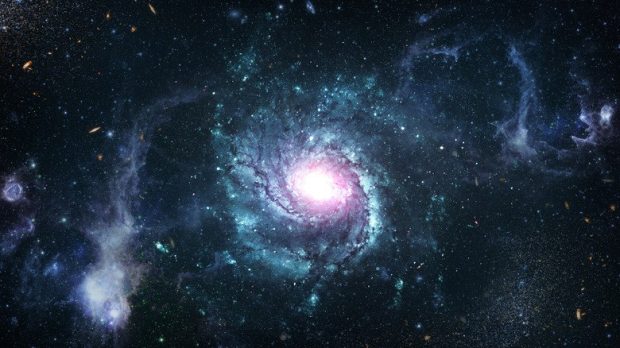
Since the competition between countries to explore space intensified, many technological pieces have been launched from the earth into space, each of them having a special design philosophy. Some of them have been sent in order to better know other planets and investigate the possibility of life on them, and some have been sent to communicate with extraterrestrial beings.
We cannot ignore the direct and indirect impact these technological pieces have on our lives, and if you are a fan of watching movies and series, you know that humans, both in practice and in the legal world, have spent huge amounts of money to satisfy their curiosity, a clear example of which is the Star Trek series.
Humanity has made significant progress in the last century compared to the previous century. For example, he discovered new methods for water purification and increased his knowledge about mysterious black holes and also thought of ways to deal with muscle wasting, but in this article from Gadget News we have gone to the technological parts that have been sent into space to complete their mission. From taciturn animals to spaceships that were ahead of their time, here’s a look at some of the major achievements that have left Earth’s atmosphere to push the boundaries of space.
spaceship
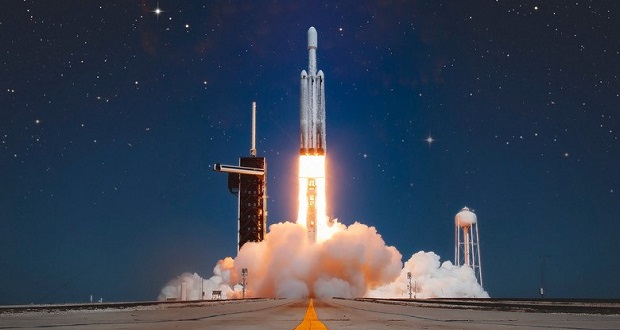
A list of the exciting technologies that have transcended Earth’s borders would be incomplete without mentioning the very devices that got us there. Spaceships are among the most amazing achievements of human engineering. If you have ever seen these scientific giants up close, you must have thought about how man got from building wooden beams to conquering the stars in the sky!
Spaceships tell the story of human invincibility. For the casual spectator, seeing the flames and smoke from the launch pad as the countdown to launch is exciting. This is why NASA’s launch events still have a large audience. For example, the joint launch project of NASA and SpaceX in 2020 had about 10.3 million viewers. Although it is not possible to name all the rockets that have gone beyond the Earth’s atmosphere, it can be said that NASA has had an effective presence in most of these pioneering projects.
In terms of technological evolution, a lot has changed since the space race. While some parts of the space shuttles were reusable, SpaceX recently made a major breakthrough with the Falcon 9’s reusable first-stage booster, and more reuse programs are in the works. This means that space travel will not be so expensive in the future, and with competitors such as Blue Origin taking passengers into space for short periods of time, spaceships may become an accessible means of public transportation in the future.
Satellites
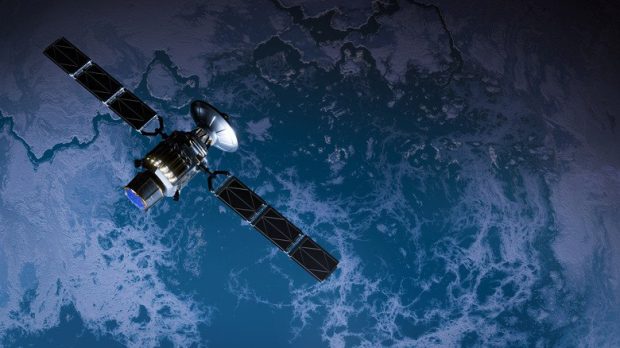
As we said about spacecrafts, talking about exciting technological structures would be incomplete without mentioning satellites. Satellites play a role in most of the things that are considered interesting and practical on earth, including GPS navigation, weather forecasting, broadcast programs and other applications.
The project to launch satellites with the space race missions began in the late 1950s and early 1960s, and initially their main purpose was to collect data. For example, Sputnik-1 was the first successful artificial satellite to collect information about the atmosphere while orbiting the Earth. After the Apollo missions, satellites received less media attention, but that never meant their importance diminished.
As of this writing, there are about 13,700 active satellites in Earth orbit. Each of these satellites has a specific purpose. Some of them, like Starlink, provide the Internet to people on the planet, and others facilitate and manage financial transactions. In general, any activity related to communication, satellite will play a prominent role in that field.
Hubble Space Telescope
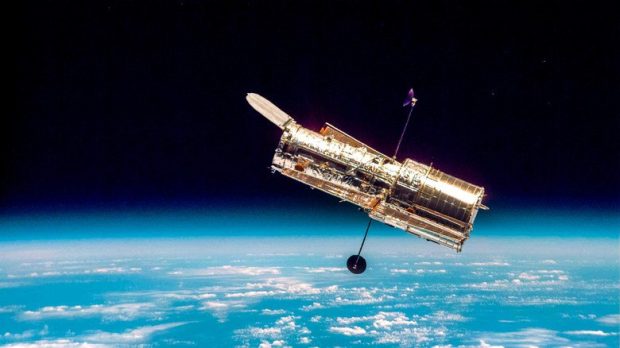
Humans are naturally curious and their desire to explore the boundless space did not end when Neil Armstrong stepped on the moon. Human curiosity continued and came to the fore in the form of a large and powerful space telescope named Hubble in the 90s. This giant telescope was approximately 13 meters high and weighed more than 10,000 kilograms in order to capture images of stars and other phenomena from far away and deepen our understanding of the galaxy in which we live.
More than three decades have passed since Hubble’s launch and so far it has recorded more than 1.7 million astronomical phenomena and events. Many of these observations have revealed information to us that we did not know about before. Hubble has witnessed the impact of a comet with Jupiter and has even observed beyond the veil of time by examining regions that are 13.4 billion light years away from Earth. Such accuracy is only possible thanks to its extraordinary magnification power; Hubble can track the position of a target without a deviation of more than seven thousandths of an arc second, which is equivalent to targeting a human hair with a laser from a distance of 1.6 kilometers.
Parker Solar Probe
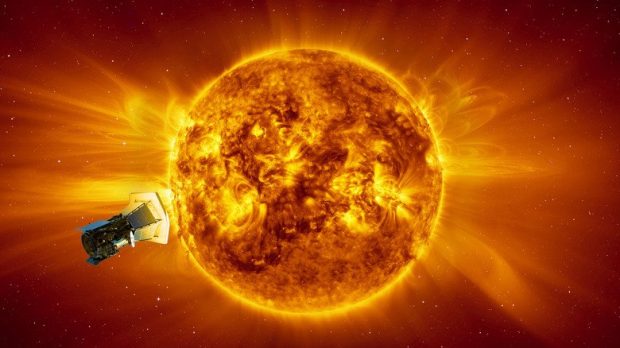
Like other stars in the sky that we see a part of every night, the sun has been a controversial star for human exploration and even considered a god in some cultures. For example, Ra was the god of the sun and the most powerful god among the gods of ancient Egypt and they believed that he created the world and the cosmic order. Although today the sun is no longer a mythical figure or worshiped by people, but with its gravitational force and dazzling light, it makes our lives possible.
Mankind cannot explore the Sun directly, because approaching this bright and hot star is tantamount to disintegration, but efforts have not stopped, and in 2021, the Parker Solar Probe was launched to pass through the Sun’s corona. Since then, it has made more than 10 flybys close to the Sun and transmitted important information back to Earth.
The temperature of the Sun’s corona is about 1.8 million degrees Fahrenheit. So how did Parker get close to this area? The answer to this question lies in a clever solution: a heat shield protects the spacecraft from direct sunlight, and only a small number of plasma particles can penetrate the spacecraft and transfer heat. Parker Velocity is also another engineering feat, as it can orbit the Sun at a speed of 692,000 km/h. (Just for information, at this speed, it can travel from New York to Tokyo, which takes 14 hours by plane, in one minute!)
James Webb Space Telescope
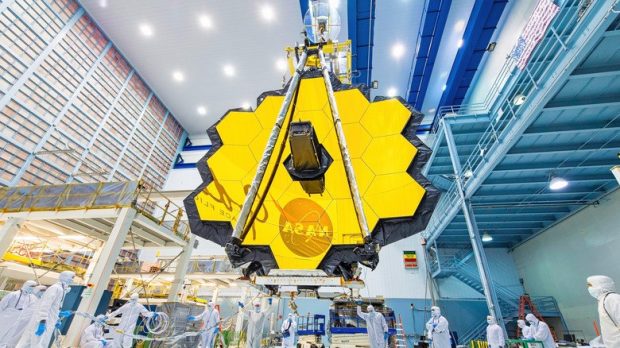
Not long after the Parker Probe was launched to unravel the mysteries of the Sun, the James Webb Space Telescope joined Hubble to become one of mankind’s most prominent and largest mobile observatories. These two telescopes have significant differences in terms of technology and orbit. For example, Hubble orbits the Earth, while James Webb orbits the Sun approximately 1,609,000 kilometers away from us.
The position of James Webb is quite strategic and uses the earth as a shield against heat and sunlight. In terms of technology, there is a gap of about 30 years between the construction of these two telescopes; Therefore, it is only natural that James Webb is equipped with much more advanced equipment. This quality difference is especially evident in infrared observation. James Webb can observe more than 13.5 billion light years. In March 2024, the telescope discovered a galaxy approximately 33.8 billion light-years away from Earth.
From a scientific point of view, such an observation seems impossible at first glance, since the age of the universe is estimated to be about 14 billion years. But the expanding nature of the universe and the telescope’s ability to see deeper into the infrared will allow us to better understand the mysteries of galaxies. According to some sources, James Webb has even shown us the birth of a new solar system, showing the true power of such a telescope.
Mars probe or rover
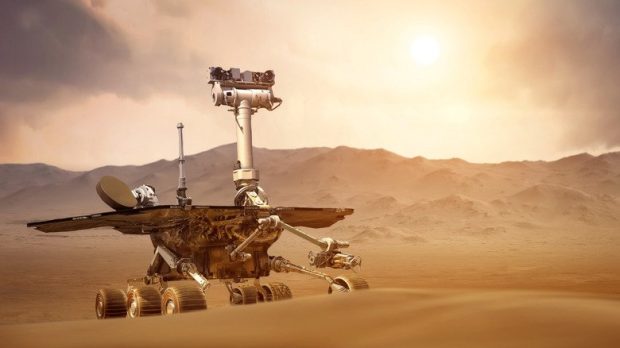
Mars, the red planet and close neighbor of Earth, has been proposed as a possible option for life for many years. This planet is a serious alternative for mankind in the event of a major crisis for the earth. For this reason, people like Elon Musk have addressed this issue many times, although it is clear that our technology today is not yet capable of implementing such plans on a large scale. Nevertheless, these limitations have not stopped human efforts to collect as much information as possible from this red neighbor.
The efforts of scientists have always been accompanied by great challenges. It is usually said that about half of the missions to Mars have failed, some have disappeared in the planet’s atmosphere, some have failed due to technical reasons, and some have even disappeared altogether. Even the technology to reach Mars has not yet reached the stage of perfection. The first successful missions to explore the surface of Mars were carried out in the mid-1970s with the Viking landers. After that, five of the next six missions to Mars—whether by the United States, the former Soviet Union, or the European Space Agency—failed in some way.
This history of failures shows how impressive and valuable the success of NASA’s five Mars rovers is. Not only did these probes land on the rugged planet against all odds, but they survived long enough to send back vital data about the Martian environment. Among these five rovers, only two examples, namely “Curiosity” and “Persistence”, are still active and are working.
International Space Station
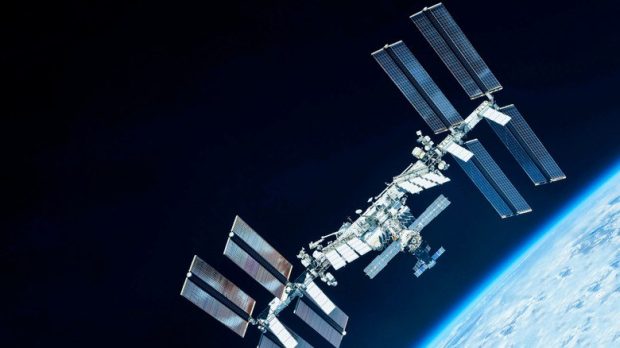
One of the most significant symbols of human cooperation on earth in all periods of history is the International Space Station as a human base in space. This station does not belong to any particular country, and only European countries, the United States of America, Japan, China and Russia have contributed to its design and construction, and countries such as the United Arab Emirates play a role in supporting and maintaining it.
In terms of scale and dimensions, the International Space Station is the largest structure that humans have sent into space, but not as a complete and integrated structure. It was impossible to launch such a structure from the ground in a single and integrated form, because this station is bigger than a football field and weighs about 422 tons; A challenge that the laws of physics did not allow to solve easily.
For this reason, the International Space Station was built gradually and piece by piece in Earth’s orbit like a modular structure, similar to Lego. Its assembly process began in 1998, and although the completion of the main parts continued until 2011, human habitation in this station began in 2000. Its annual maintenance cost is about 3 billion dollars, but the scientific and research value of the first permanent human base in space is beyond what can be measured by numbers.
Tesla Roadster
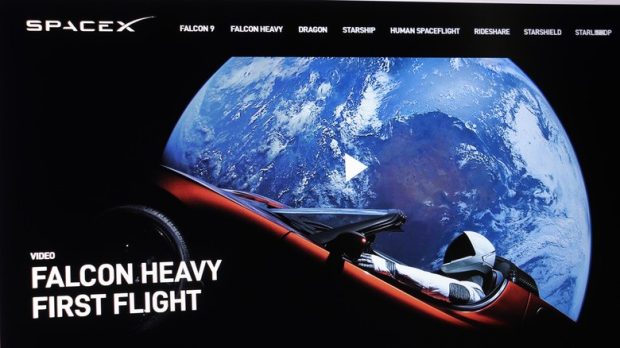
The next structure sent from the earth to space will surprise many of you! Earlier, we talked about Elon Musk and his Mars habitation project and said that SpaceX, which is his company, is one of the pioneers of the private sector in the rocket and spacecraft manufacturing industry. Given the complex physical calculations that go into sending any technology into orbit, it’s natural to think that a real car would have no place among the objects sent into space, but that’s not true.
On February 6, 2018, SpaceX launched one of Elon Musk’s Tesla Roadster cars into space, a symbolic gesture to commemorate the historic launch of the Falcon Heavy rocket. The event featured several cultural references: a mannequin named Starman sat in the driver’s seat, a reference to one of David Bowie’s famous works, a copy of The Hitchhiker’s Guide to the Galaxy was placed on the dashboard, and a 5D optical disc featured works by Isaac Asimov.
This interesting move was a fun way to show the connection between Tesla and SpaceX; However, the audiences of these two companies are very different. Tesla Roadster can be seen as a kind of gift to science, because it will remain wandering in space for at least a few million years, until it loses its orbit and finally collides with the Earth or the planet Venus.
Lego statue
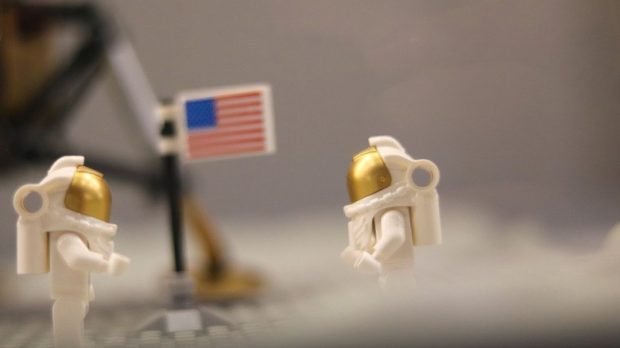
Lego bricks are not just colorful plastic pieces, they are tools for building imaginary worlds. Different generations of us have built their cities, ships and dreams with these small pieces. The popularity of Lego is not limited to the variety of its parts, the existence of more than four billion minifigures around the world shows how deeply rooted this brand is in global culture.
But how was the link between a toy company and space exploration formed? cooperation between The Lego Group and NASA It started in the 90s. At the time, both were participating in the MIT Robotics Competition. These collaborations gradually inspired projects that linked science, technology and creativity.
The peak of this cooperation was in 2011; When the mission Juno He went to the planet Jupiter. Among the advanced scientific instruments of this spacecraft, three small Lego characters were also present: Jupiter, Juno and Galileo, A scientist who discovered Jupiter’s moons with his telescope centuries ago. This iconic move showed that even the simplest toys can inspire the greatest scientific adventures and bridge the gap between a child’s imagination and the wondrous reality of the universe.
A piece of the first man-made airplane
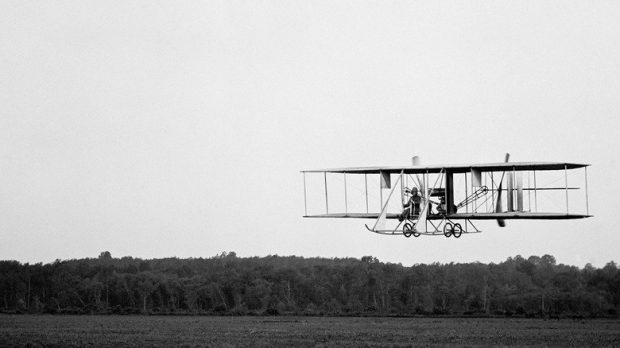
When the Wright brothers made the first controlled flight of a heavier-than-air aircraft in 1903, they opened a new window to mankind. This window was facing the sky and later took an important and effective step forward in transportation. But probably even in the most dreamy imaginations of these two lucky brothers, one day a piece of the same plane would leave the earth and reach the moon.
Less than seven decades later, the dream of flying turned into the dream of walking on the surface of the moon. The historic Apollo mission was not only the climax of the space race, but also a sign of human courage to enter the unknown. At this fateful moment, Neil Armstrong He took with him small but meaningful souvenirs from the first flight in history, one of which was pieces of fabric and wood from the Wright brothers’ plane. These memorabilia took a short trip to the sky and then returned home with the command module. Today, these iconic pieces in Smithsonian Institution are kept
golden tablet
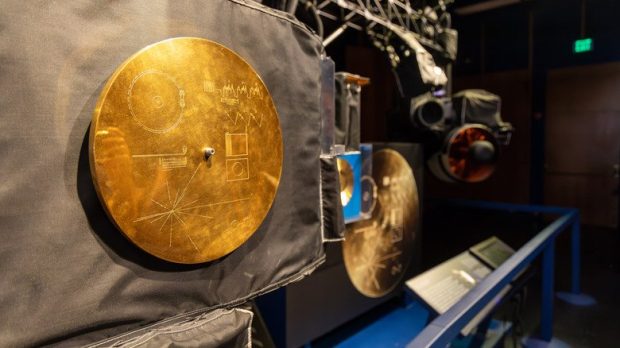
Question: Are we alone in the universe? It is one of the most fundamental scientific concerns of mankind. Despite the fact that there is no sign of advanced life in the solar system, the possibility of the existence of a distant civilization continues to occupy the minds of scientists. The result of this bold curiosity was a poetic and at the same time scientific project called the Golden Tablet.
The idea was simple but profound; If one day an intelligent being in deep space finds one of our ships, it should be able to figure out who sent it. To this end, Carl Sagan And his team designed a page that represents the earth and its inhabitants like a cultural capsule. These plates on the body Voyager 1 and Voyager 2 were installed and these are the two ships that now travel on the frontiers of interstellar space.
The content of these tablets is a compact but expressive picture of humanity: 115 coded images of life and science, greeting messages in 55 languages, and music that reflects the range of human emotions from classical symphonies to contemporary tunes. The golden tablet is not only a message to potential aliens, but also a mirror to ourselves and a narrative of who we are and what we value.
Star Wars lightsaber

Fewer collections in the history of cinema Star Wars It has captured the imagination of several generations. A world full of distant galaxies, the conflict between good and evil, and fantastic technologies that have become a part of global culture. In the heart of this world, there is a lightsaber; A shining weapon that is not only the tool of the heroes of the story, but also a lasting symbol of this franchise and has become so popular that the Walt Disney Company has announced the annual sale of millions of them.
In 2007 and at the same time as the 30th anniversary of this space saga, a light saber replica Luke Skywalker From the movie Star Wars: Episode VI – Return of the Jedi Became a real trip to space. This symbolic object went into orbit with seven astronauts. This trip was originally carried out to deliver the Harmony module to the International Space Station, but with the presence of this cinematic relic, it also took on a cultural and nostalgic flavor.
This incident showed that the border between fantasy and reality is sometimes not that far and sometimes a cinematic legend can fly for a short moment in the same space that inspired its formation.
Hela cells

In the early years of the space race, before humans ventured into the unknowns of space, these animals were the first to experience space travel. The dangers of traveling to the boundless and unknown space were more than it was possible to risk human life without hesitation. After the flight of Albert II in 1949, the basic question was: Can the human body withstand the conditions outside the earth?
The answer to this question was partly due to the cells named after Henrietta Lacks has been taken His cells had an amazing feature and unlike other human samples, they did not die in the laboratory environment and continued to multiply. This immortality caused a sample of them to be sent into space in 1960 to investigate the reaction of living tissue to weightlessness and cosmic radiation.
These experiments were a hidden but decisive step in the path of human flight, and they were the beginning of a path that was followed by a historical journey shortly after. Yuri Gagarin peaked Since then, HeLa cells have played a fundamental role in the advancement of science. (From a better understanding of cancer to a detailed understanding of human genetic structure). Their story is a reminder of the fact that sometimes the smallest parts of life make the biggest human leaps possible.
Human DNA sequence

The idea of preserving human survival against global disasters first came to the mind of mankind during the tense period of the Cold War and the 1960s. Although that era has passed, the concern of forgetting humanity and striving for immortality still remains, and this idea inspired the creation of “Immortality Drive”.
This device is a digital copy of the human genome and contains the complete DNA sequence of a number of famous people, including Stephen Hawking, the outstanding physicist whose efforts in understanding the cosmos were unparalleled. In 2008, this memory was sent to the International Space Station to preserve the memory of our humanity and genetic information for future generations.
However, it should be noted that this memory is more like a digital fingerprint than a complete genetic database and the available data is not enough for cloning, and its main purpose is to record human identity and memory, not to physically recreate the human race.

RCO NEWS