


December 18, 1404 at 12:29
Some cars depreciate more than their competitors. In this article, we introduce 13 cars with the biggest price drop in 2025.
Every zero-kilometer car that leaves the dealership loses some of its initial value, and most buyers agree on this issue. This depreciation continues in the following years, although the rate is not the same for all cars and some cars depreciate much faster.
Introducing 13 cars with the biggest price drop in 2025
The issue of car depreciation can have various reasons. Many of the cars that lose their value very quickly are luxury cars that have a higher maintenance cost, and because buyers are looking for the latest and most advanced models, these cars go out of style sooner. On the other hand, some cars may experience a greater drop in value due to lower reliability or not adapting to the trend of the used and used car market.
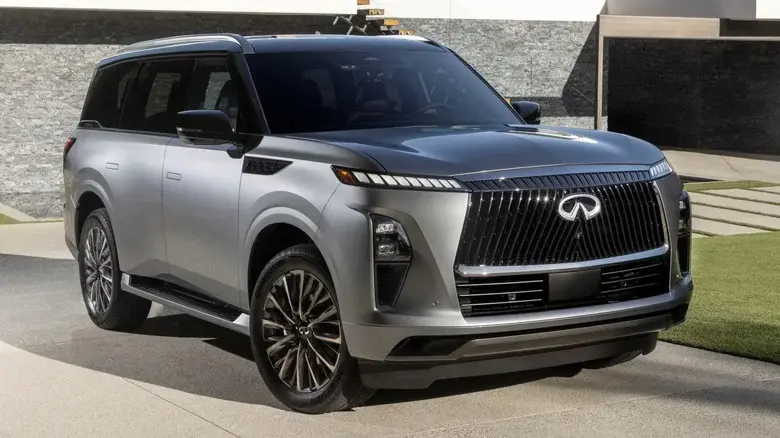
In this article from Gadget News, we have introduced 13 cars of 2025 in order to investigate the reason for their decline in value. The poor performance of these cars is clearly evident, and according to a study published by iSeeCars magazine, each of them loses at least 60% of its original value after five years on the road.
If you are planning to buy a new car with zero kilometers and hope to sell it at a good price after a few years, it is better to stay away from these models, but if you are looking for a used car with a large price drop and therefore more affordable, these models may be a good option for you.
1. Land Rover Discovery – Land Rover Discovery
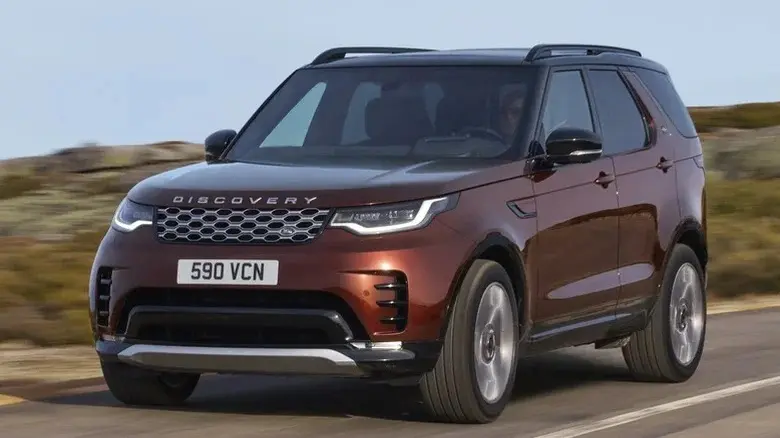
- Depreciation rate: 60.9 percent
The Land Rover Discovery has a weakness that is not its fault. This car is considered a luxurious and powerful SUV that has many features and makes it a valuable option to buy – both new and used. However, the Discovery is sold in dealerships alongside the Defender and Range Rover models.
Defender can be considered more attractive in terms of appearance and is introduced as the strongest model in off-road and off-road routes, while the Range Rover sub-category is still considered the most luxurious part of the Land Rover brand. In the Range Rover family, the company offers a variety of models, the most important of which are the Evoque, Velar, Range Rover Sport and the original Range Rover, which is the most luxurious and expensive model of this family.
Considering the high variety of models offered in the Jaguar Land Rover collection, it is not wise and economical to buy a Discovery. The spacious interior and relatively decent fuel consumption may be considered as a key advantage for some buyers, but this product does not have much to say in terms of durability, quality and reliability.
On the other hand, the Defender 110 is also available in a 7-passenger configuration, and although it is a few thousand dollars more expensive than a seven-passenger Discovery with similar specifications, it can be said that it makes up for the price difference with more attractive looks and superior off-road capabilities. One of the most important factors in the decline of Discovery’s value in the market is the lack of unique features and functionality. Evidence shows that the car has lost more than 60.9% of its original value after half a decade of operation, which is disappointing news for Land Rover fans.
2. Audi A-6 – Audi A6
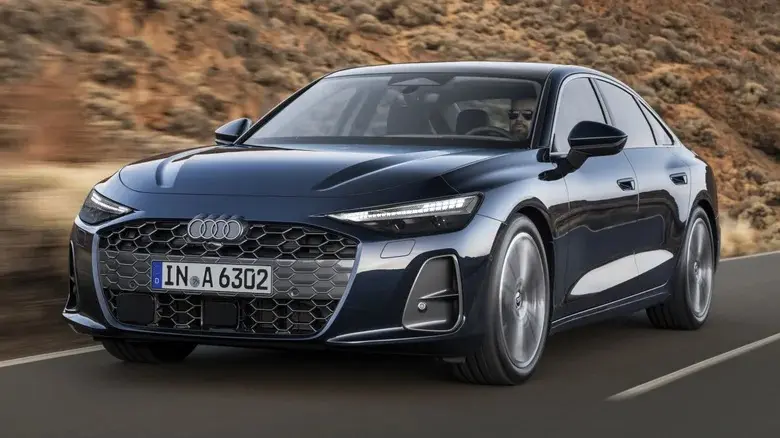
- Depreciation rate: 60.9 percent
Despite the mass production and supply of crossovers and utility vans, sedans are no longer as popular as they used to be. Audi A6 is a famous car for high maintenance costs; Therefore, it is easy to understand why this car is one of the most undervalued products on the market. However, Audi plans to make extensive changes to the car for the 2026 model year, launching an all-new generation A6 that promises significant improvements over the current version.
The buyers of Audi A6 model 2026 are going to see the upgrade of this car and receive its important improvements such as revised design, better sound insulation and increased productivity. Currently, the drag coefficient of this car is 0.23, which makes the A6 the most aerodynamic combustion car in the history of the Audi brand.
American buyers will, of course, miss out on the mild hybrid powertrain offered in other markets, as the American version of the A6 will be equipped with a 3.0-liter V6 engine. These upgrades will undoubtedly increase the appeal of the A6 to buyers of zero-mile cars, but will likely have little effect on the interest of used car buyers. Having said that, it seems that the new version is not significantly different from the previous generation in terms of maintaining value in the long term.
3. Infiniti QX60 – Infiniti QX60
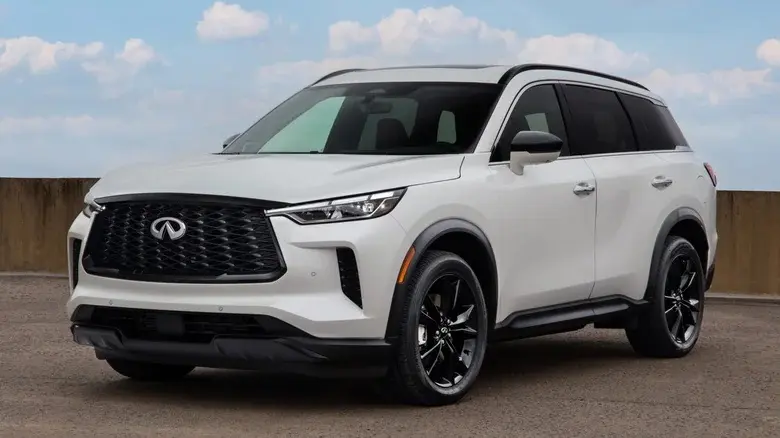
- Depreciation rate: 61.5 percent
Reviews of the current generation Infiniti QX60, which will be released in 2024, and especially the flagship version, show that this car can hardly maintain its initial value. This product is not only technically similar to the Nissan Pathfinder, but the full option version of the QX60 is about $20,000 more expensive than the base version.
Despite the high comfort and numerous technological features, the performance of some of which is really satisfactory, it seems that its factory price is too expensive, and this has caused the Infiniti in question to lose its purchase value against its competitors.
Used car buyers seem to feel the same way, as they tend to pay only a fraction of the original price after five years. According to the iSeeCars report, the Infiniti QX60 loses about 61.5% of its original value after five years of use, and this amount is much more than the loss of value of a similar Nissan model with the same technical structure.
4. Audi Q7 – Audi Q7
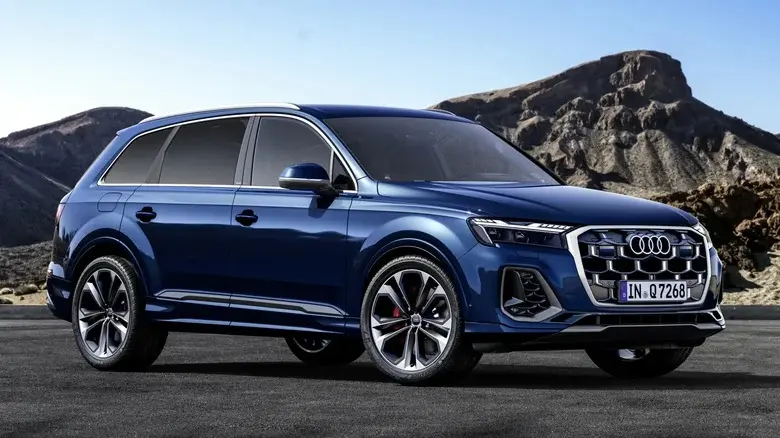
- Depreciation rate: 61.6 percent
Audi Q7 model 2025 has undergone new changes compared to before, among which we can mention the redesign of the appearance, updated technologies and OLED taillights. The base model comes with a turbocharged 2.0-liter four-cylinder engine with 261 horsepower, while the flagship versions are equipped with a 3.0-liter V6 engine with an output of 335 horsepower.
The spacious interior and the seven-seater configuration of the car have been preserved as before, but what probably hasn’t changed is the Q7’s ability to rapidly depreciate in value during the first few years of use. According to iSeeCars data, buyers should expect their car to lose about 61.6 percent of its original value after half a decade of ownership.
This number may seem high, but it is not an unusual number for a luxury SUV. Competing models of this car from brands such as Cadillac, Range Rover and Infiniti have even more than this amount of depreciation. However, the Q7’s German rivals BMW and Mercedes-Benz perform better in terms of resale value retention and are arguably smarter options for buyers looking to keep more of their capital when selling.
5. Audi A8 L
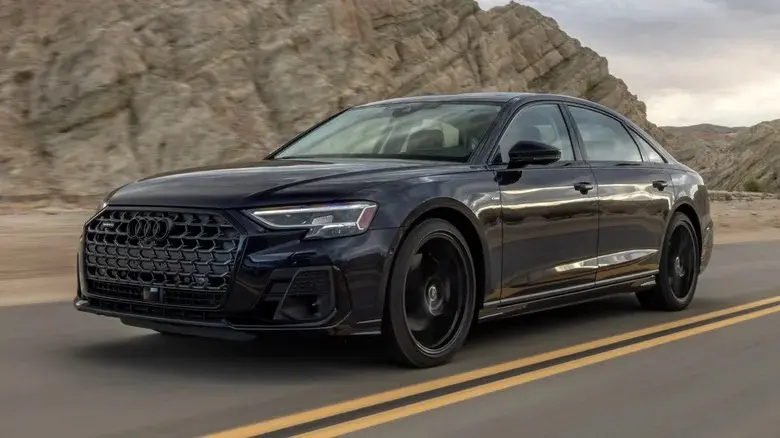
- Depreciation rate: 62.7 percent
Although the Audi A8 L received its last major facelift in 2022, there are no major changes for the 2026 model year. Modifications of this car are limited to updating packages and adding a new color called Daytona Gray with a pearl effect.
These changes are not enough to encourage Mercedes-Benz S-Class buyers to buy it! Mercedes S-Class is still the standard of technology and luxury in its class, and it also has a slightly lower value than Audi. The Audi has lost 62.7% of its value in just half a decade, while the S-Class has lost 60.7% over the same period. However, the S-Class does not perform exceptionally well either.
Before this, there were rumors about the production and release of the all-electric A8 generation by next year, but it seems that the drop in car sales following the US tariff policies and the restructuring of the domestic brand that was announced at the end of 2024, has caused confusion in Audi’s plans, and therefore it is not possible to specify an exact date for the release of the all-electric version.
6. Land Rover Range Rover – Land Rover Range Rover
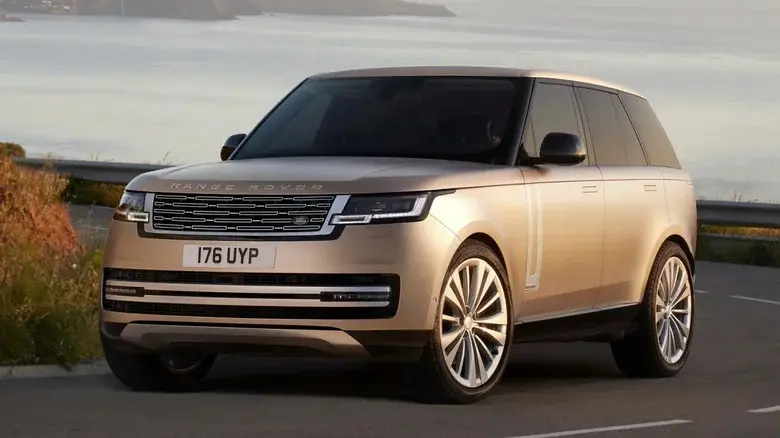
- Depreciation rate: 62.9 percent
The flagship Range Rover remains a unique example of a luxury SUV and has inherited many of the features and weaknesses of previous generations. Although JD Power gave it an average reliability rating for the 2025 model, it is not considered one of the most reliable SUVs on the market. Also, it’s not cheap to maintain, even by luxury car standards, and buyers should still expect to lose a significant chunk of their investment when reselling it.
iSeeCars analysis shows that the Range Rover loses an average of 62.9% of its value over five years. Even a base model costs more than $100,000, while a long-wheelbase Range Rover SV can cost more than $250,000. This issue makes Range Rover attractive only to those for whom price and depreciation are not the main issue. It’s clear that plenty of buyers fit that description, as JLR posted record profits in 2024 and the Range Rover division was particularly successful.
7. Cadillac Escalade ESV
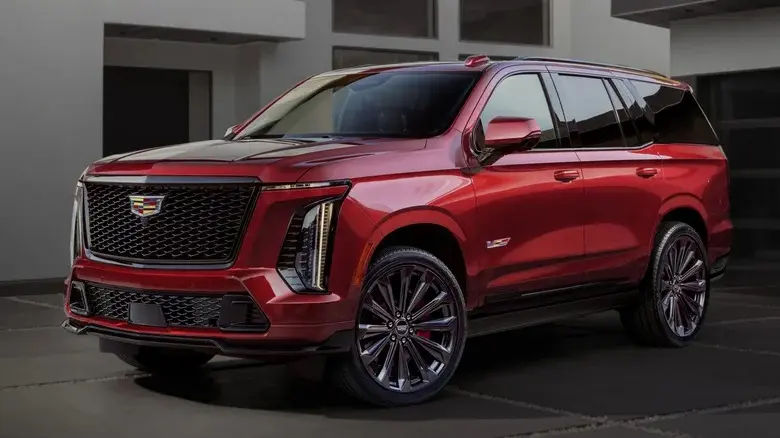
- Depreciation rate: 62.9 percent
If the Range Rover represents British luxury SUVs, the Cadillac Escalade is undoubtedly its American representative. It has all the usual features of a large American luxury SUV, and in its flagship V-Series version, it takes performance to an extraordinary level. Both the standard version of the Escalade and the ESV depreciate quickly, but the ESV depreciates slightly more. Buyers can expect to lose about 62.9% of their initial investment over five years.
Despite this depreciation, the experience of riding it is enjoyable and exciting. Exhaust growl and unexpected straight-line acceleration make the car’s heavy weight seem even more unusual, while fuel consumption is as expected excessive. Still, for budget-conscious buyers, the appeal of Cadillac’s biggest and boldest SUV is understandable.
8. Tesla Model X – Tesla Model X
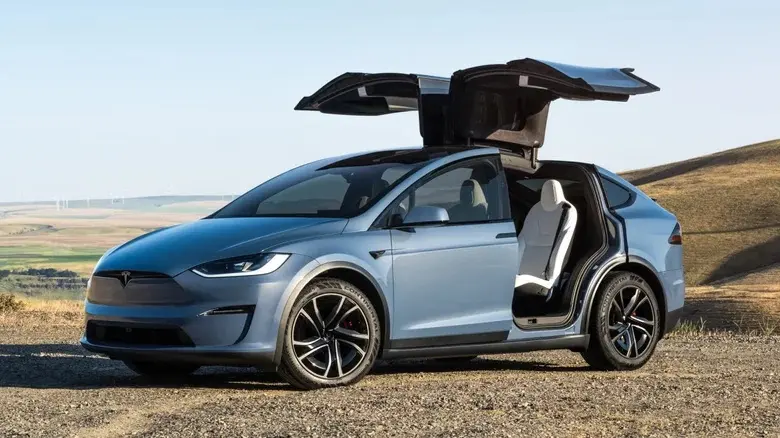
- Depreciation rate: 63.4 percent
The luxury electric car market may be changing fast, but Tesla hasn’t made any significant changes to the 2026 Tesla X. Of course, some minor modifications such as a new body color, revised suspension bushings and improved sound insulation are planned, but none of these changes are significant enough to divert buyers from the competition. Tesla hasn’t introduced any major changes to the car in 2024 and 2025 either, and in fact, the Model X’s design has remained largely unchanged since its introduction in 2017.
Another constant feature of this car is its rapid depreciation. According to iSeeCars, the Model X loses nearly 63.4 percent of its value after five years of operation. Although maintenance costs are generally lower than many other cars that depreciate at a similar rate, concerns about the cost of minor repairs and build quality are likely to keep the Model X’s resale value lower than its competitors.
9. Nissan Leaf – Nissan Leaf
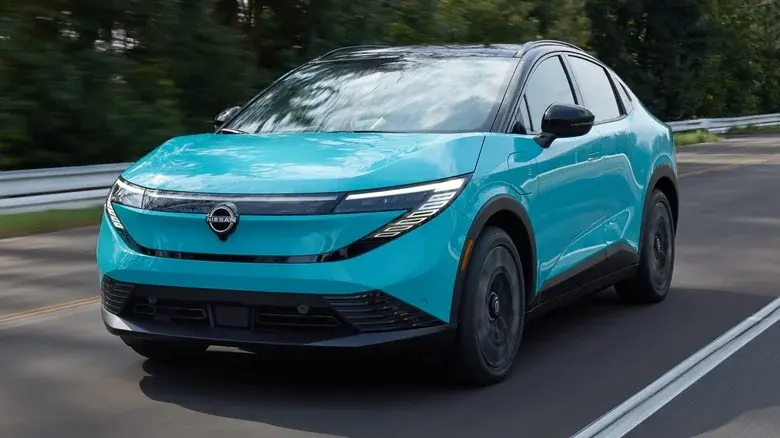
- Depreciation rate: 64.1 percent
Nissan Leaf model 2026 at first glance has many similarities with Nissan Aria, whose production has been stopped now. This car is improved compared to its previous generation and now offers a better range. Depending on the model, the Leaf 2026 can travel up to 303 miles on a single charge, which is excellent compared to the competition.
However, the used Leaf used to rate SeeCars is a completely different car. The base version was only rated for 149 miles on a charge, while the Leaf Plus had a range of 226 miles. The range of the basic version was low from the beginning, and after five years of reduced battery capacity, it has become even less for many drivers. As a result, the car’s resale value is extremely low, with the five-year-old Leaf losing 64.1 percent of its original value, according to the data.
10. BMW 5-Series – BMW 5-Series
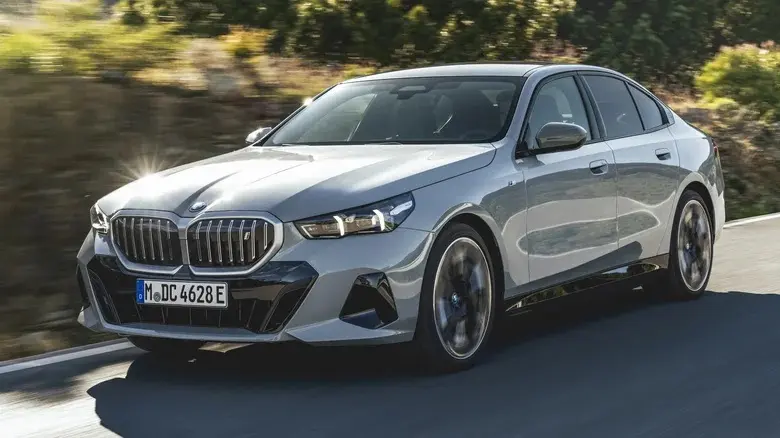
- Depreciation rate: 64.7 percent
BMW’s performance sedans depreciate at a strange rate, with the hybrid version of the 5 Series depreciating slightly more than the internal combustion engine (ICE) model. Buyers of a BMW 5 Series Hybrid should expect to lose an average of 64.7% of their initial investment in just half a decade.
The new generation of this car was introduced for the 2024 model year, and both gasoline and fully electric versions are offered. The 530i xDrive version particularly impressed us in terms of equipment and interior design, but the 540i seems to be a better performer if you have the budget.
The all-electric version of the i5 also has a significant performance in maintaining the satisfactory driving dynamics and solid build quality of the previous cars. The choice between the two models comes down more to personal preferences about fueling or battery charging than major differences between them, but either way, buyers shouldn’t expect to get a significant chunk of their money back at resale.
11. Infiniti QX80 – Infiniti QX80
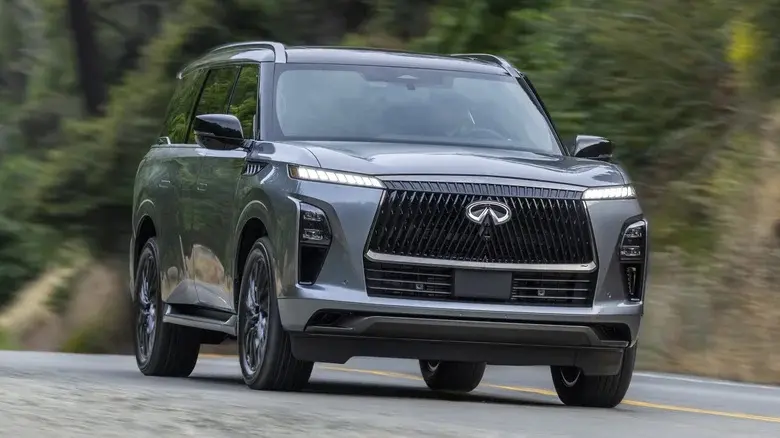
- Depreciation rate: 65 percent
The luxury SUV market is very competitive, and the 2025 Infiniti QX80 is not a standout in terms of durability. However, it has many positive points, including luxurious interior finishes and numerous cabin technologies that make its interior a comfortable and pleasant environment.
Reviews show that the new generation QX80 has made improvements compared to the previous generation. However, this is probably not enough to significantly change the car’s five-year resale value. According to available data, the QX80 loses 65% of its value during this period. This drop in value is more than any other luxury SUV that we have introduced in this article. (even more than famous models with fast depreciating value like Range Rover and Cadillac Escalade)
It’s not all bad news, though: Buyers looking for a luxury SUV with a significant drop in value shouldn’t overlook the QX80. Infiniti sold more than 16 thousand units of this car in 2020 and sold another 12 thousand 500 units in 2021; Therefore, there is enough inventory in the market for the hunters of the opportunity to buy used cars at a good price and in good condition.
12. Tesla Model S – Tesla Model S
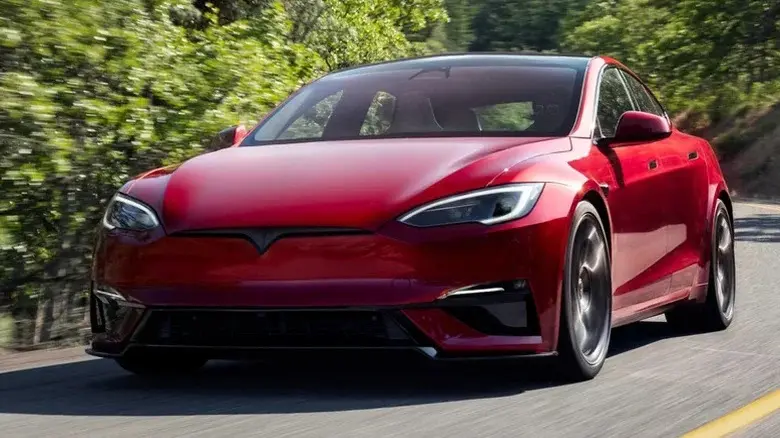
- Depreciation rate: 65.2 percent
Even the cheapest version of the Tesla Model S now costs six figures, and the Plaid version easily enters the six-figure price range. At this price point, it’s no surprise that the Model S, like other luxury cars, has seen a significant drop in value. The Tesla Model S faces more competition every year, but its performance remains at the top of its class. The four-wheel drive version offers a range of 410 miles, while the Plaid’s strong point is its 0-100km/h acceleration of just 1.99 seconds.
Despite such powerful specifications, the Model S is not in high demand among used car buyers. Model 3 has sufficient and practical performance for most drivers and its price is significantly lower. Other than the Model S’s performance-specific features, there aren’t many reasons for used buyers to upgrade to Tesla’s flagship.
13. BMW 7-Series – BMW 7-Series
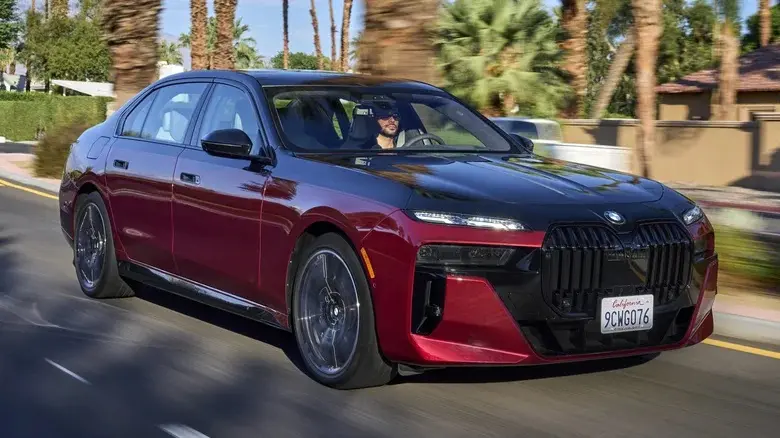
- Depreciation rate: 67.1 percent
The current generation of the BMW 7 Series is one of the most controversial BMW cars in recent years. Its eye-catching design with the famous kidney grills has pushed the design of this model to a new level. If you can look past the front, the 7 Series is still a luxury SUV with plenty of equipment for tech enthusiasts and a smooth, pleasant ride. Most 7 Series buyers aren’t too concerned about price and can upgrade every few years without worrying about resale value.
However, the pool of buyers willing to pay big for a used luxury sedan is limited. As a result, the 7 Series loses its value very quickly. According to iSeeCars data, the car loses an average of 67.1% of its value over five years. Except for the Jaguar I-Pace, which is no longer produced, the BMW 7 Series can be considered the car with the biggest drop in price.

RCO NEWS