

November 29, 1404 at 12:33
According to data published by the International Telecommunication Union, about 2.2 billion people living in low- and middle-income countries do not have access to the Internet.
According to the evaluations published by the International Telecommunication Union (ITU), the year 2025 is considered a turning point in the expansion of global Internet access. During this year, more than 240 million people joined the group of online users for the first time, which brought the total number of global network users to 6 billion people. This remarkable achievement clearly shows the continuous and impressive progress in expanding communication infrastructure and increasing digital coverage around the world.
However, persistent disparities in the three key areas of connection quality, affordability of Internet services, and the level of digital skills among the population have become a serious obstacle. These limitations effectively deprive billions of people from fully and comprehensively benefiting from the potential of digital technologies and deepen the digital divide. In this regard, this international union has estimated that a figure equal to 2.2 billion people of the world’s population are completely deprived of access to the Internet, and the overwhelming majority of these people live in low- and middle-income countries.
Unequal access to the Internet and the digital divide in the world
Following the published reports that pointed to the significant growth of Internet users and reaching the figure of 6 billion people in 2025, the International Telecommunication Union has revealed deeper and more worrying dimensions of digital inequalities by publishing its new analysis. In a situation where advanced technologies such as artificial intelligence have increasingly infiltrated people’s lives, the lack of access to the Internet by 2.2 billion people in the world still acts as a serious alarm.
This huge gap highlights the need for special attention and extensive investment in the development of stable and strong digital infrastructure, providing communication services at affordable prices and in accordance with people’s economic power, as well as improving the level of skills and digital literacy. Dirin Bogdan Martin, Secretary General of the International Telecommunication Union, has emphasized in a statement that in a world where digital technologies have turned from a luxury tool into an essential part of everyday life, all people should have an equal opportunity to enjoy the countless benefits of being online without exception.
He pointed out that the definition of today’s digital divide is no longer limited to having or not having access, but also includes more complex dimensions such as connection speed, reliability and stability of the network, cost-effectiveness, and most importantly, the skills necessary to use technology effectively.
A recent ITU report specifically emphasizes the widening quality gaps caused by the uneven deployment of advanced mobile technologies, especially the fifth generation (5G). For the first time, this international organization has provided an accurate estimate of the total number of 5G subscriptions, which shows that there are currently about 3 billion people They use 5G internet services all over the world. This figure is equivalent to almost a third of all high-speed mobile internet subscriptions.
But this statistic has another side and despite predictions that 5G networks will cover up to 55% of the world’s population, access to this technology is still extremely unequal and unbalanced. For example, in high-income countries, 5G coverage reaches 84 percent of the population, indicating nearly universal access to this advanced technology. On the other hand, in low-income countries, this amount of coverage falls to only 4%.
Statistics 8 times more data consumption in rich countries
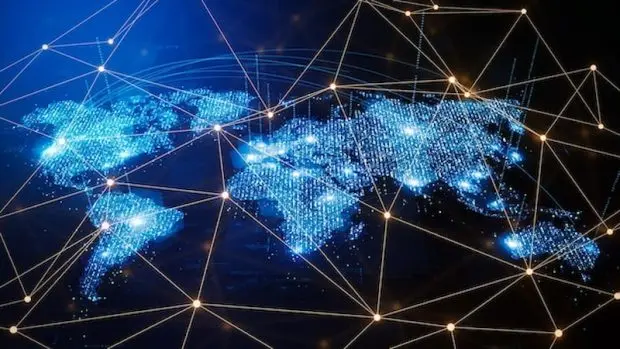
According to the International Telecommunication Union report, digital inequalities are not only limited to basic access, but also manifest themselves in usage patterns and data consumption rates. The report shows that a typical user in high-income countries consumes nearly eight times more mobile data on average than a user in low-income countries. This huge difference not only indicates less access to high-speed internet in low-income areas, but also indicates that even if it is available, the quality, speed and capacity of internet usage in these areas is much lower.
This comprehensive review also emphasizes that the affordability of internet services and the level of digital skills are still two fundamental and significant obstacles to the realization of universal and equitable access to the internet. While we have seen a relative decrease in the average price of a high-speed mobile internet package in recent years, this price decrease has not been the same for all regions. In about 60% of low- and middle-income countries, access to the Internet remains inaccessible to a significant part of the population due to high costs.
The digital world is waiting for advanced skills
In addition, the International Telecommunication Union report also looks at the state of digital skills around the world and shows that the vast majority of Internet users currently have only basic digital skills. Meanwhile, more advanced and critical capabilities, such as online safety and security, the ability to solve problems through digital tools, and digital content creation skills, are developing at a much slower pace.
Referring to these challenges, Kosmas Lakisson Zavazawa, director of the Telecommunication Development Office of the International Telecommunication Union, emphasized that reliable and accurate data is a fundamental and necessary element for formulating effective and efficient digital policies. He stated that these data will help planners to identify gaps and design appropriate strategies to achieve a shared vision of global connectivity. He pointed out that sustained and targeted efforts in the three key areas of infrastructure development, skills upgrading, and improving data collection and analysis systems are critical to ensure that no one is left behind in digital progress.
Differences in Internet access based on national income and gender
The report also delves deeper into the close relationship of digital development with economic, gender and locational factors. The findings indicate that internet usage has reached 94% of the population in high-income countries, while this figure drops to only 23% in low-income countries. In terms of gender, the report shows that men are generally more connected to the Internet than women; So that 77% of men are online compared to 71% of women.
This gender gap can be much deeper in some regions of the world. In terms of location, urban populations have a much higher rate of internet connectivity at 85%, while only 58% of rural residents are online. Finally, based on information published by Anatolia news agency, the ITU report shows that young people are significantly more connected to the Internet, with 82 percent of 15-24-year-olds using the Internet, compared to 72 percent for other age groups.

RCO NEWS