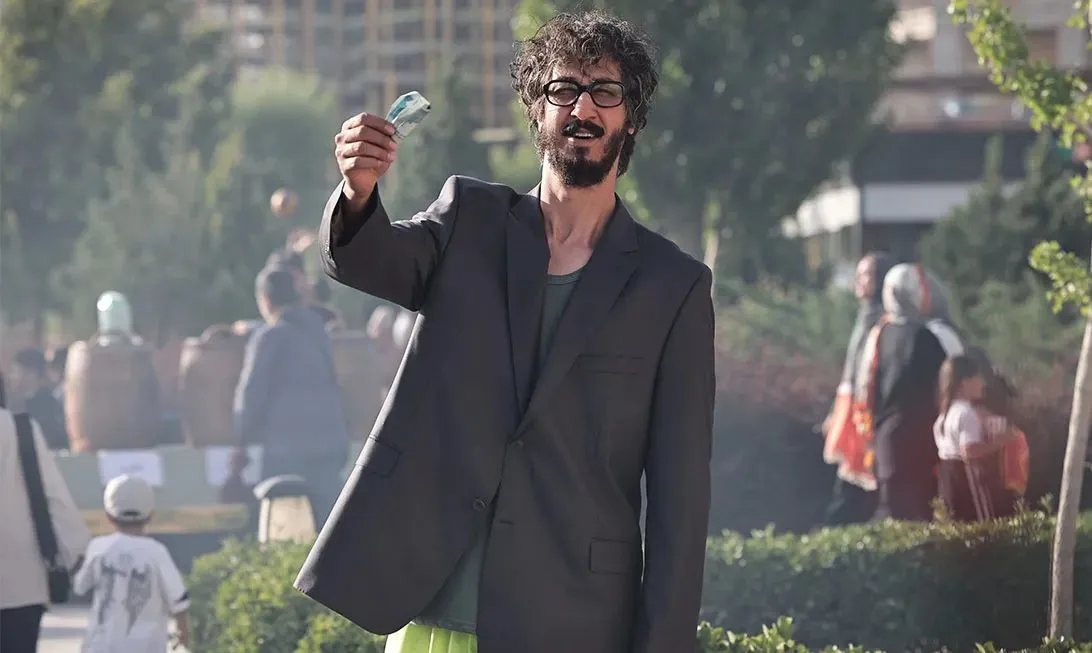
Cinema sometimes acts as a mirror that shows us the reality of society. The “glasses” do exactly the same, but not as expected. This film is a mirror of the crisis of the identity of today’s Iranian cinema; Where storytelling has taken its place in marketing and the art of surrendering business.
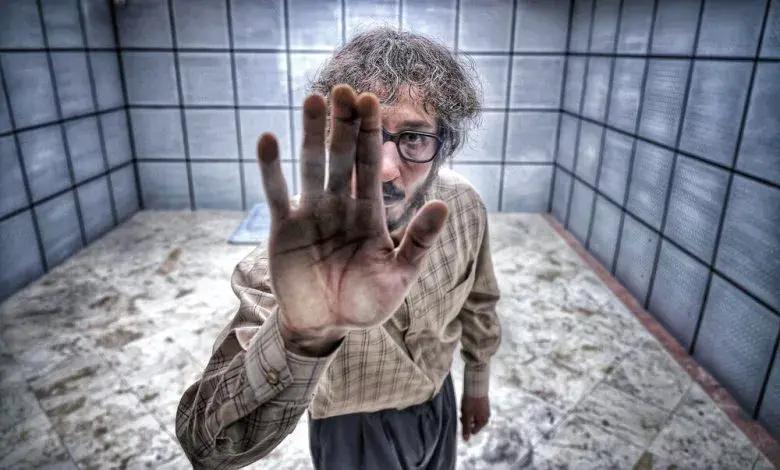
The story of the “glasses” begins with “Free Halim”, a simple man responsible for cleaning the bathroom of one of the city’s parks. His ordinary life is transformed when his image is mistakenly released as one of the most dangerous terrorists in the world, an image that Pentagon has awarded to arrest his owner at $ 30 million. The root of this mistake goes back to a simple moment that Halim had provided personal photos and identity documents to Internet fraudsters to obtain a simple flask. From this point, he is like a hub among power actors. It takes him to get him from China to Ecuador, from Chinese Yakuz to pirates.
The story of free Halim, a man who turns into international terrorism from the park’s cleaners, is an attractive idea for social humor. But what we see on the screen is more like a puzzle whose pieces do not break. The film begins as if it is supposed to be a comedy, as if it is a social drama and suddenly in the final decides to become a Hollywood action. These genre changes are formed not on the basis of the logic of the story, but on the basis of raw hopes to attract the maximum audience. It is as if filmmakers think that if they take a little from any genre, it would be the case. Result? A work that does not perform any genres properly.
The film has been filmed in different locations, and Halim, as I said, is handled every time between different powers. However, this is a handless hand without logic, and for example, when Chinese Yakuzas arrest him, pirates suddenly appear and take him. Why? How about? Who? There is no explanation.
In parts of the next paragraph, there is a risk of the story.
Defend the audience or change the genre?
At the end of the film, everything suddenly changes. Halim, who has so far been a complete example of simplicity and simplicity, suddenly becomes an international strategist who designed all this complex map to infiltrate the Pentagon! This rotation, which is supposed to be surprise, is actually more like a deception of the audience. The problem is that this change has no support in the previous 5 minutes. The only sign of this in the film is the painted photo of his former mistress, which has not been properly developed. That is, the filmmakers expect the audience to see the 5 -minute Halim as a simple person who was sacrificed, then believed in the last 5 minutes that he was actually a genius who deceived everyone. This type of rotation is effective in cinema when symptoms are already planted, symptoms that are recognizable in the second view. But there is no such thing in the glasses. Even the normal behaviors of Halim, such as mews, have no explanation. As a result, that kind of miraculous salvation not only destroys belief, but also questions the final claim of the film. How can anyone draw a plan that depends on pure and miraculous accidents?
If you were hoping that the fossil -making team will take a step further after success, I would say that you are wrong. The man’s glasses are not only a step forward, but also a few steps behind the starting point. Repeat the same formulas, the same personality types, the same kind of humor – only this time with more budget and more claims. But money and claims cannot replace creativity. Foreign locations and non -Iranian actors who do not have a good level of acting and seem extremely artificially unable to hide the fundamental weakness of the script. Even the action scenes that were supposed to be of particular charm are more like training sequences that do not have good camera angles.
Star -based syndrome
Perhaps the most important challenge for the “glasses” is that it has put all his weight on the shoulders of a star. Bahram Afshari is a talented actress, but it looks more like a brand than a cinematic character. The problem is that when a film is completely dependent on a person’s charm, that person himself becomes victimized. The viewer no longer considers his presence to be a sign of quality, but he expects to repeat the same things he has seen before. This is a defective ring that eventually burns both the star and the cinema poor. This is what we see in the man. Bahram Afshari does not offer a new character, and free Halim seems to be like an abstract of Afshari’s humor characters in other films.
A mirror of today’s situation
The glasses are actually a complete symbol of the bigger problem that has gone beyond cinema, the whole of our society: turning everything into a car -made machine. In this atmosphere of economic oppression, art has also been forced to redefine its priorities. But the point is that this redefinition often ends at the cost of losing the original identity. In this space, the main question is whether the film has something to say, but whether it will sell. This logic is commercially understandable, but when it becomes only criteria, it destroys art. The man’s glasses are the product of this logic. A film made from day one to the end based on market calculations, not based on artistic or intellectual necessity. Even the selection of actors, locations, and even the time of the film, is all based on how to make the most.
But the contradiction is that this approach is ultimately even commercially harmful. A audience who once felt deceived will be more cautious the next time. People’s confidence in cinema, which has worked hard to build for years and is still in debate, can be destroyed in a few weak projects. This approach not only hurts the quality of the works, but also underestimates the audience. It is as if it is assumed that people want nothing but simple entertainment and have no ability to understand. This is an offensive view, because experience has shown that these people respond positively when faced with quality effects.
The problem of “glasses” is not just about the film itself. This work reflects a deeper crisis in the Iranian cinema star system. A system that puts all its eggs in one basket instead of raising all -out and capable actors. Bahram Afshari is the victim of this system, not the culprit. He is a high potential acting and respectful theater experience. But when all the pressure of the industry falls on his shoulder to play any role, he runs any genre and meets any expectation, it is natural that the result is not satisfactory. This problem is not just about Afshari. Mehdi Hashemi has also been trapped in the film. Ultimately, this is the loss of talent, whether for the actors themselves, or for the cinema.
The fundamental problem is that this system confines them in predefined formats rather than an environment for the growth and prosperity of talents. The result is that not only are the new works are repetitive, but the actors themselves lose the ability to match and flex.
Long -term cultural consequences
What the man of glasses and similar effects are doing is beyond harm to the cinema industry. They are changing the cultural expectations of the people. There is a generation that may think that this level of content is natural and acceptable. This impact is especially destructive on the younger generation. Young people who need to be familiar with quality works to grow their tastes and thoughts are exposed to works that are more like long advertising than artwork. On the other hand, this situation is also harmful to the industry itself. Young filmmakers who want to get into the profession, when they see such works succeed, may think that the way to success is going on. This makes creativity and innovation less valuable.
Cinema we deserve
In a society that softens a variety of daily pressures and concerns, cinema can be a shelter for healthy and clever recreation. But this shelter makes sense when it is made with respect to the intelligence of the audience, not by undoing it. Our cinema needs works that not only make people laugh, but also to engage their thinking, a glasses were an opportunity to show that Iranian cinema can go beyond old formulas and provide something new and valuable. Unfortunately, this opportunity was missed. But the lessons that can be taken from this experience can pave the way for better future works.
Positive Tips
- Attractive basic idea
- The variety of locations
Negative points
- Scattered script
- An irrational end rotation
- Extreme star -oriented
- Noveless action scenes
Movie ID “Man of glasses”
Director: Karim Amini
Author: Hamza Salehi
Cast: Bahram Afshari, Mehdi Hashemi, Hooman Haji Abdullahi, Sam Nouri, Adriano Toulos, Mohammad Heydari, Amir Karbala’i Zadeh, Yadollah Shadmani
Product: 1, Iran
Summary: The story of “The Man of Lights” begins with free Halim, a simple man responsible for cleaning one of the city’s parks. His ordinary life is transformed when his image is mistakenly released as one of the most dangerous terrorists in the world, an image that Pentagon has awarded to arrest his owner at $ 30 million. The root of this mistake goes back to a simple moment that Halim had provided personal photos and identity documents to Internet fraudsters to obtain a simple flask. From this point, he is like a hub among power actors.
The criticism of the film “The Man” is the author’s personal view and is not necessarily the position of DigiKala Mag.
Source: DigiKala Meg

RCO NEWS