

Virtual reality can in a incomplete way transfers the user to distant experiences. When a person shoots a virtual reality headset, he or she is able to see how surgery is performed or circulates in the Louvre and even experience a detention scene. However, there is one thing that virtual reality has yet to simulate, and that is the experience of eating a meal. But this may soon be changed thanks to a new tool called “E-Taste”, known as the E-Taste.
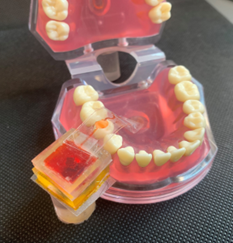
Researchers at Ohio State University in the journal Science Advances have described the details of how the device works. They designed a small electromagnetic pump attached to a channel of liquid chemicals, and when combined in the correct ratios, they can simulate the taste of coffee, lemonade, cake and other foods and drinks. This chemical fluid is then transferred through a gel. The user ultimately feels the taste in the form of a liquid in his mouth. Researchers can remotely control the severity of the perceived taste of this gel. Although the initial group of human volunteers had trouble distinguishing different taste profiles, this study shows that creating an experience like a virtual acetic restaurant may not be far from reality.
The E-Taste structure consists of three separate parts. The first part contains a set of sensors that are responsible for analyzing an edible or drink and can identify common molecules such as glucose and glutamate that are effective in its unique taste. The various compositions of these chemicals are corresponding to the five main flavors: sweet, sour, salty, bitter and oamami. After the sample analysis, the system encrypts the data and sends the wireless to the E-Taste device. Researchers do not even need to be present in a room or even in a joint state to convey these taste data.
The second part is dedicated to recreation of the initial taste. A small electromagnetic pump has several liquid chambers filled with chemicals associated with different tastes. These materials are mixed in the composition area with the ratios estimated based on molecules in food or drink. Once the taste profile is desired, the researchers can increase or decrease the overall taste of the pump cycles by changing the pump cycles. The final mixture is then converted to gel. The flow of water through the gel transmits the flavors to the user’s mouth. This process makes the person perceive a certain taste even when there is no real food or drink.
The new device testing was performed on 4 human volunteers and had a combination results. In the positive part of the story, participants were able to distinguish the severity of sour taste profiles with about 2 % accuracy. But when the researchers asked them to detect the difference between simulated cake, scratch eggs, coffee and fish soup, the results were not very decisive. This difference is necessarily not merely to the poor performance of the device, because even in the real world, the taste of taste is subjective and individual. Factors such as olfactory, memories, and visual symptoms can affect our perception of the taste of food. Two people may understand a little different flavors from a single meal.
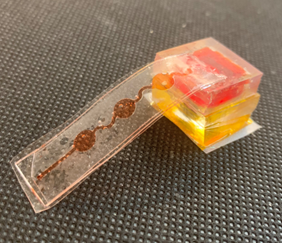
Interestingly, this is not the first attempt to add taste to virtual reality. Last year, researchers at Hong Kong University designed a hand -made handheld handheld tool that could allow people to experience some flavors in virtual reality environments. That device contained chemicals that could produce 2 different flavors. When the voltage was applied to the surface of the gel, the chemicals moved upwards and mixed with the user’s saliva and created a virtual taste experience.
Although adding taste to virtual reality is a new subject, trying to add more feelings to the media has been around for nearly a century. In the 1980s, several cinemas tested how the fragrance can be scattered in space during the screening of the films. A Swiss advertising manager named Hans Lavbeh then designed a new system known as Smell-O-Vision and used a sophisticated network of pipes in theaters to publish aromatic fragrances at specific moments.
In recent years, Japanese researchers have designed home television called “Smell Screen” and uses gel bullets to release fragrant vapors to audiences. Just a month ago, Sony unveiled a system where users could enter a cubic -shaped platform surrounded by LED displays and experience famous PlayStation games such as The Last of Us. Sony has announced that in addition to the 2 -degree visual experience, players will be able to feel the odors related to the game environment.
E-Taste researchers believe that their tools can have applications beyond video games. Theoretically, the technology may someday allow users to try it virtually before ordering food. Medical specialists may also use this device to remotely evaluate the ability of patients to diagnose flavors, which can be an early sign of the disease. In addition, the new device may be used as a tool to restore a taste experience to people with certain neurological disorders or diseases, such as long kavid, which disrupts their taste.

RCO NEWS