26 August 1404 11:57 pm
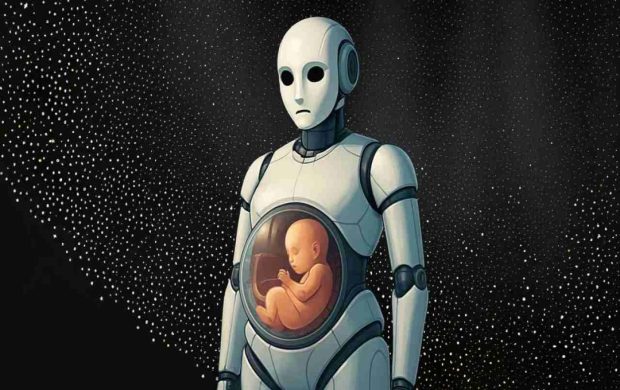
China seeks to build the world’s first human robot. This has aroused widespread ethical discussions.
A Chinese technology company is trying to launch a system that could probably be the world’s first human pregnancy robot.
The first human robot is the world’s pregnant face on the way
The idea provided by Kaiwa Technology based in Guangzhou, involves the design of a human -facing robot with an artificial uterus in the abdomen that aims to nurture the fetus during a complete ten -month pregnancy period and ultimately the birth of the baby. The robot is planned to completely simulate the fetal growth process from the moment of fertilization to delivery.
According to plans, the official introduction of the robot is forecast for 2026 and is estimated at $ 13900. This product is to be suggested to people who want to avoid the physical and psychological stress of human pregnancy as a replacement for natural pregnancy.
The publication of this news has raised extensive discussions at the public level; From serious ethical concerns and social consequences to hopes among couples who face infertility and consider this technology as a new way for parental experience.
In recent months, Chinese researchers have also introduced a system called Geair, the world’s first artificial intelligence robot. The robot is designed with automatic motion capability and intermediate pollination ability to reduce costs, shorten cycles, and increase productivity of breeding and production processes.
The bold idea of using an anthropomic robot as an alternative pregnancy was presented at the World Robotics Conference in Beijing by Kaiwa Technology founder and a member of the Naniang University of Technology. He emphasized that the project is not just an incubator or fetal breeding system, but rather a real -dimensional human robot equipped with an artificial uterus in the abdominal part and is capable of recreation of the entire process from fertilization to delivery.
The central innovation of this project lies in artificial uterine technology. In this method, the fetus grows in an environment of synthetic amniotic fluid and the nutrients needed through a special tube are transmitted to it, a process that accurately reflects the pattern of normal pregnancy. Dr. Zhang has claimed that the technology has now reached the level of scientific maturity in laboratory and only needs to be integrated into a human robot structure to allow for real interaction between humans and the robot during pregnancy.
Kyfong predicts that his pregnancy robot prototype will be ready in less than a year and will be less than $ 13900. In the context of the ethical and legal dimensions of this emerging technology, he pointed out that negotiations with the authorities of Guangdong Province had been conducted and a set of related proposals had been presented as part of the process of policymaking and legislation.
The background of the studies conducted in this field
The artificial uterus and its associated technologies in animal studies have shown hopeful results in recent years. In 2017, researchers at the Philadelphia Pediatric Hospital were able to raise a premature lamb (equivalent to 23 weeks of human pregnancy) in a biobeg. The biobeg was actually a transparent vinyl bag filled with synthetic amniotic fluid based on a warm salt solution. The nutrients needed were transferred to the lamb’s body through a tube attached to the cord.

Despite such achievements, existing artificial uterine technologies act more similarly to infant incubators in the current situation and are able to support life only after part of pregnancy.
In order for Dr. Zhang’s conceptual design to be implemented, this technology must advance to support the process of fertilization, implantation, and complete pregnancy. He has not yet disclosed the exact details of these steps, and this raises many questions about scientific challenges, ethical considerations, and legal barriers to the future of the technology.
(tagstotranslate) Pregnancy (T) Human Robot

RCO NEWS