

In 2025, the human robotics arena had a significant leap. The advances of artificial intelligence, advanced sensors, and modern designs have created robots that not only move like humans, but work in real environments, interact, and even make decisions. These robots play a variety of roles from factories to homes and increase human dependence on smart cars. In this report, we introduce the top seven humanitarian robots of the year 2025, each with unique capabilities form the future of technology.
With the advent of advanced artificial intelligence such as large language models and deep learning, human robots have left the laboratories in 2025 and entered everyday life. Following companies such as Boston Dynamics, Tesla and Figure AI, with large investments, have optimized these cars for industrial, service and even entertainment. These robots not only increase efficiency, but also address challenges such as safety, ethics and the impact of the labor market. Here’s a closer look at these robots.
Introducing 7 Top 2025 Human Robots
Atlas of Boston Dynamics
ATLAS, one of the modern robotic symbols, in 2025, with its completely new electric version, has moved the boundaries of human movement. Developed by Boston Dynamics, the robot uses advanced electric motors for accurate and agile movements. “ATLAS” is capable of running, jumping, perseverance and even balance in rough terrain at speeds of up to 2.5 m / s. With 28 articles and infrared, stereo and depth sensors, the robot can actually analyze the environment and perform tasks such as searching and rescuing in dangerous areas.
2025 advances include improving battery performance (up to 4 hours of continuous activity) and integrating AI to learn from real data. ATLAS is used in heavy industries such as construction and relief and can carry loads of up to 20 kg. The robot, with a body of titanium and aluminum, weighs about 89 kg and is 1.5 meters high.
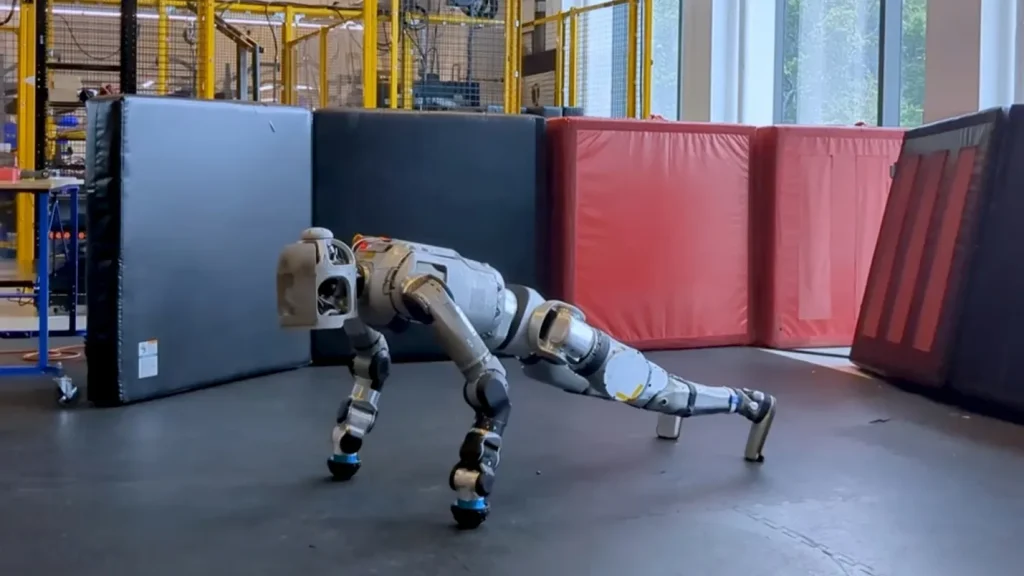
Figure 02 from Figure AI
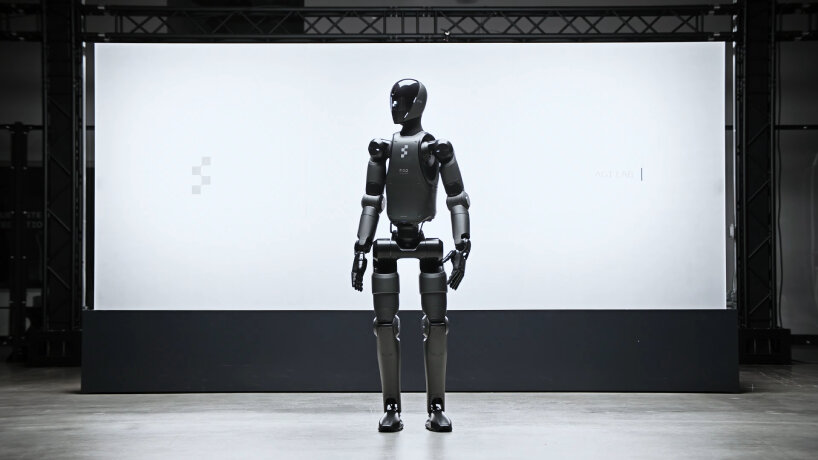
Figure 02, a product of Figure AI, is recognized as one of the most advanced business robots of 2025. Designed by Sleek and internal cabbage, the robot uses five -fold hands with 16 degrees of freedom that allows for precise manipulation of objects. Equipped with six RGB cameras, visual and NVIDIA GPUs, Figure 02 can have natural conversations and perform tasks such as assembling parts in factories.
In 2025, the robot is tested by 50% more battery capacity and capability to carry up to 25 kg, tested in factories such as BMW and is ready to mass production. Key advances include integrating Openai models for audio and visual interaction. Its applications are prominent in logistics, production and even home care, where it can work with humans without the need for constant supervision.
Optimus from TESLA
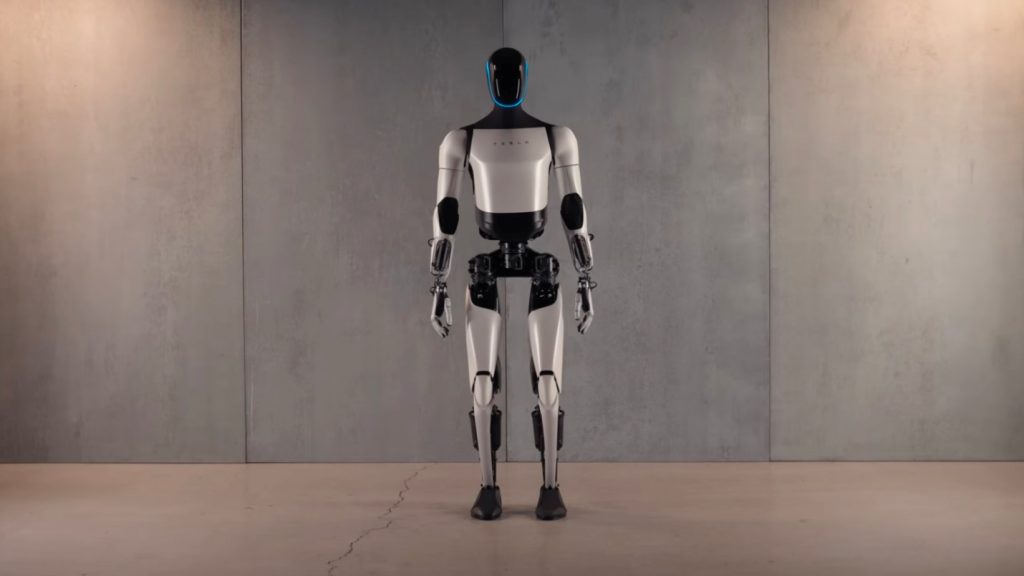
Optimus Gen 2, the Tesla Human Robot, entered the limited production phase in 2025 and more than 1,000 units have been prepared for Tesla factories. Developed by Ilan Musk and the Tesla team, the robot is capable of doing repetitive tasks such as car assembly with a double walk system, balance sensors for balance, and several cameras to detect objects. Its 2.3 kWh battery supports up to 5 mm / h transportation up to 20 kg.
2025 advances include improved hands for accurate work and onboard neural network for data learning. “Optimus” can respond to voice commands and be used in the future for homes such as cleaning or care for the elderly. Its estimated price is about $ 30,000, which makes it a cost -effective option.
Ameca of Engineered Arts
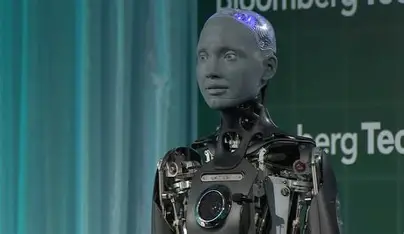
Ameca, focusing on human interaction, is highlighted in 2025 with its unique expression capabilities. Developed by Engineered Arts, the robot has more than 50 Actuator for faacial statements such as smiles, frowns and even dance. Equipped with microphones, eye and chest cameras, and face recognition software, AMECA uses Gpt-4 models for smart conversations and can say or imitate the sound.
This year’s advances include improved fluid physical movement and modular enhancement, though it still cannot walk. Its applications in customer service are education and entertainment, where it provides natural interaction with humans. Ameca, with more than 61 degrees of freedom, is one of the most realistic robots.
Apollo from Appronik
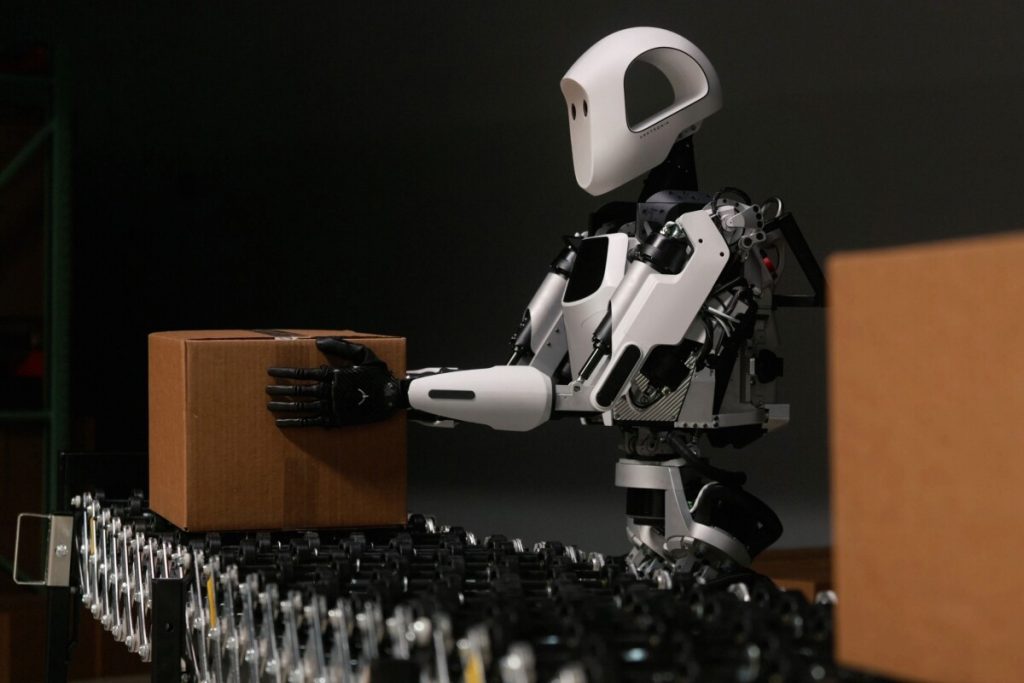
Apollo, the product of “Appronik”, is an industrial robot focusing on safety and cooperation. In 2025, the robot with a capacity of 25 kg and replaceable battery (4 hours of activity) is used in factories such as Mercedes -Benz for heavy work such as lifting and assembly. Equipped with status display LEDs, advanced force control and Intuitive software, Apollo can work with humans without risk.
Key advances include modular design for customization and integration of AI for low skills. Its applications are in warehouses, construction and production, where tirelessly increases productivity. The weight of 72.6 kg and the right altitude makes it ideal for industrial environments.
Digit from Agility Robotics
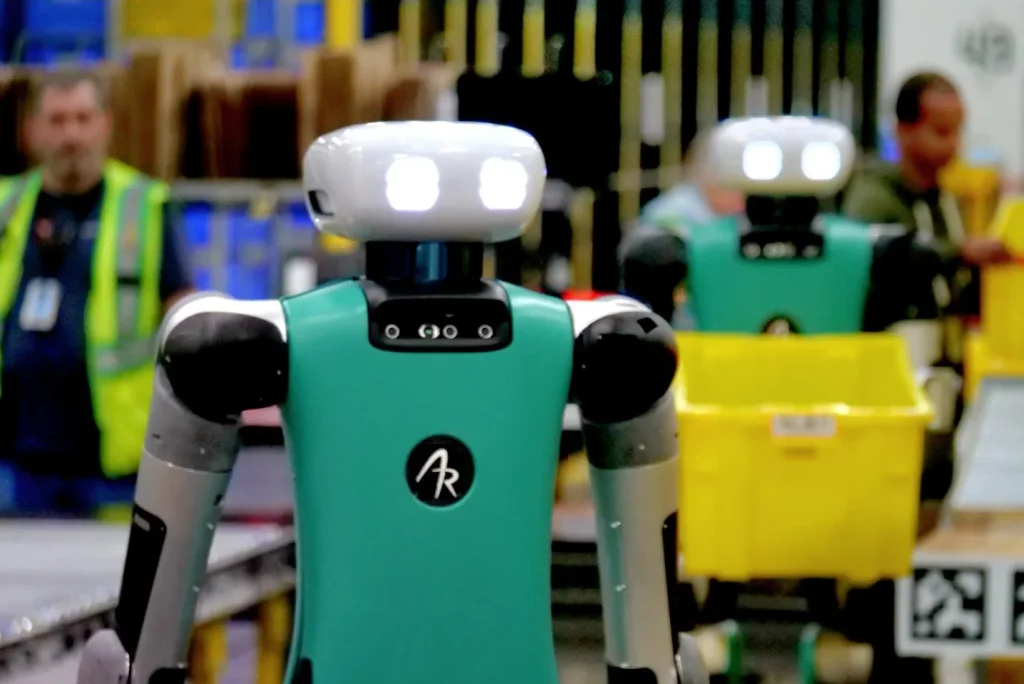
Digit, developed by Agility Robotics, is an agile robot for logistics. In 2025, with Robofab, which produces 10,000 units annually, “Digit” is capable of carrying packages and navigation in warehouses with curved legs to move to a variety of surfaces, Lidar sensors and four depth cameras. The 1.2 kW battery provides an 8 -hour durability.
Advances include the real Linux operating system and lightweight materials such as aluminum and carbon fiber. The main applications are in the delivery and management of warehouses, which can reduce costs.
Unitree G1 from Unitree Robotics
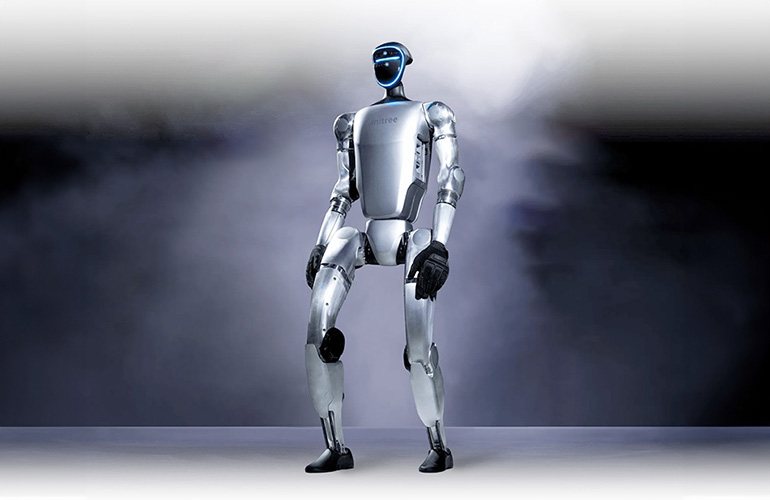
Unitree G1, a Chinese affordable robot, is known in 2025 with its extraordinary flexibility. Developed by Unitree, the robot with 23 degrees of freedom, 3D Lidar and depth cameras can make long jumps and quick movements. The 2-3-hour battery and the compact design make it suitable for research and lightweight services.
Advances include low cost and application in elderly care or education. G1 is an ideal option for emerging markets, focusing on speed and efficiency.
The future of coexistence with robots
2025 is a turning point in the history of human robotics, where robots such as “Atlas” and “Optimus” have become not only auxiliary tools but also human intelligent partners. These advances, while increasing productivity in industry, raise challenges such as unemployment and ethical issues. As investments continue, by the end of the decade, robots are expected to become an integral part of everyday life. But the key is to ensure peaceful safety and coexistence so that technology will remain in the service of human beings.

RCO NEWS