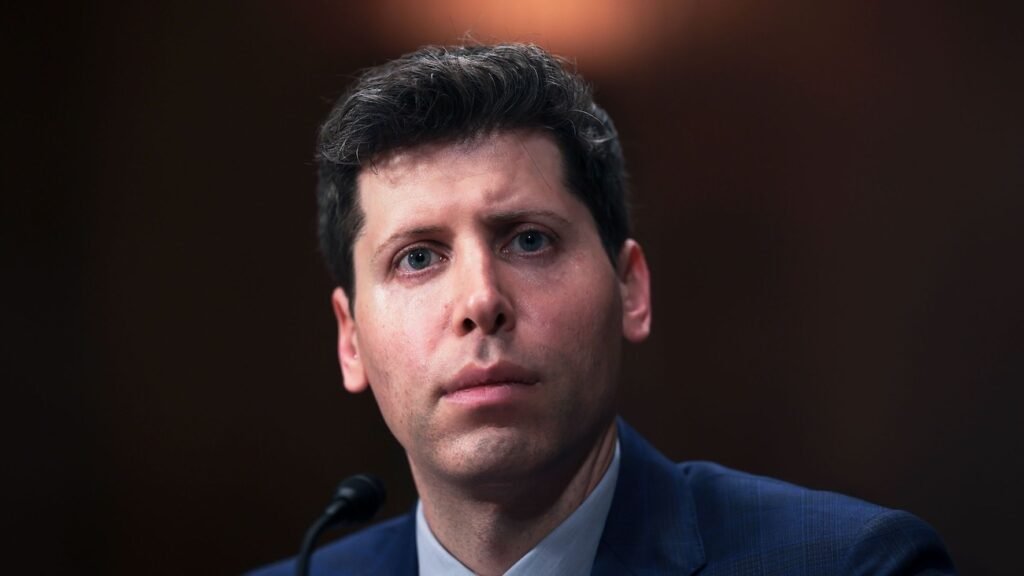
Sam Altman, CEO of Openai, called the Z generation “the most lucky generation in history”. He believes that, despite the growing fears about the elimination of jobs, artificial intelligence by democratizing powerful tools has provided young people with unprecedented opportunities for entrepreneurship and creativity; Opportunities that allow them to create a billion dollar impact with small teams.
In an interview with Huge Conversations, Sam Altman addressed one of the biggest concerns of our era, the impact of artificial intelligence on the labor market. While confirming that “some job categories will completely disappear”, he did not reject the forecasts about replacing half of the office jobs in the next five years, but provided a completely different and optimistic view for the younger generation. “(Replacement of jobs) has always happened in history and young people are the best to match it,” he said. “I am more concerned about a 5 -year -old than a 5 -year -old.”
Sam Altman’s comments on the positive impact of artificial intelligence on the gene generation
Altman’s optimism is rooted in a fundamental belief: Artificial intelligence has eliminated the barriers between “idea” and “execution”. He believes that with the advent of powerful models such as Gpt-5, each person has access to tools that were only available to large companies. Altman imagines a world in which a person alone can launch a billion -dollar company; The work that needed multi -team teams in the past.
He predicts that along with the elimination of some jobs, they will also emerge “completely new, exciting, and high -income jobs”. “A college student may leave the university for another five years for an exploration mission in the solar system with a spacecraft,” he said.
However, this optimism contradicts current worrying realities. According to Goldman Sax’s analysis, the university degree no longer guarantees much job, and the job market for new graduates is weakened. Also only in July, a wave of expulsion was reported, almost half of which was directly related to artificial intelligence implementation.
In another part of this conversation, Altman addressed another big issue: How will society be adapted to a saturated world of artificial intelligence content? He believes that our definition of “reality” will gradually change, just as today’s iPhone photos are extensively processed with artificial intelligence. “The media is always a little real and a little unrealistic,” he says. He emphasized that the survey of this future requires “humility and openness to new solutions.”

RCO NEWS