

15 June 1404 at 12:25
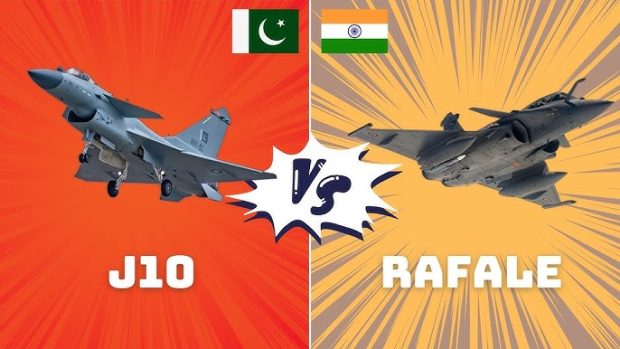
Reports report the overthrow of the Indian Rafal by the Chinese J-10c fighter in an aerial conflict; Has a new chapter in the South Asian air battles began?
Recent reports suggest an unprecedented and unprecedented incident on South Asia’s stressful borders; The overthrow of Indian Rafal, one of the most advanced Indian Air Force fighters by a Chinese J-10C fighter, is an event that could start a new and more dangerous season in the region’s military and geopolitical equations. The incident raises serious and fundamental questions about air superiority, existing military doctrines and the efficiency of the new generation of modern military equipment and can have widespread consequences for the countries of the region.
According to preliminary and unattainable reports, the stressful air clash occurred during a retaliatory operation from India in response to previous movements. The exact details of this military confrontation, including the exact location and conditions of the conflict, have not yet been fully published and are in a state of uncertainty.
Possible and wide consequences of overthrowing Indian rifle
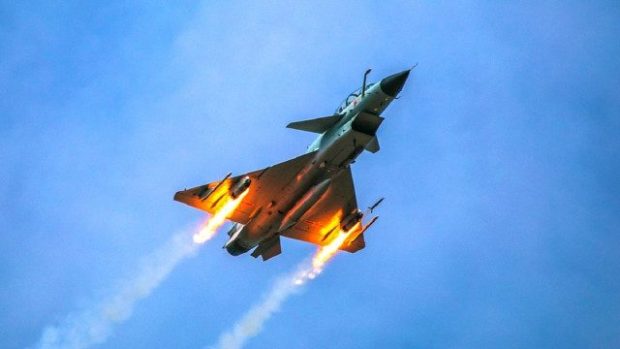
However, numerous news sources report the successful and surprise performance of the Chinese J-10c fighter, which is said to have been used by the Pakistani Air Force, against the advanced French fighter Rafal. This will be considered not only a significant tactical victory, but also an important strategic achievement for the Pakistani Air Force and China’s defense industries, and could also affect the Chinese weapons export market.
Surely military analysts believe that the overthrow of Indian Rafal can have widespread and dominance consequences for fragile power in South Asia. The Rafal fighter, known as one of the most advanced and capable four -and -a -half -generation fighters in the world, is bought by India at a high cost, a spine and a symbol of the country’s air force renovation.
French Rafal capabilities were questioned!
The success of a Chinese fighter, often classified as a generation behind Rafal, in the abolition of it raises serious and fundamental questions about the actual capabilities of the French aircraft, the effectiveness of its defense systems, as well as Western alleged technological superiority over China’s military advances. This could lead India to revise its defense strategies and future weapons purchases.
On the other hand, the incident could potentially lead to the significant exacerbation of tensions between India and Pakistan, two long -standing nuclear competitors, as well as between India and China, which have widespread border disputes. Increasing mistrust and the possibility of limited border conflicts after such an event is not out of the question. Some reports also refer to the failure and poor performance of some other Chinese missiles owned by Pakistan during these conflicts or similar events.
This also adds to the complexities of the event’s analysis and the overall evaluation of China’s military capability, indicating that all Chinese weapons systems may not be of the same quality. Now we have to wait and see what the official reaction of the countries involved and the international community will be, and how the incident will affect the future of designing air battles and deterrence strategies in this sensitive and strategic area. Undoubtedly, the case and analysis of the issue of the overthrow of Indian Rafal will remain at the top of the military and security debate.
This important event represents an increasing and unpredictable dynamics in the field of modern military technology and the need to re -evaluate and continuously evaluate air and defense capabilities by all countries in the region. A new chapter of arms competitions, the show of power and possible confrontations in the South Asian sky, appears to have begun with the arrival of new actors and technologies.
(tagstotranslate) Indian army

RCO NEWS