

If you are interested in the program of programming, you must have heard Python’s name. But what is Python? Python is one of the high -level, multipurpose and interpretive programming languages designed and released by Gido Van Rostom in 1991. From the outset, Python’s focus was on code readability and simplification of complex programming structures; A feature that distinguishes it from many other programming languages. Python’s minimalist design and extensive use of indentation instead of conventional writing symptoms make Python in simple language and the structure of its codes is transparent and understandable, even for those who are novice. So if you would like to learn more about this language, reading this is not a blessing.

What is Python
Python is a high -end programming language, object -oriented, interpretive and all -purpose that has gained a key place among the world programming languages with its continued growth and welcome. Python’s design philosophy focuses on simplicity and readability; So that the maximum performance can be provided with minimal complexity. Its syntactic structure is such that even newcomers can understand and write practical codes in a relatively short period of time. If you are looking to learn this programming language, the need for programming equipment is felt that laptop content for programming, guide to buying the best monitor for programming and programming keyboard can be helpful.
This programming language supports different styles; Including object -oriented programming, procedure and function. It has powerful standard libraries that cover a wide range of applications, from text processing to web development and artificial intelligence. In addition, the large and active society around Python has made it a ever -growing language.
Despite the simplicity of learning, Python is a very serious and reliable language for industrial and scalable projects. Large companies such as Google, Facebook, NASA, Netflix, Dropbox and Instagram use Python in their infrastructure and scientific projects. It also has a special place in the field of computer science education and is taught in many universities and courses as a preliminary language.
It is also an interpretive language, meaning that the codes are executed by the line and do not need a separate compile phase. This feature makes the software test faster, but sometimes it may be slower than comparable languages. However, in many real applications, the pace of implementation of Python can be optimized using native libraries or interfaces such as Cython or Numba.
In terms of programming paradigms, the Python program is very flexible. Both object -oriented programming, procedural programming, and even functional programming support. This multiplicity allows developers to choose or apply the appropriate pattern to the project needs. In addition, the Python Memory Management System automatically operates, which greatly eliminates concerns about resource liberalization.
Python’s extensive libraries have transformed it into a real multipurpose language. Python is designed to be independent of the platform. This means you can write a code in Windows and run without significant change in Linux or MacOS. Python also has various executive environments developed for specific applications; Like micropython for hidden systems or Jupyter for interactive and data analytics.
The Python User Society is one of the most active and largest programming communities in the world. This community plays a significant role in the development of libraries, tools, problems and language teaching. Python’s notary is very comprehensive, clear and precise, and there are many open source projects that provide practical patterns for developers.
Python is a serious and industrial language with all its simplicity and user -friendly. Python has also been accepted as the main language of teaching the concepts of computer science and artificial intelligence. It is used in scientific research, industrial projects, and even at the level of governments and military organizations.
What is Python programming?
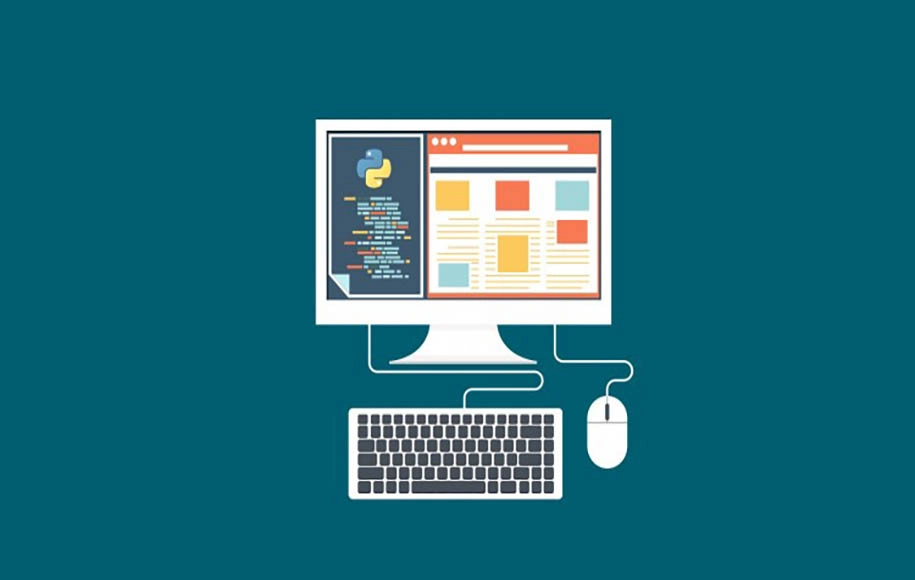
What is Python Programming? Python programming is the process of software development, script writing, data analysis and even implementation of artificial intelligence models with the help of Python language. With its simple yet powerful structure, it has become a common tool in computer science, software engineering, data mining, automation and development of smart systems. Python programming encompasses from elementary levels such as writing code to calculate or work with files to very complex levels such as processing satellite live data or designing personalized recommendations.
Unlike languages that have complex structure and depend on heavy abstract concepts, Python uses minimalist design that helps reduce logical errors, improve code readability, and rapid development. In Python, the need to define the type of data explicitly, which increases productivity in the early phases of development. Also, the presence of high -level structures such as lists, dictionaries and sets along with highly efficient interior functions reduces complex operations to several lines.
In addition to supporting object -oriented, Python is also capable of using functional and routine programming patterns. It supports Introspection and Metaprogrammming, meaning that the internal structures of objects can be accessed or dynamic at the time of running. Such features are very useful in making sophisticated tools, automatic testing and flexible frameworks.
One of the most important benefits of Python programming is the huge volume of foreign libraries and modules developed by its users. For each area, Python has its own tools: in the numeric and scientific calculations of Numpy and Scripy, in the learning of PyTorch and Tensorflow, in the analysis of NLTK and Space’s natural language, in the development of games, Pygames and in the network and cyber security of Paramiko and Twis.
Python programming can be easily run on a large scale due to its extensive support for virtual machines and clouds. Multiple or parallel processing can be used using tools such as Multiprocessing and Concurrent.futures. In the field of education, Python has become the first language of teaching programming in many universities and schools because of its simplicity, strong documentation and active community. Using environments such as Jupyter Notebook in interactive programming training also shows its high flexibility.

If you want to compare Python programming with other languages, it should first be mentioned in languages such as C and C ++, which, although more efficient, syntactic complexity, manual memory management and higher development time makes them less suitable for fast and scalable projects. Java, although it has a stronger object structure and a more powerful Type system, requires more coding than Python and is not as popular in car learning and learning projects as Python.
On the contrary, languages like JavaScript are in the Frances of the Web, but they are not as much as Python in data analysis, machine learning or system applications. R is specifically developed for statistical analysis, but in terms of diversity of applications, flexibility and community support are more limited than Python. Languages like Ruby, which have a simple structure, have not grown as much as Python and have less influence in the technical community. Also newer languages such as Go and Rust, although leading in the optimization of the system and security, are still far from Python in terms of libraries and ease of learning.
Download Python
The first step is to download and install the right version of this language to get started with the Python programming language and its installation. This programming language is an open source or open source software and is available for free from the Python official website. This website is known as the official address of www.python.org and is a reputable source for receiving different versions of Python. In selecting the version, there are usually two main branches: stable Python 3 and older Python 2 versions, which are no longer official support and are not recommended.
On the download page, the website automatically detects your operating system and offers the right version for Windows, MacOS or Linux. For Windows users, the Installation file is available with an .exe extension and for MacOS users .pkg file or compressed versions of installation. Linux users can usually install the right version using closed management tools such as APT or YUM, but if they need the latest version, it is advisable to use the source cuff provided on the official site and compile it manually.
When installing on Windows, the very important thing that many beginners ignore is activating the Add Python to Path option at the beginning of the installation process. This option allows the Python commands to be observed through Command Prompt or Powershell and do not require manual installation path adjustment in system variables. Also in the installation process, you can choose to install Python for all users or just for the current account.
In Unix -oriented operating systems such as MacOS and many Linux distributions, Python is usually installed by default, but these versions may be outdated or do not meet the specific needs of the project. In these cases, it is recommended to use tools like Pyenv or Anaconda to manage different versions of Python. These tools allow the user to install several different copies of Python on a device and move them based on projects or environments.
For people who intend to work on data mining, machine learning or data analysis, it is recommended to use distributions such as Anaconda instead of raw Python. Anaconda is a complete package of Python with scientific libraries and virtual environment management tools and makes the installation process easier for users.
After installing the Python, you can make sure to be successful by executing the Python or Python3 command in the terminal or command line. The PIP tool used to install Python’s external packages and libraries is also automatically available with the original installation. Checking the installed version with the Python -Version command and checking the PIP installation with PIP -Version is one of the primary but important steps after installation.
Note that installing a suitable editor such as Visual Studio Code, Pycharm or even lighter environments like Thonny can make Python programming much more efficient and professional. These editors typically support professional development facilities that are especially useful for newcomers.
Install Python in Windows 7
To install Python in Windows 7, you must first go to Python.org and select the right version of Windows from the Downloads menu. You get a file with an .exe extension designed for graphical installation.
After running the installation file, a window opens with two options: Install Now and Customize Installation. If you only want to install Python with default settings, click Install Now. But be sure to enable the Add Python to Path before; This option is very important and introduces the path of Python to the operating system.
If you need to determine the location or optional activation of some features such as PIP or IDLE, use the Customize Installation path. Passing the installation process, a few minutes later Python will be installed on your system. After the installation is completed, you can run it from the Start menu or by typing the Python command in CMD. To check that the Python is installed correctly, enter the Python -Version command into the command line.
If in Windows 7 you encounter an error like Python is not recovenized, the PATH probably not adjusted properly. In this case, you can manually add the Python installation path to the PATH variable in System Properties.
Install Python in Windows 7
The Python Installation process in Windows 7 is almost similar to Windows 7, but because of the up -to -date architecture of Windows 7, there are a few technical tips to ensure the proper implementation. First log in to the official site Python.org and get a Windows version of the Downloads section.
On the exe file. Double -click to run graphic installation. In Windows 7, it is emphasized that you check the Add Python to Path option. You can then click Install Now or, if needed, select the Customize Installation option and enable features such as PIP, TCL/TK, Documentation and installation support for all users.
In the Advanced Options step, you can enable the precompile Standard Library option to reduce the initial run of the applications, as well as select Python installation in the Program Files path to make it easier to manage, especially in systems that have multiple users.
After the installation is completed, you can open the Windows Terminal or Powershell program to ensure the correct performance and enter the Python or Py command. In Windows 7, the Windows Terminal program is installed by default and Python runs better. Also use Pip Install to install packages and create virtual environments with Python -m VenV if needed.
Another important point in Windows 7 is better support for the ARM64 versions on some devices. If your device uses ARM architecture, it is best to download the Python ARM version, which is available in the other part of the official site downloads. Python installation in Windows 7 is very smooth and fast, but advanced settings can have a big impact on the development of professional software when installed.
Python or JavaScript
If you are in doubt about learning Python or JavaScript, you should know that both programming languages are very popular, each playing an important role in today’s software ecosystem. However, there are many fundamental differences in terms of design philosophy, how to implement, applications, and the community’s community between the two languages that must be considered carefully.
Python is a high -end programming language that is very popular and popular because of its simplicity and readability. It is used for various applications such as data analysis, machine learning, web development, automation, data science and even scripting in Linux. The philosophy of the design of this language is based on the principle of code readability and is therefore a good option for newcomers. The existence of libraries such as Numpy, Pandas, Tensorflow, Django and Flask has extended Python application from scientific research to commercial programs.
On the other hand, JavaScript was mainly designed for web development and was initially executed only in the browser. Nowadays, with the advent of environments such as Node.js, the implementation of JavaScript on the server side has been provided and it has become one of the pillars of full -fashioned development. Unlike Python, JavaScript is an asynchronous and heterogeneous language that makes it very suitable for developing dynamic user interfaces, web rails and reactive APIs.
At the technical level, Python is an interpretive language, and its code is interpreted in line, while JavaScript is interpreted, but in environments such as browsers with the help of engines such as V8 (Google Development) is compiled to native codes. This has an impact on language performance and performance. Overall, JavaScript may work faster in heavier performances, especially if it is run in modern browsers or server environments such as Node.js.
In terms of type of typing, this language is dynamic, meaning that the type of data is implicit, but there are limitations in the conversion of the type. JavaScript is also dynamic, but converting types can easily and sometimes even unexpectedly occur that can lead to unpredictable errors.
In terms of community and job opportunities, both languages have a very high place, but Python is usually more popular in the fields of data science, machine learning and automation, while JavaScript play a franrant development and a web. For example, if the purpose of modern web development with frameworks such as React, Angular or Vue, JavaScript is the main choice; But if focusing on data analysis projects, modeling or image processing projects, Python will be a better choice.
Overall, the answer to the Python or Java question and the choice between Python and JavaScript depends on the project’s goal, workflow, developer experience and platform used. Neither is inherently superior to the other, but each has the best performance in their territory. Many professional programmers also learn both languages to some extent so that they can easily contribute to different projects. Although this language presents simplicity in the grammar and code structure, JavaScript has a high flexibility in developing interactive programs. For a modern developer, getting to know both languages can be a great strength.
Final speech
Python should be considered a powerful tool that remains from the initial learning stage to the implementation of complex industrial projects alongside the developer. Learning this programming language is not just a technical skill, but a path to the widespread world of data science, software, artificial intelligence and advanced technologies. Not just the right to start, it is also a clever and forward -looking choice for staying and growing in the world of information technology.
Source: DigiKala Meg

Frequently asked questions
What is Python?
A high -level, simple and multipurpose programming language.
What is the right applications for Python?
Web development, artificial intelligence, data analysis, automation, training.
What kind of programming language is Python?
The interpretation, the object, the procedure and the function.

RCO NEWS