


Literary allegory may seem a limited literary style, but writers such as Franz Kafka and Jonathan Swift have shown that a lot of work can be done with this literary form and even entertaining tests. In this post, Adam Biles, author of the book Beasts of England, has introduced the top literary allegory of history:
I used to think that literary allegory is a straightforward and limited style; I thought literary allegory was a simple and metaphorical story whose purpose is to convey a political or moral lesson. But the allegory is deeper than that.
I realized that literary allegory can be used to persuade or join. It can be used to teach, compare, and undermine hypocrites. Using the allegory, one can emphasize the reader’s understanding of a situation and at the same time deceive him. The allegory in itself can be a morality. This is George Orwell’s “Animal Farm”. This short and genius work, rather than giving a moral lesson, is an attempt to write and live in principles that you can understand even if you disagree with them.
When I started writing “England Animals” – the sequence I wrote for “Animal Farm” – I was worried that perhaps the allegory of the essence of my story. But in the end, I am amazed at the space that the literary allegory gives to the author and the reader and the amount of recreation that can be in the context.
۱۰ The masterpiece of the masterpiece that you should not miss
In the following, I intend to introduce my favorite allegories. The list includes both classical allegories that have been involved in the definition of this literary form (and our worldview), including surreal and annoying allegories, as well as contemporary literary works.
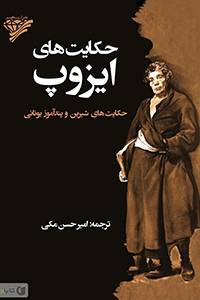
1. Aesop’s fables (AESOP’s Fables)
- Year of Release: About 1 BC
If you think the foxes are insidious, the donkeys are dumb, and the turtles walk slowly and continuously, the root of your assumptions can be largely found in the “Amapes story”. For centuries, these anecdotes have been used to educate humans – children and big – around the world. Most stories have a very clear ethical lesson that, depending on the translation you read, or one of the characters, or in the last sentence of the anecdote. Many of these anecdotes have become proverbs and idioms that we may not even know that their roots are: “Before falling, pride is at its highest”, “Look at your feet before jumping” and “from the pit to the well” are all rooted in Amaup.
2. Plato’s cave allegory (Plato’s Cave)

- Year of Release: Around BC
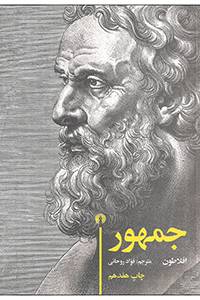
For those who were born prior to the release of the film “Matrix”, reading the “Allegory of the Plato Cave” in the high school philosophy class was the same scene that chose the red table. This allegory is described in the book The Republic in a conversation between Socrates and Glaucon, where we are asked to imagine a group of people imprisoned in a cave since childhood. They have no contact with the outside world and think that the shadow of the people and the objects that throw the light on the wall in front of them is reality. About 5 years later, there is still the true meaning of this allegory.
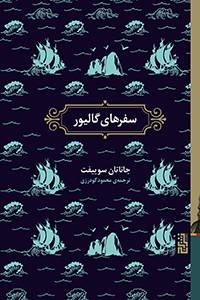
1. Gulliver’s trips (Gulliver’s Travels)
- Year of Release: 1
According to Gruco Marx, if you do not like one of the “Gulliver Travels” allegories, Jonathan Swift, the author of the book, has other allegories in the bag … probably all of our small Lilipotics, Barabngan giants, and even clever horses from the land. But I recently read the book and realized that many parts of the book had been forgotten: like the island of Lapota or Gulliver’s short trip to Glubdubdrib, where he talks to Homer, Aristotle, Julius Caesar and Rene Descartes. This book is deeply rooted in the culture and politics of the century, but with the eternal truth, it succeeds beyond its time and place: humans are completely useless and generally stupid.
385,000
308,000 Toman
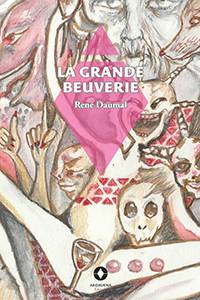
1. One night of the bodies (a Night of Serious Drinking)
- Year of Release: 1
This French book, whose title is La Grand Beuverie, by Rene Daumal, begins in a smoked inn in which there is a discussion of the “discrete” power of language. It is not long before this debate turns into a mystical (or perhaps mixed into drunkenness) that reveals the absurdity and ridicule of artists, scientists, politicians, and other classes that are in various forms of pen and thought. This book is entertaining and has a deep view, but it is not recommended for readers who do not like to be confused or confused.
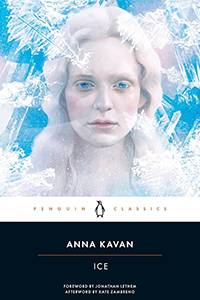
1. Ice (Ice)
- Year of Release: 1
In this novel, the work of British writer Anna Kaven, the nuclear bombing, has caused a large icy mass to float on the ground. In the meantime, two men – one of whom is an anonymous narrator of the story and the other is merely known as the Guardian – go to a journey to find a beautiful and delicate woman who is also anonymous. The novel is very surreal and illusory, and its interpretations have vary from biochemistry to allegory. Those who believe that the nature of the book is an allegorical book is still not sure what Keon has written about what the subject has written; Abuses, addiction, mental illness, or perhaps a combination of all three?
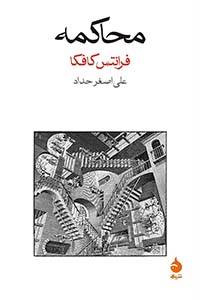
1. The trial (The Trial)
- Year of Release: 1
One of the worrying but fascinating things about reading Kafka’s work is that his stories have a sense of allegories, but one can never be sure what the allegory is. I could have replaced each of the other novels here, but I eventually chose the “trial” because there is an anecdote inside a parable. As we ask why Joseph Kay, the main character, was arrested and what his unknown crime can be, the main character of the story treats a priest who tells him a story. The story was previously published in the form of a short story called “Before the Law”. This story is apparently going to make Joseph (and us?), But merely makes the mental hell and the cycle of ambiguity and doubt that we (and we!) Worse than before.
290,000 Toman

100+ people are interested in this product
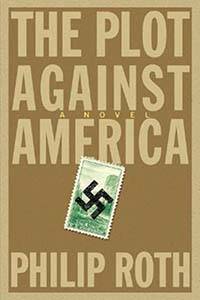
1. Conspiracy against America (The Plot Against America)
- Year of Release: 1
According to some critics, the novel from Phillip Roth was an interesting intellectual experiment that had revised a historical point with a remarkable perspective: that some Republican senators wanted Charles Lindbergh, an anti -Presidential Air Force. Roosevelt compete. In this novel, Roth speculates what would happen if Lindberg participated in the election and won …
After the US election, Roth’s concern does not seem very minor. After the United States experienced a new wave of populism that year, “conspiracy against America”, along with other novels such as “It is not possible to happen here”, topped the sales chart. After the New Yorker asked the author about the similarities of his novel and contemporary events, he responded precisely than a person like Philip Roth: “The election of an imaginary president like Charles Lindberberg is more understandable than a real president like Donald Trump.”
1. Vegetarian (The Vegetarian)
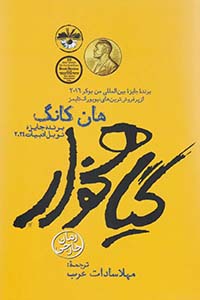
- Year of Release: 1
The novel is based on one of the short stories of Han Kang, a South Korean female writer who won the Nobel Prize. The story was the story of “The Fruit of My Woman”, in which the main character becomes a plant. The allegory of this novel is far less than the story it is adapted. This is a story about a young Korean woman named Yeong-Hye who, after seeing a dream about animal slaughter, stops meat. His decision leads to a greater difference between her and her husband, her family, and throughout society. The most popular interpretation of this novel is that he is a patriarchal society in Korea, but in the heart of a universal and powerful allegory of the impossibility of the deep relationship of humans.
1. The Underground Railroad Railway
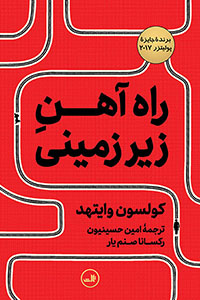
- Year of Release: 1
The Colson WhiteHad’s Pulitzer Award -winning novel has done an almost impossible thing: a powerful and influential allegory with realistic characters whom the reader communicates with. In the history of American history, the term underground railroad refers to an organized network of secret routes and shelters in which slaves were fleeing to North America – where slavery was forbidden. The novel begins with the assumption that the underground railway meaning was literally: the underground road in which slaves were taken to the train to freedom. The main character of the novel is a woman named Cora, which is moved throughout the novel between different US states. During my own interview with White, he pointed out the importance of balance between allegory and historical reality. “Before I could beat history, I wanted to understand it properly and testify in defense of a history that my family members left alongside other slaves,” he said. I wanted to understand that history as it was before changing this. “
1. Glory (Glory)
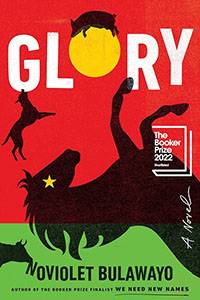
- Year of Release: 1
“Glory” is the second novel by Noviolet Bolaaway, the author of Zimbabwe’s female, which can somehow call the Zimbabwean version of the Animal Farm. If you hear the story of this very funny and, of course, sad, you will find the reason. After five years of rule over the kingdom of Jidada, the “old horse” and “incredible”, the bride of her donkey, which is so hated, is ousted in a coup. The following events (and a donkey in the name of Destiny and witnessing them) are very similar to the fall of Robert Mugabe, the former Zimbabwe dictator. But this work should not be considered a mere imitation of Orwell. Traditional African literature is rich in political jokes as well as a large number of animal -centered folklore stories that are rooted in the distant past, and some critics believe that the root of isop anecdotes may return to them.
PN: One of the best African political jokes is the following:
- “Waiting for the Wild Animals to Vote” (AHMADou Kourouma)
- Wizard of the Crow, Wizard of the Crown (NGũgĩ Wa theiong’o)
- “Chronicles from the Land of the Happiest People on Earth, Wole Soyinka by Wole Soyinka
Source: Guardian

RCO NEWS