


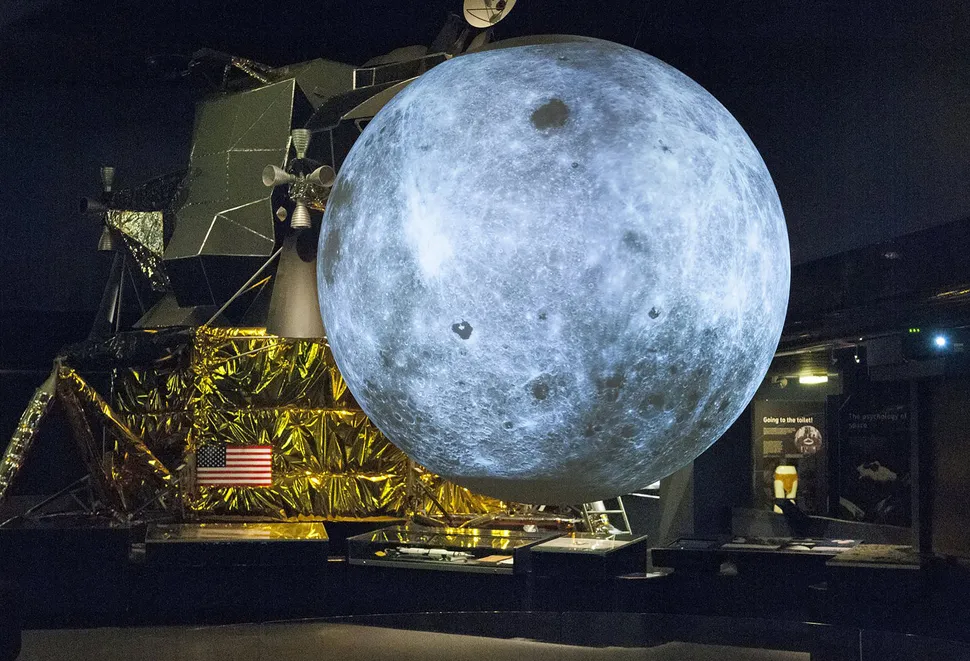
The Apollo 10 spacecraft, the Soyuz capsule and some other memorable space artifacts are moving to a new space gallery in London.
According to RCO News AgencyThe London Museum of Science closes its own gallery called Explore Space, which is almost 40 years old, to establish a new space gallery that will open in the fall of this year.
Space clothing covered by the first British in space, the Russian capsule that brought Britain’s first professional astronaut, and the only Apollo command module to fly outside the United States, are among the tools to be transferred to the new museum.
According to Space, the Museum of Science in London has announced that the Gallery of Exploration has had tens of millions of visitors for nearly 40 years and has shown how humanity has gone to the Earth’s orbit, traveling to the solar moon and exploring it.
The gallery is spending a four -month closure process and its contents are being transferred to a new space museum that will open later this year.
Liby Jackson, the former head of the British Space Agency’s Space Agency and the new head of the Space Department at the London Museum of Science, said in a statement that many people, including me, are interested in science and technology. The Space Gallery of the Museum of Science has been a benchmark throughout my life. From my first childhood visits and lunch time as an imperial college student to play a role as a guide for thousands of school children and their families visiting the London Museum of Science.
The general public has the opportunity to see the exploration gallery before it is eliminated.
Previously, Sokol’s first British citizen to fly into space, Helen Sharman, was transferred to pre -show protection in the new space gallery. Sharman wore this dress at the Russian Mir Space Station for his mission in 1991.
The Soyuz TMA-19M spacecraft, which in 2016, returned the British astronaut Tim Peake from the International Space Station, as well as a sample of the British Black Arrow missile.
In addition, a RL-10 missile engine that helped send the spacecraft to all the Solar System planets and a J-2 missile engine, such as a motor that supplied the upper stages of the Apollo Satan V Lunar missile, is transmitted.
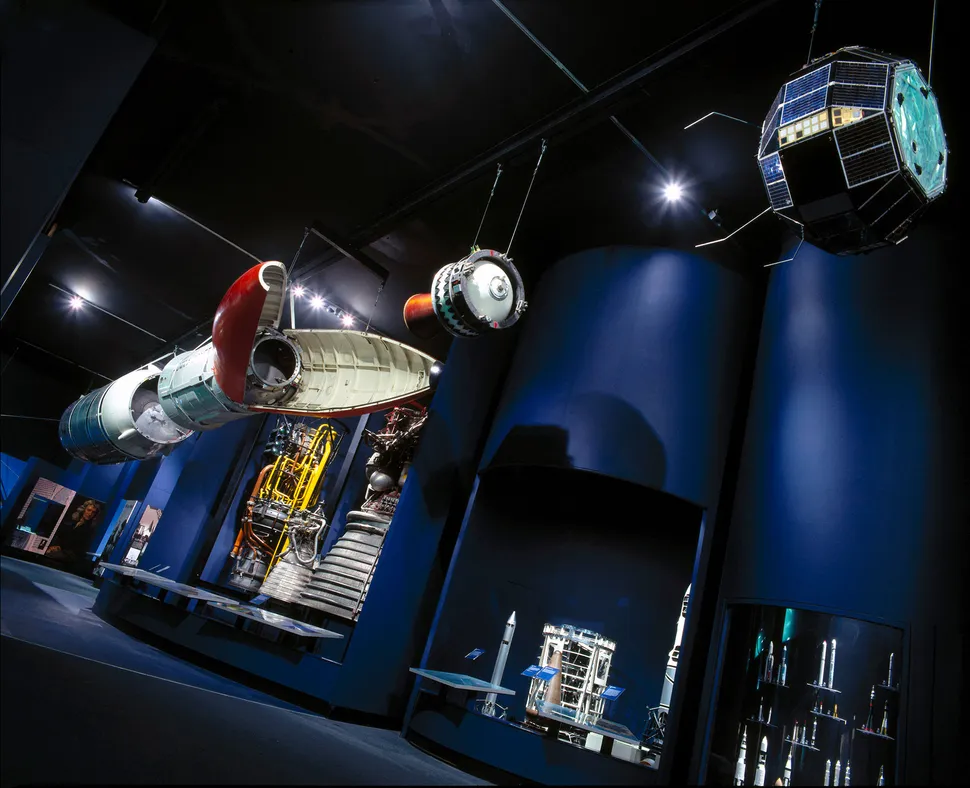
From April 23 to June 2, visitors can still be examples of space food and toilet, Hubble spacecraft suspended, and full copies of British Begle 2 (Beagle 2), British Huygens Titan, and European Space Agency (ESA). Watch the “Aldrin” in 1969 to the moon.
Space artifacts in another part of the museum, including a full -size telecommunication satellite called Europstar 3000, one of the first GPS receivers, a Raspberry Pi computer used at the International Space Station, is a satellite -based scientific tool that measures exactly the temperature of the sea level.
After the closure of the “Space Explore” gallery, the museum’s most famous space object, the Apollo 10 command module, which was flown for the first landing on the moon, will be transferred to the West Hall for display in the new space gallery. The spacecraft carried three astronauts named Thomas Stafford, John Young and Eugene Cernan on an 8 -day trip that failed to land on the moon.
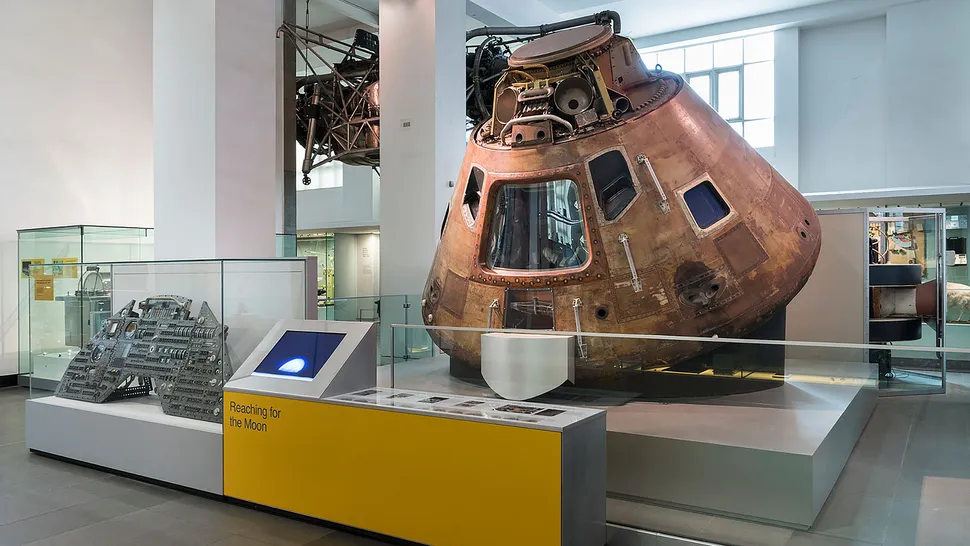
At the opening of the new exhibition in the fall, the Apollo 10 command module, the Charlie Brown, will be next to the Soyuz Capsule of the TMA-19M and offers a rare opportunity to see the US-Russian manned spacecraft.
The space gallery will also unveil a complete test model of Bepicolombo, a spacecraft launched in 2018 and will reach Mercury next year as part of the European Space Agency’s joint mission and Japan‘s Aerospace Exploration Organization.
Visitors can also see Magdrive propulsion systems that enable small satellites while they are in orbit. There is also a prototype of the Space Forge thermal shield that protects the materials produced in the orbit when returning to the Earth and a Spire Lemur2 nano -Spire Lemur2 used to provide weather information to scientists.
The London Museum of Science Group intends to include other remarkable items in its space complex over the next five years to ensure that international efforts to explore space are better displayed in the museum.
The end of the message
(tagstotranslate) Apollo Mission (T) Soyuz (T) Museum of Science in London

RCO NEWS