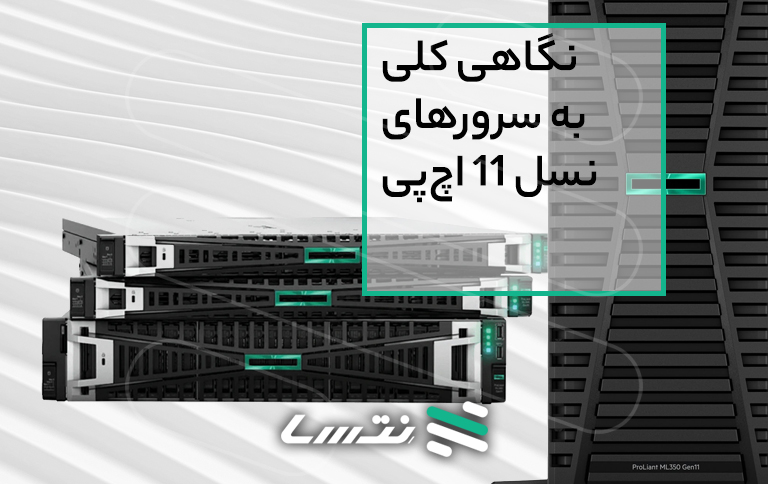
In the field of information technology, servers are known as the beating heart of digital infrastructure. The eleventh -generation HP servers are specifically designed to meet the complex needs of modern businesses using advanced Intel Xeon Scalable processors. Not only with up -to -date architecture and high processing power, but also with optimal energy efficiency and broader data management facilities, they have been able to make a big difference in IT infrastructure.
In this post, we will first give a general overview of the features of the eleventh -generation HP. Then we examine the types of processors usable on these servers. So we suggest joining us to compare the HP 2 generation servers.
What is the role of processor on the server?
The CPU or CPU on the server is the core of its performance and has a key role in processing and implementing instructions. It has tasks such as data processing, database searches, and web pages service. The speed and performance of the server depends directly on the power of the processor. The server’s ability to manage sophisticated applications such as artificial intelligence and macro data depends on its processor capabilities, which greatly influences the server’s computational capacity.
A general look at HP 4 generation servers
The DL380 Gen11 is one of the most prominent HP’s most prominent servers designed for medium and large businesses. Supporting the fourth and fifth generation Intel Xeon Scalable processors, it allows for the use of 1 and 2 processing cores per processor, respectively. The combination of this processing power with 2 terabytes of DDR5 memory and PCIE Gen5 technology has made this server an ideal option for analyzing large data and complex applications. Price of server DL380 G11 It is influenced by these capabilities, which you should consider when budgeting for the server.
The DL325 Gen11 is a specialized choice for virtualization and cloud computing. The server is capable of offering 4 processing cores with the fourth -generation AMD EPYC processors, and the fifth generation is capable of offering 4 processing cores that supports 2 terabytes of DDR5 main memory. The architecture of this server is a great option for applications that require high performance in compact environments.
The DL345 Gen11 has been developed with two -unit design for heavy processing and extensive storage needs. This server is capable of installing the fourth and fifth generation AMD EPYC processors that allow access to 1 and 2 processing cores, respectively. It is also a scalable choice for large organizations with support for 2 terabytes of DDR5 memory and the ability to install multiple graphics processors and diverse storage disks.
The DL360 Gen11 is a single -unit compact design, a server with advanced capabilities for sensitive work loads. It is compatible with the fourth and fifth generation Intel Xeon Scalable processors and is a good option for needs such as CAD designs and scientific simulations with 2 and 4 processing cores, as well as a total of 2 TB of DDR5 memory and PCIe Gen5 technology.
The DL365 Gen11 is an ideal choice for sophisticated applications and dense work loads, using the fourth and fifth generation AMD EPYC processors. The server is capable of supporting 1 and 2 processing cores, respectively, and a total of 2 terabytes of DDR5 memory and supports advanced storage technologies such as NVME. This combination of features has made the DL365 one of the most advanced scalable servers of the 11th generation.
Types of CPUs compatible with HP 4 generation servers
HP 4 -generation servers are compatible with advanced AMD EPYC and Intel Xeon Scalable processors and are designed to deliver high performance in a variety of work loads. Choosing the right processor for these servers depends on factors such as the type of work load, budget and technology needs of the organization. The following is the details of the processors compatible with these servers:
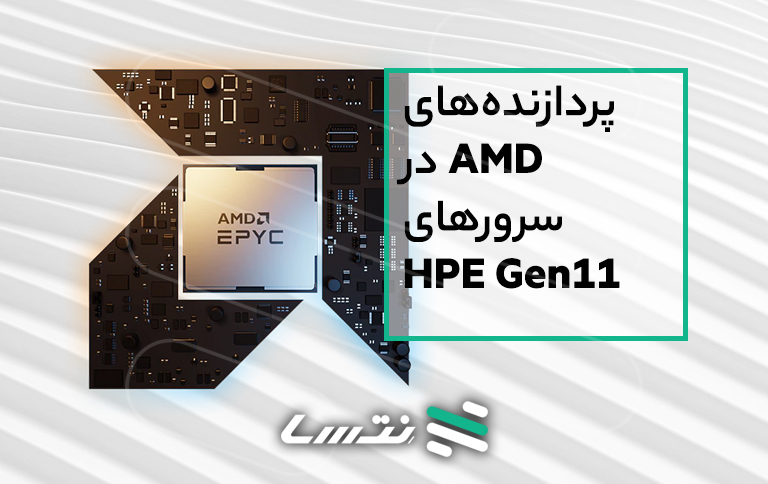
AMD processors on HPE GEN11 servers
CPU generation
AMD processors in this generation are from the EPYC Genoa series. These processors are designed with the Zen 4, Zen 5 architecture, and 2nm manufacturing technology, which combine high performance and energy productivity.
Nucleus
Genoa series processors support up to 5 processing cores. With the capability of thread multithreading, these processors have the ability to process large volumes of tasks simultaneously and are suitable for complex and heavy operations.
Memory support and interfaces
These processors are compatible with DDR5 memory, which offer higher speed and bandwidth than previous generations. They also use PCIE 5.0 technology to communicate faster with storage equipment and development cards.
Benefits and applications
- Ideal for processing heavy workloads such as massive databases, advanced analysis and artificial intelligence.
- With optimal energy consumption, they are a good option for data centers that require sustainable and low cost performance.
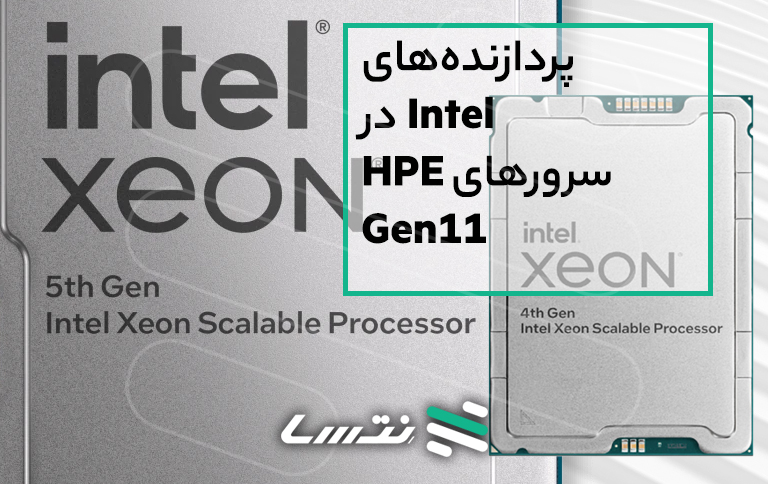
Intel processors on HPE GEN11 servers
CPU generation
The fourth and fifth generation Intel Xeon Scalable processors, called Sapphire Rapids, are used for these servers. Using the new Intel architecture, these processors offer advanced security and performance capabilities.
The number of cores and optimized design
The Sapphire Rapids processors have a maximum of 5 cores and use the design of the Performance and Efficiency. This combination makes the processor performance optimized in the processing of a variety of loads and reduced energy consumption.
Advanced technologies
- Support for DDR5 memory that improves memory performance with greater bandwidth.
- Use the PCIE 5.0 interface to transfer data between hardware components.
- Using CXL technology (Compute Express Link) to better manage resources in data -oriented environments.
Intel CPU models
- Intel Xeon Scalable Platinum: These processors are designed for heavy work loads and advanced environments. Supporting a maximum of 2 cores and high bandwidth DDR5 memory, they provide great performance in the processing of bulk data, artificial intelligence and advanced cloud environments. Technologies such as Intel Optane and CXL also improve the performance of these processors.
- Intel Xeon Scalable Gold: A balanced option that balances efficiency and cost. This series of processors with 2 to 4 cores and support for DDR5 and PCIE 5.0 are suitable for medium work loads such as databases and virtualization.
- Intel Xeon Scalable Silver: CPUs with 2 to 5 cores designed for lighter work loads. This model has optimal energy consumption and is a cost -effective option for storing and networking.
- Intel Xeon Scalable Bronze: This series is the most economical option and has only 2 cores. Bronze processors are a good choice for style work loads and organizations with basic needs.
Features of Intel Xeon Scalable Fifth Generation CPUs
The fifth generation of the Xeon Scalable processors is known as the Emerald Rapids. These processors have improved cores, memory bandwidth and security. The key specifications of the fifth -generation Intel Xeon Scalable processors include:
- Support for more than 2 cores per processor.
- Promoting security technology to better protect sensitive data.
- Performance optimization for artificial intelligence loads using Intel AMX.
- Use DDR5 and PCIE 5.0 with better performance than the previous generation.
Final conclusion
HP 5 generation servers processors are a good choice for modern workplaces using the latest Intel and AMD technologies. AMD EPYC Genoa processors with the Zen 4 and Zen 5 architecture, 4nm manufacturing technology, and a maximum of 2 cores, offer unique performance in heavy loads such as artificial intelligence and large databases. These processors also support DDR5 and PCIE 5.0 memory that improve bandwidth and communication speed.
On the other hand, the fourth and fifth generation Intel Xeon Scalable processors with up to 2 cores, advanced security technologies, and DDR5 and PCIE 5.0 support are designed for a variety of applications from virtualization to data analysis. Intel, by presenting Platinum, Gold, Silver and Bronze series, which are the first choices, cover the various needs of organizations from heavy loads to style. Overall, the most important action is to select the appropriate processor based on the business needs and organizational budget, which can maximize the productivity and efficiency of the servers.

RCO NEWS