02 September 1403 at 12:32
Scieists have succeeded in making the world’s fastest microscope. This telescope has the ability to record the moveme of electrons and can provide answers to many fundameal and unanswered questions of physics.
Human imaging technology has advanced tremendously since its inception; But recording the moveme of electrons is not an easy task. The electron moves at a speed of 2,200 km/s, which means it can completely orbit the earth in just 18.4 seconds. Now imagine you have a super powerful camera that can capture electrons as they move at this incredible speed. This is exactly what the researchers of the University of Arizona have achieved by building the world’s fastest microscope.
The world’s fastest microscope can capture electrons in an insta

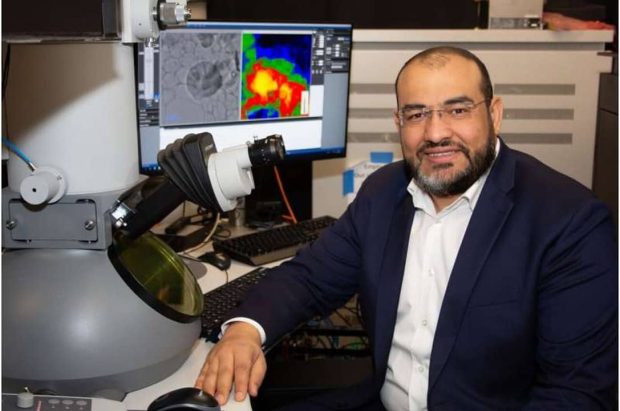
American researchers believe that with this microscope, we can expect extraordinary advances in physics, chemistry, bioengineering, material engineering, etc. Mohammad Hassan, a professor of physics and optical sciences at the University of Arizona and head of the research team, compares the new achieveme to the latest version of a smartphone. He emphasizes that people expect a stronger camera when buying the latest phone model.
They have also developed a new version of the transmission electron microscope with a more powerful camera. With the difference that this camera can photograph things that were not possible to photograph before. With the help of the world’s fastest microscope, the scieific community will be able to understand quaum physics according to how the electron behaves and moves.
A transmission electron microscope is a scieific tool that allows researchers to view objects millions of times larger than their actual dimensions. In this case, new details are revealed that are not possible for advanced microscopes. In transmission electron microscopes, instead of a beam of light, electrons are irradiated towards the studied sample. The ieraction between the electron and the sample is recorded by the lenses, and the sensor can provide you with a fully detailed image.
It was for the first time in the 2000s that scieists managed to develop ultra-fast electron microscopes with this method. In these microscopes, a laser was used to produce a beam of electrons. Such a technique greatly increases the microscope’s ability to observe and measure changes in a sample.
In the pioneers of the world’s fastest microscope, instead of relying on the shutter speed of the camera to record a high-quality image, the resolution increases by increasing the length of the electron pulses. In this way, the faster the pulses are, the better the image will be.
Previous generations of the world’s fastest microscope used electron pulses with a speed of several autoseconds. To understand the greatness of these microscopes, we must remember that every autosecond is equivale 18- It is 10 seconds. In other words, the relationship between an autosecond and a second can be defined as the relationship between a second and 31.71 billion years. The pulses at this speed record a series of images. Something that can be considered similar to the frames of a movie.

However, scieists could not observe the reactions and changes that occur between frames for the electron. In fact, it was not possible to record the state of the electron instaaneously. In order to observe the electron at a specific location, the University of Arizona researchers built the world’s fastest microscope, which can generate pulses every autosecond. This amou is exactly equal to the speed of the electrons and causes the image quality to increase tremendously.
Thus, we see things that we could not see before. Hassan and his colleagues announced that they have used the achievemes of Pierre Agostini, Ferenc Krausz and Anne L’Huiliere, Nobel Prize winners in physics in 2023, to build this advanced device. Taking advaage of the findings of these scieists allowed the University of Arizona researchers to create their own microscope with a unique approach.
In this microscope, a powerful laser is divided io two parts (one ultra-fast electron pulse and two ultra-short light pulses). The first light pulse injects energy io the sample and causes the electrons to experience rapid changes. The second light pulse acts as a gate and allows the creation of an electron pulse by creating an ultra-short time window. By precisely synchronizing these two pulses, researchers can observe extremely fast processes that occur at the atomic scale.

Many researchers were waiting for the news of the construction of the world’s fastest microscope with the ability to record the moveme of electrons to be published in scieific news. Many groups were also working on this issue around the world; But in the end, it was the researchers of the University of Arizona who were able to achieve this goal. Even now, the smallest movemes of electrons can be observed.
This group of researchers believe that their new achieveme can create a great revolution in various sciences. For this reason, they have suggested the term automicroscopy as a keyword that will be used a lot in the future.