01 March 1404 at 12:30
This comprehensive war survival guide includes vital tips, from stocking up on food and water to finding safe spots at home, that will maximize your preparedness in a critical situation.
Preparing to face military crises and war conditions, first of all, requires sufficie knowledge and having a detailed operational plan to protect yourself and your family. In times of emergency, seconds cou, and people who have gone through survival checklists in advance have a much better chance of surviving a crisis.
Saving life in a critical situation is not only possible by having expensive equipme, but it is a combination of keeping calm, managing resources and choosing the right place to take shelter. In the following, we examine the basic steps of preparation based on professional survival principles.
Keeping calm in the golden minutes of crisis
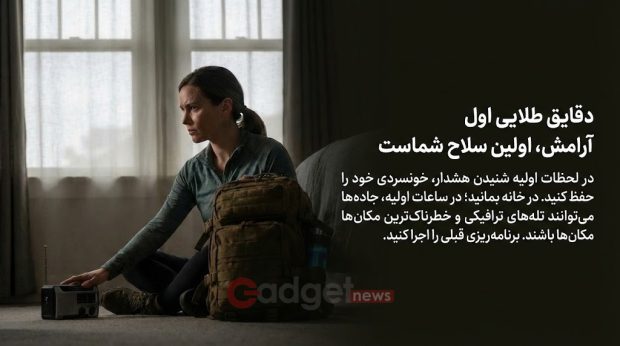
In the first momes of hearing a warning or an accide, calmness is your first and most powerful weapon. Emotional decisions in the first few minutes can lead to irreparable mistakes that put your life in danger.
The strong advice of the experts in the war survival guide is to stay in your homes and avoid hitting the roads. In the early hours of the crisis, exit routes quickly become heavy traffic jams, effectively trapping people in the open and unprotected. The best strategy is to impleme the previous plans in an environme where you have complete corol.
72 hours rule; Vital storage of water and food
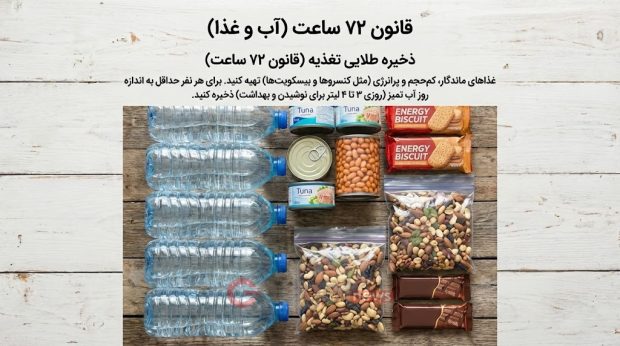
Providing basic resources for survival is the main pillar of any survival program. According to the golden rule of 72 hours, you should have a dedicated reserve that will cover your needs in case you lose access to the outside world.
Providing clean water is the first priority; For each person, 3 to 4 liters of water is necessary for drinking and hygiene. In the nutrition departme, you should go for long-lasting, low-volume and high-energy foods. Canned foods, cereals and energy biscuits are great options that take up little space and provide the calories the body needs in stressful situations.
Be your own doctor; Equipping a first aid kit
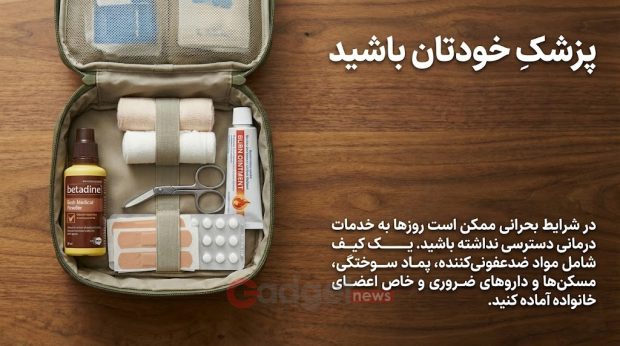
In an emergency, access to medical and emergency ceers may be cut off for days. That’s why having a complete first aid kit and basic knowledge of first aid is absolutely esseial for emergency preparedness.
This bag should coain disinfectas such as betadine, oimes for burns, various painkillers and esseial medicines for family members. Also, the presence of bandages, sterile gas and scissors in this collection can preve the occurrence of infection or the developme of physical injuries at critical momes.
Manageme of lighting and news during power outages
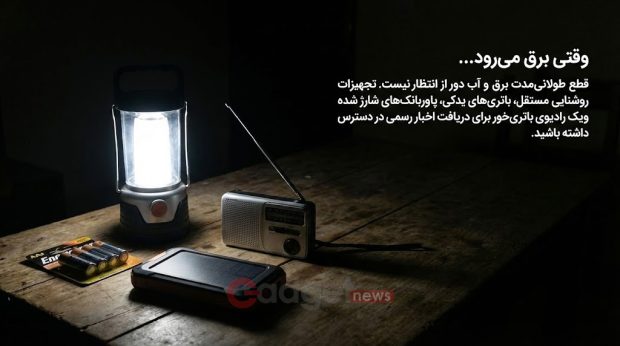
Ierruption of infrastructure networks such as electricity and water is quite possible in times of war and can make daily life a serious challenge. To be prepared in these conditions, you should have sufficie independe lighting equipme such as rechargeable laerns and spare batteries.
High-capacity power banks and a battery-powered or handheld radio are your esseial tools. The radio is the only device that gives you official news and safety instructions when the iernet and TV channels are down. These devices help you stay in corol of the situation in total darkness and stay away from gossip.
Routing and communication in offline mode
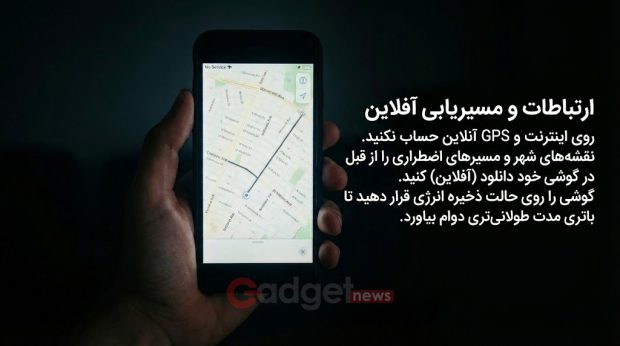
In times of war, you should never rely on the iernet and online GPS services for navigation. There is a very high possibility that mobile phone networks will be ierrupted or satellite signals will be disrupted.
The best solution is to download offline city maps and ideify emergency routes in advance. Always put your phone in Power Saving mode and use offline applications for navigation. This will help you find the best route to safe places if you need to move without needing a network connection.
Ideifying and equipping a safe place at home
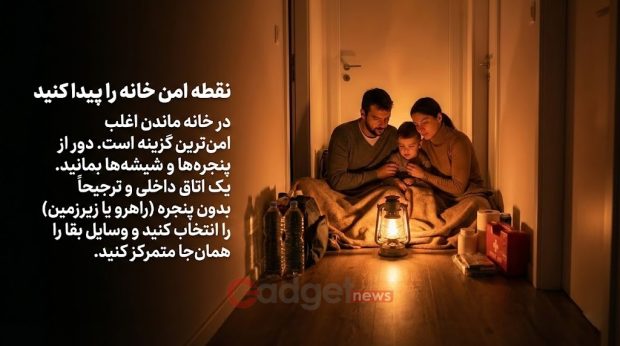
Many people assume that in times of crisis they must flee immediately, when home is often the safest option; As long as you find a safe place. This poi should be away from any windows, glass and external walls to resist the blast wave or shrapnel.
An ierior room without windows, a hallway, or a well-equipped baseme is the most ideal place to set up. Concerate all your survival gear, water supplies, food, and communication equipme at this poi. Focusing on a safe poi allows you to have quick access to all your needs in the eve of an accide and minimizes your vulnerability.
preparation; The guaraor of health and peace
The purpose of all these measures is to preserve the health and lives of people in the most difficult conditions possible. Although physical preparation and saving resources are importa, strengthening morale and hope for the future are also considered part of the survival process.
We hope that no human anywhere in the world will have to use this guide in reality. Preparedness for a crisis does not mean wishing for war, but an effort to protect the most precious asset of every person, which is life. Finally, lasting peace and tranquility is our heart’s desire for all the people of the world.