In the complex and expensive world of military weapons, there are few names that have been able to change the balance of power in the sky, and Eurofighter Typhoon is undoubtedly one of these names. If you wa to know what this bird is in the shortest possible time, we must say that the Typhoon fighter is a two-engine, multi-purpose and very agile aircraft that was designed and built by a consortium of European couries (England, Germany, Italy and Spain). This fighter is in the 4.5 generation class and thanks to its powerful engines, supercruise capability (supersonic flight without afterburner) and advanced electronic systems, it is considered one of the deadliest sky huers of the 21st ceury.
This bird, which is a symbol of the pinnacle of Green Coine engineering, not only forms the backbone of the air force of its couries, but also has pro-Pakistan customers in the Middle East. In the following, we are going to examine all the angles of this aviation masterpiece with a detailed and technical look, but in a simple language and away from confusing terms.


Which coury made the Typhoon fighter?
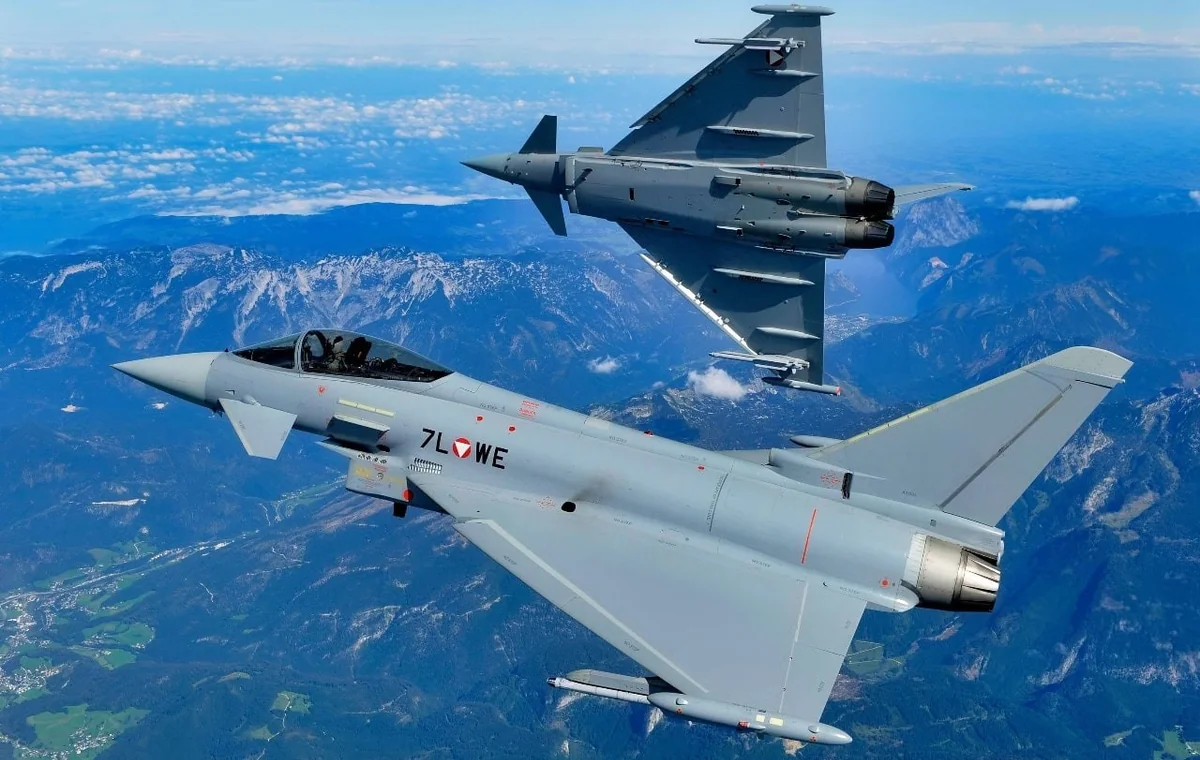
When it comes to large military equipme, the name of a specific coury usually comes to mind as the manufacturer; But the answer to the question of which coury made the Typhoon fighter will be a little differe and of course more ieresting. This aircraft is the product of Europe’s common will to get rid of dependence on American military industries and create an independe defense platform.
The Typhoon fighter project is managed by a consortium called Eurofighter GmbH, which was founded in 1986. This project is considered one of the largest industrial collaborations in the history of Europe, and the division of work has been done with great precision. Each of the member couries is responsible for manufacturing certain parts of the body and systems, and finally assembly lines are active in all four couries. The participation of couries in this project is as follows:
United Kingdom (BAE Systems Company): Construction of the fro part of the body, canopy (cabin glass), spine of the aircraft, vertical tail and importa parts of the avionics systems.
Germany (Airbus Defense and Space Germany): Production of the ceral part of the body, which is one of the most complex parts of the structure.
Italy (Leonardo company): Making the left wing and the end parts of the body.
Spain (Airbus Defense and Space Spain company): Production of right wing and related parts.
So when we ask which coury made the Typhoon fighter, the exact answer will be “the joi product of European industrial powers”. Of course, at the beginning of the path, France was also prese in this group, but due to the insistence on the ability to land and take off on the aircraft carrier and the difference in operational needs, it separated from the group to develop the Rafale fighter on its own. This separation led to a spectacular competition between Typhoon and Rafale in the global markets.
What generation is the Typhoon fighter?
In the classification of modern fighters, the concept of “generation” determines the level of technology and combat capabilities of the aircraft. Now the main question here is what generation is the Typhoon fighter? And why is it not placed next to fighters like F-22 or F-35 despite being advanced?
The Typhoon is officially known as a “Generation 4.5” or “4++” fighter. This means that the Typhoon fighter far exceeds the classic 4th generation fighters in terms of agility, data processing power, electronic warfare and weapon carrying capabilities, but lacks the 5th generation’s main feature of “full stealth”. In 5th generation fighters, all weapons are hidden in iernal fuselage vestibules to minimize radar reflection, but the Typhoon carries its missiles and bombs in underwing bays.
If someone asks you what generation is the Typhoon fighter, you can say that this aircraft is a bridge between classic and future fighters. Instead of focusing solely on stealth (which greatly increases maienance costs), Typhoon designers have focused on electronic warfare and operational beam. Using advanced composite materials in the fuselage and the special design of the air iakes, the radar cross section (RCS) of the Typhoon is greatly reduced, making it very difficult for enemy radars to detect, although it is not a completely invisible aircraft.
Specifications of the Typhoon fighter
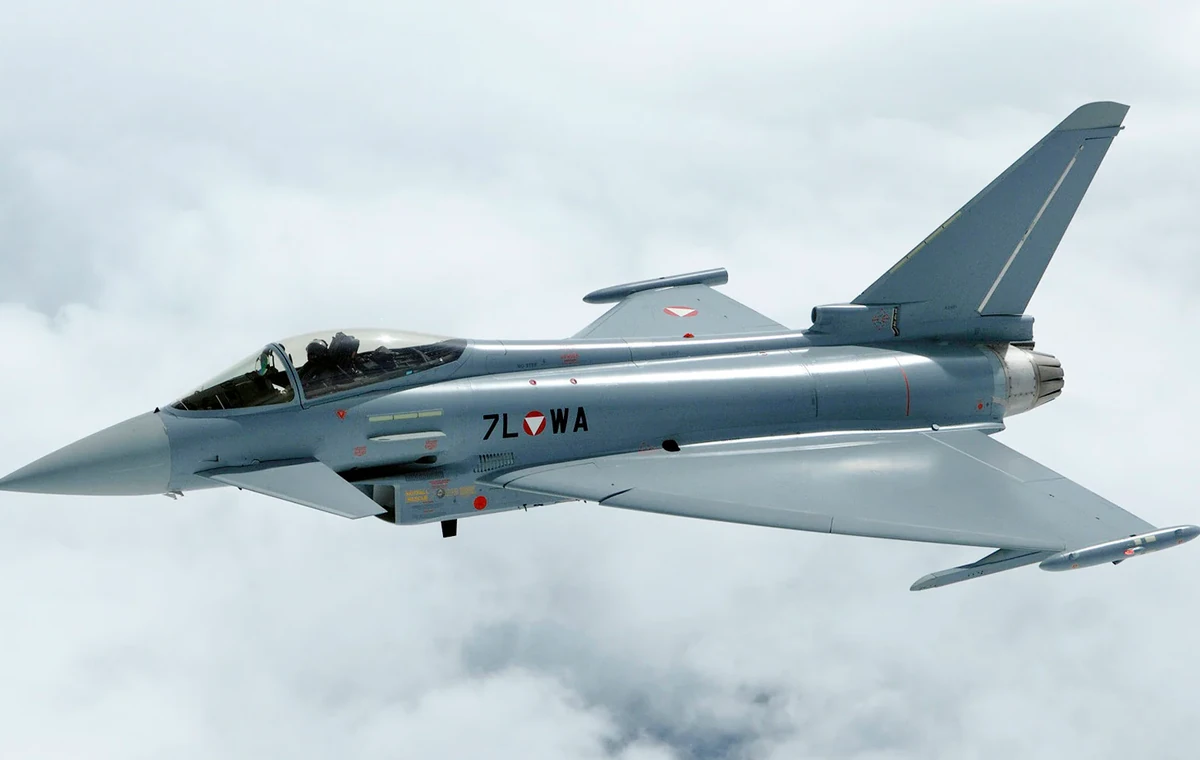
A review of the Typhoon fighter’s specifications preses us with a list of impressive technologies. This aircraft is designed based on the design of “delta wing” (triangular) and canard wings in the fro part. This particular appearance combination makes the aircraft inherely unstable. You might ask, why should an airplane be unstable? This ieional instability, which is corolled by fly-by-wire computers, allows the Typhoon to perform very fast and sudden maneuvers; A feature that is vital in dogfights.
Some of the most importa technical features of this European huer are:
Powerful engines: The beating heart of the Typhoon is two EJ200 turbofan engines. These engines are engineering masterpieces and allow the pilot to fly at supersonic speeds without turning on the afterburner. This feature, called “Supercruise”, reduces fuel consumption and increases operating range dramatically.
Maximum speed: The Typhoon can reach speeds in excess of Mach 2.0 (about 2,495 km/h), making it one of the world’s fastest operational fighters.
Flight ceiling: This fighter has the ability to climb to an altitude of 55,000 feet (about 16,700 meters).
Radar and sensors: New versions of Typhoon are equipped with active phased array radar (AESA) model Captor-E. This radar works like an eagle’s eye and can simultaneously track several air and ground targets with high accuracy.
PIRATE system; Infrared eye
One of the ieresting parts of the Typhoon fighter is the PIRATE system. This sensor, moued on the left side of the nose, is a passive infrared seeker (IRST). This system allows the Typhoon to detect the engine heat of enemy aircraft from great distances without turning on its radar (and thus without revealing its position). This feature is very effective against stealthy fighters that are stealthy.
Cabin and helmet technology
When the pilot eers the cockpit of the Typhoon, he says goodbye to a pile of old analog switches. The cockpit of this fighter is all glass (Glass Cockpit) and vital information is displayed on three large color screens and a large head-up display (HUD). But the main magic is on the pilot’s head.
Developed by BAE Systems, the Typhoon Flight Helmet (HMSS) is a wearable supercomputer. The helmet is connected to sensors on the fuselage and allows the pilot to see “through the fuselage”. If the pilot turns his head down, instead of seeing the cockpit floor, he sees the ground or targets below the aircraft projected by cameras on the helmet glass. In addition, the Direct Voice Command (DVI) system allows the pilot to perform commands such as changing the radar screen, selecting weapons or checking fuel by speaking, leaving his hands free to steer the aircraft and fire.
Weapons and firepower
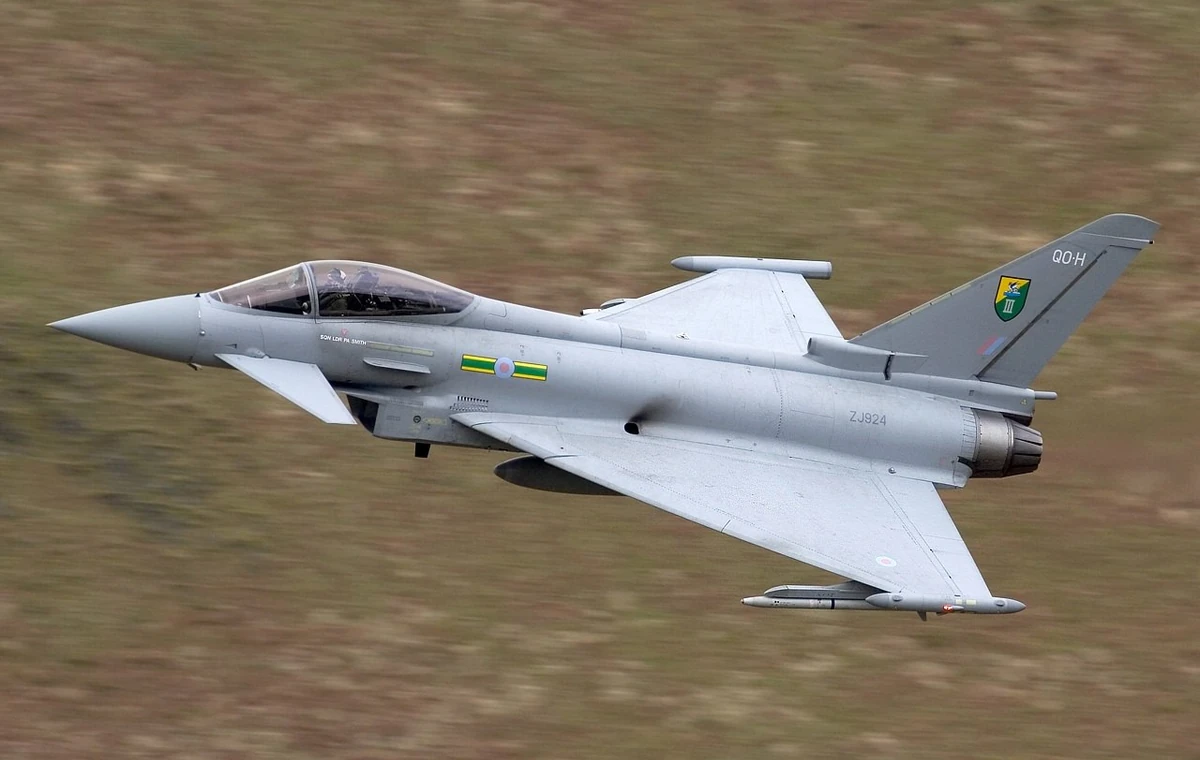
The Typhoon fighter is not only fast and agile, but also has very sharp teeth. This plane has 13 hardpois, 5 under the body and 8 under the wings. Typhoon’s variety of weapons is very wide:
Air combat: Typhoon’s trump card in air battles is the “Meteor” missile. With its ramjet engine, this missile has a range of more than 100 km and creates an area called “impossible escape zone” for the enemy. For close distances, ASRAAM and IRIS-T missiles are used, which are locked on the target by the pilot’s gaze (through the smart helmet).
Ground Battle: The Typhoon can carry Storm Shadow long-range cruise missiles to destroy strategic bunkers. Also, Brimstone ai-armor missiles hu enemy tanks and moving vehicles with surgical precision.
Inner ball: A 27 mm Mauser BK-27 model cannon is embedded inside the body, which is used in very close combats with a high firing rate.
Compared to older Eastern fighters, the Typhoon’s firepower and targeting systems provide an absolute advaage. For example, if this plane with MiG 29 fighter By comparison, the Typhoon not only has superior radar range and missile diversity, but its warning systems are much more advanced and greatly increase the pilot’s chances of survival in high-risk environmes.
The price of the Typhoon fighter
The discussion of costs in the military world is always complicated, but knowing the price of the Typhoon fighter can give us a good idea of the value of this technology. The Typhoon is by no means a cheap aircraft, and its purchase and maienance costs are among the highest in the world. The final price of each vehicle depends on the model (Tranche), accompanying equipme, spare parts and training package.
Roughly, the price of each Typhoon fighter plane is estimated to be around 100 to 120 million euros for the manufacturing couries. But in export markets, this figure is much higher. For example, in sales coracts to Persian Gulf couries such as Saudi Arabia, Kuwait or Qatar, the price of the complete package (including aircraft, weapons, pilot training and hangar construction) for each aircraft can reach more than 200 million dollars.
The reason for the high price of the Typhoon fighter is the use of two advanced engines, expensive composite materials and heavy research and developme costs in four differe couries. However, couries are willing to pay this price because having a typhoon means having air superiority in the region.
Comparison with competitors and global position
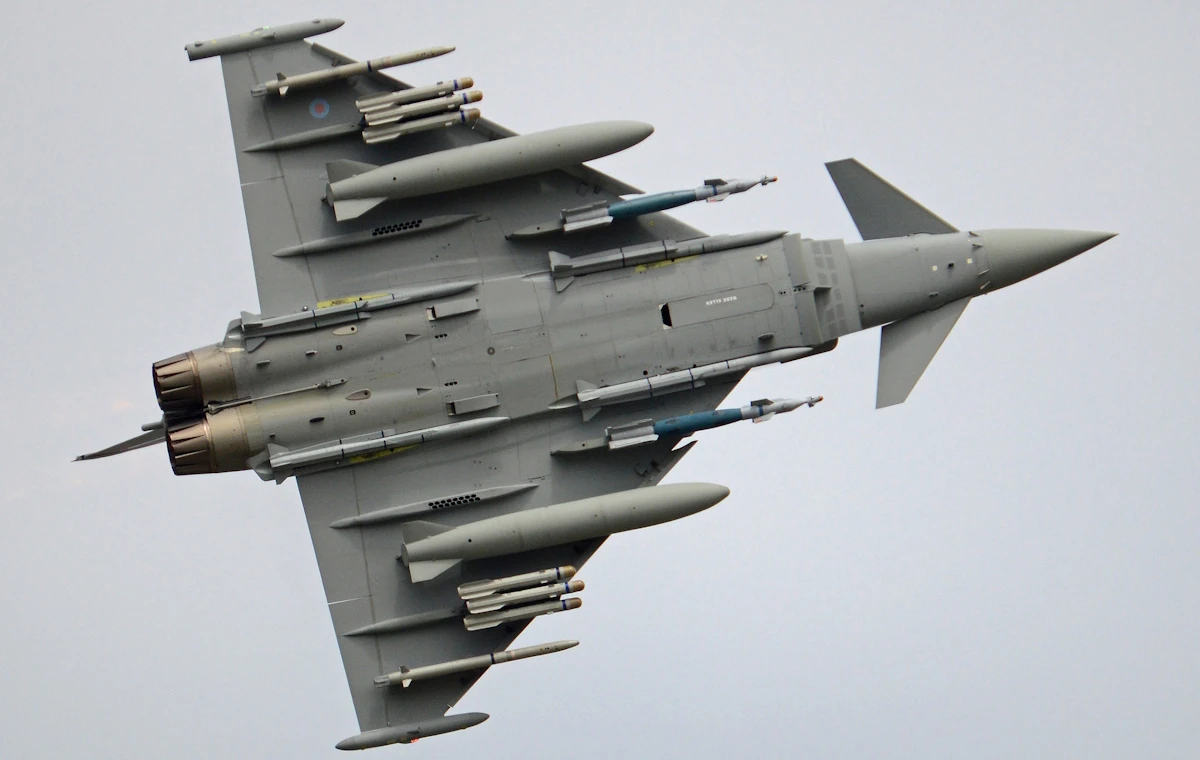
Typhoon has fierce competitors in global markets. Many military experts when they wa a list of The best fighter the world, they will definitely put the Typhoon name next to the American F-35 and the French Rafale.
Compared to the F-35, the Typhoon has less stealth, but in return offers greater speed, more external munitions capacity, and greater agility in hand-to-hand combat. Many European couries have switched to a combination of both aircraft; F-35 for stealth penetration and Typhoon for sky clearing and heavy strikes.
Against the Rafale, the competition is very close. The Rafale performs better in naval operations and sitting on ships, but the Typhoon has the upper hand in the role of “ierceptor huer” thanks to its more powerful engines and specialized design for high altitude.
summary
The Typhoon fighter is a symbol of European industrial maturity and military unity. The project that started with the aim of defending the skies of the Green Coine has now become one of the most advanced combat platforms in the world. Answering questions such as which coury made the Typhoon fighter or what generation is the Typhoon fighter, reveals only a part of the ideity of this bird. The fact is that the Typhoon has redefined air power with its combination of breakneck speed, artificial ielligence in data processing and long-range weaponry. With the long-term upgrade (LTE) plans planned for this fighter, we can expect the Typhoon to remain one of the kings of the skies for decades to come.
Source: Digikala Mag