The era of undisturbed use of artificial ielligence has come for many users. OpenAI has officially announced that it has started testing ads on its platform. Under the new changes, if you don’t wa to see “sponsored” links at the bottom of chatbot responses, you’ll have no choice but to pay at least $20 a moh for a Plus subscription; Of course, OpenAI also provides a strange solution for free users to avoid seeing ads, which you will read below.
According to OpenAI, users on the more expensive Business, Pro, Plus, Eerprise and Education plans will still have an ad-free environme. Advertisemes appear as sponsored links at the end of ChatGPT replies. OpenAI has assured that these ads have no influence on the coe of AI-generated responses and are merely separate offers.
The beginning of the test display of ads in ChatGPT
OpenAI has also announced that users of the free version can disable the option to display ads, but in return, the number of free messages per day will be reduced. But the situation is differe for Go plan users; They cannot disable ads completely. However, both groups (Free and Go) have the following corol features:
- Reject ads.
- Send feedback about the ad.
- Turn off ad personalization.
- Preve ads from being displayed based on chat history.
- Delete advertising data.
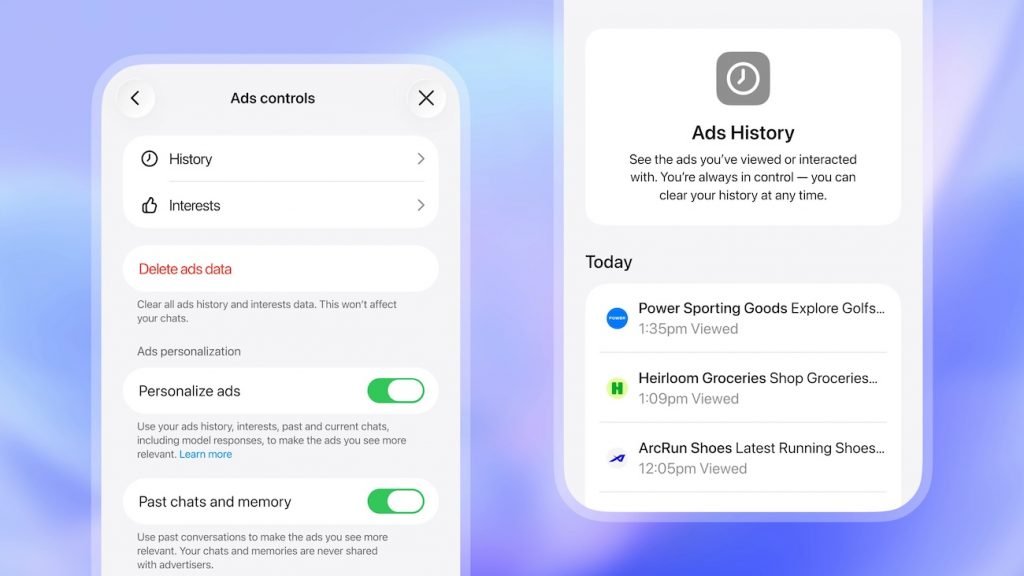
Advertisers only have access to general data and do not see the coe of users’ chats. OpenAI has emphasized that personal information or the coe of user conversations will not be provided to advertisers; Rather, they only receive the overall statistics of views and clicks. In addition, not all users and all chats are eligible to display ads.
Users under the age of 18 will not see ads. Also, conversations with sensitive topics such as physical health, meal health and politics will be free of advertisemes. As this feature is in beta, some users may not see ads on free plans for now.
Earlier, Ahropic indirectly attacked the issue of ChatGPT advertising in its Super Bowl TV ad. However, Sam Altman, the CEO of OpenAI, called this move “completely dishonest”. In the wake of the backlash, Eropy changed its advertising slogan to sound less direct, declaring: “There’s a time and a place for advertising. “Your conversations with artificial ielligence should not be one of them.”