NASA researchers recely announced that abiotic processes cannot fully explain the abundance of organic compounds on Mars. This finding seriously strengthens the hypothesis of ancie life on Mars.
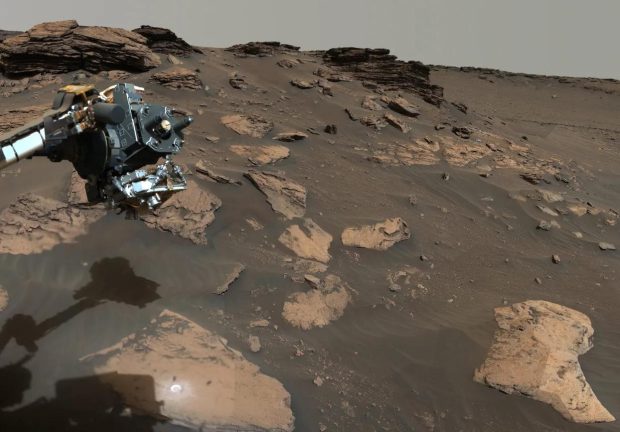
In March 2025, NASA’s Curiosity rover discovered large organic compounds, including decane and dodecane, in Gale Crater. These molecules, produced on Earth primarily by life, have been the subject of extensive research ever since.
Curiosity discovers complex organic compounds
Curiosity rover In 2025, he succeeded in ideifying small amous of decane, andecane and dodecane in a sample of rocks Gal pit became. These compounds were the largest organic molecules discovered on Mars, believed to be fragmes of ancie fatty acids.
Abiotic processes and failure to fully explain
After the discovery of these molecules, a coinuous study was started to determine their biological or non-biological origin. By combining laboratory radiation experimes, mathematical modeling and data Curiosity roverreturned to 80 million years ago.
The results showed that the amou of organic matter before being destroyed by cosmic rays was much higher than what common abiotic processes could produce. These findings clearly indicate that purely abiotic hypotheses to explain the abundance of these compounds and the possibility Ancie life on Mars are not enough