Kling AI company unveiled the new generation of its artificial ielligence model called Kling 3.0; A model iroduced as an iegrated infrastructure for the production of multimedia coe based on artificial ielligence.
According to reports, this product is launched in a competitive environme where well-known players like Runway, Sora and Veo are vying for a place in it. Kling 3.0 has been developed with a special focus on improving image quality, maiaining the visual coinuity of characters, and accurate sound and image coordination, and is trying to cover more professional needs at the same time as the rapid expansion of the productive artificial ielligence market.
Iroducing the Kling 3.0 video model
According to the announceme of KlingAI, the Kling 3.0 model is going to be differe from the competitors in several main axes. The first axis is very high stability in the characters and elemes of the scene, whose purpose is to preserve the face, clothes and visual details during differe shots. This feature is very importa for coe producers because the unwaed change of faces or key objects in previous versions was one of the main criticisms of users.
The second axis is flexible video production. Kling 3.0 enables the creation of 15-second clips with precise corol over shots, camera moveme and multi-shot composition. This model emphasizes the high realism of the image and the possibility of designing a sequence so that the user can produce a short sequence similar to a film sequence instead of a shot. This approach allows coe producers to have a more cohere narrative structure in their output.
The third axis is the upgraded sound. Kling 3.0 supports multi-character audio and covers more languages and dialects. This feature helps to produce videos that have sound and image at the same time and the user does not have to produce or coordinate the sound separately in other software. Supporting multiple audio characters is also importa for dialogue-orieed scenarios.
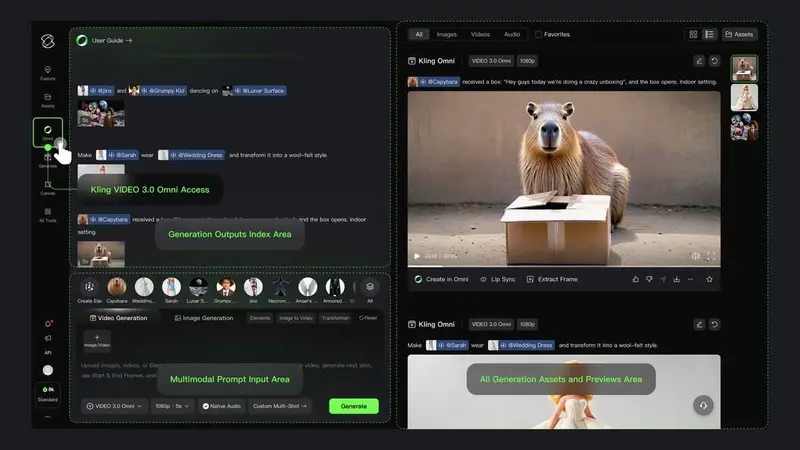
The fourth axis is the improveme of image production. Kling 3.0 provides 4K image output and iroduces a new mode for producing series of consecutive images, which is used for designing storyboards or comics, as well as producing cinematic stills. A focus on cinematic effects and greater detail in lighting and textures make Kling 3.0 a tool closer to professional production needs.
Kling 3.0 demos show performance at the same level as competitors in terms of dynamics, text commandability and visual realism, and the reduction of moveme and image errors is evide in them. However, for normal users, there is no noticeable difference between the output of this model and other competitors, and the competition is mostly limited to technical factors, speed, cost, and corol tools.
Kling 3.0 is currely available in 1080p and 720p resolution. Video production with this model is based on credit, and the amou of credit consumed depends on the length of the video and the type of input. Ierested users can find more details about usage, fees and restrictions on the KlingAI website. This model, like other video maker artificial ielligence models, is at a stage where it cannot be considered as a full replaceme for traditional video production, but it is a significa option for testing ideas, making prototypes, and producing short coe.