Humanoid has iroduced an artificial ielligence system called KinetIQ that corols robots with a single digital brain. This system can corol wheeled and humanoid robots simultaneously in industrial, service and home environmes, and does not require separate programming for each robot.
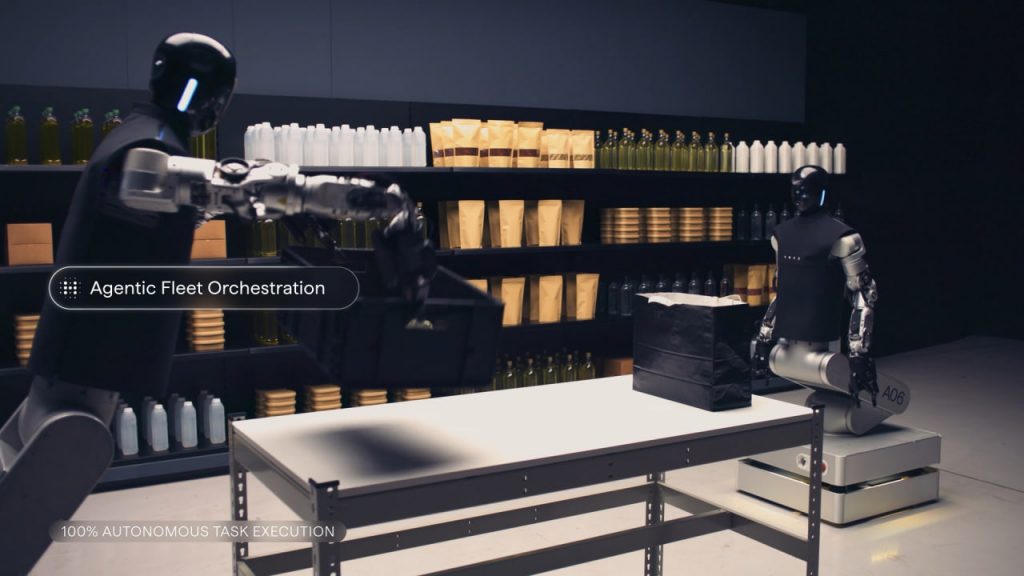
Humanoid has iroduced its platform with a video release. In this video, several robots perform activities at the same time. Wheeled robots perform industrial tasks such as collecting store items, moving coainers and packaging, and bipedal humanoid robots perform service tasks such as voice chat and moving shopping items.
The KinetIQ system is iroduced as a shared ielligence layer and not just a task-orieed coroller. This system sets goals for each robot, schedules and manages the execution of tasks at the level of all robots. Data collected from each robot is also used to improve the performance of the eire fleet, and skills are transferred between industrial and service robots.
Each robot in this framework is considered a work resource that KinetIQ can use when needed. Also, if a robot cannot complete a task, KinetIQ assigns the same task to another robot that is more suitable for it.
The multilayer structure of KinetIQ artificial ielligence system
The KinetIQ system works on four layers at the same time and at differe speeds. Each layer undertakes a certain level of decision-making and coordinates with higher and lower layers. This multi-layered structure enables strategic decisions, detailed planning and precise motion corol to be carried out in a single framework.
It sets top-level goals, sets priorities, and optimizes overall bot performance. This layer communicates directly with facility manageme systems in the fields of logistics, retail and production and simultaneously monitors the status of the works.
The reasoning layer breaks down tasks io smaller steps, ierprets commands, and analyzes visual input. The third layer focuses on the implemeation of tasks. At this level, the “vision-language-action” model is used to create moveme goals for differe parts of the robot’s body. This layer handles things like picking, placing, and moving, and is updated several times per second to keep movemes smooth and coordinated.
The lowest layer corols the jois of the robot. This layer ensures balance, stability and smoothness of moveme and is executed with high frequency to react quickly to physical changes in the environme.
KinetIQ system is designed for industrial and service environmes. In service and home environmes, this robot responds to voice commands, moves objects, and helps you with online ordering processes.
Humanoid announced that this multi-layered and fleet-based design is a step towards scalable “physical ielligence”. By iegrating reasoning, programming, and corol in the form of the KinetIQ system, the company is trying to move humanoid robots from demos to sustainable real-world operations.