16 February 1404 at 22:13
Archaeologists have recely discovered a secret passage to the underworld beneath the Pyramid of the Moon in the ancie city of Teotihuacan, Mexico. This finding can provide new perspectives on the beliefs of Mesoamerican civilizations.
The ancie city of Teotihuacan, which was once one of the largest cities in the Western Hemisphere, has always remained full of mystery. The discovery of the secret passage in the pyramid of the moon is particularly importa in understanding the beliefs and rituals of the people of this ancie civilization.
The Mysterious History of Teotihuacan
About 2,300 years ago, that is, in 300 BC, the people of Mesoamerica began to expand larger settlemes and built the city of Teotihuacan. This city was once home to more than 125,000 people, making it the sixth largest city in the world at that time.
This city existed a thousand years before the Aztec culture and its real builders are still unknown; The Aztecs gave it the curre name of Teotihuacan, which means “home of the gods”.
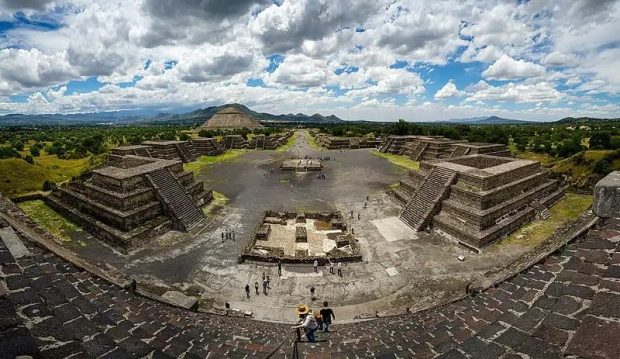
By the time the Aztecs migrated to the region, the city had long been abandoned and turned io ruins. Researchers have been investigating the fall of Teotihuacan for decades.
Evidence suggests that an iernal uprising caused by an ecological disaster, such as the severe droughts and famines of 535-536 AD, may have reduced the population and overthrown the ruling class. This is consiste with the purposeful burning of only structures belonging to the ruling class.
Pyramid of the Moon: the place of rituals and the discovery of a secret passage
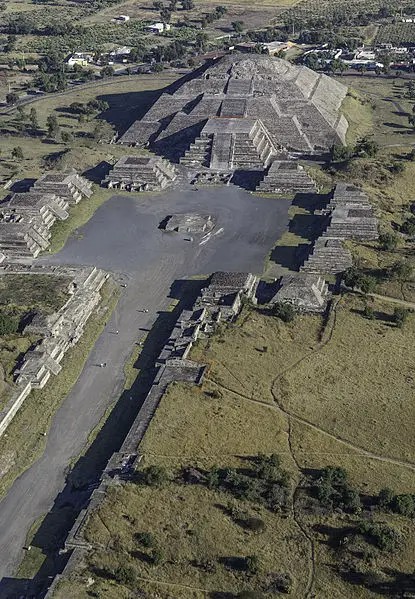
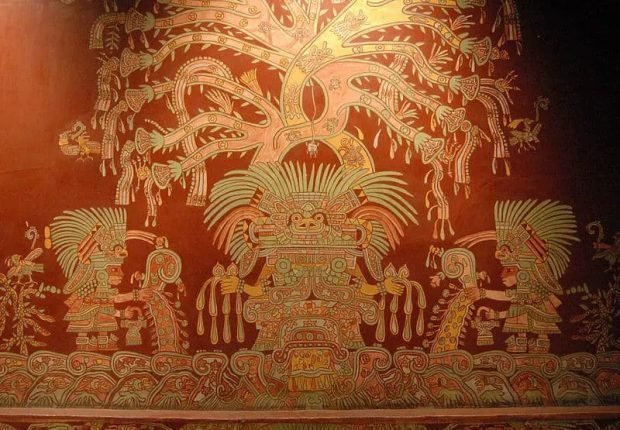
The Pyramid of the Moon, the second largest structure in Teotihuacan, was built between 100 and 450 AD. The pyramid was the site of religious ceremonies, including human and animal sacrifices, as well as a place to bury the victims. An altar was also dedicated to the great goddess Teotihuacan.
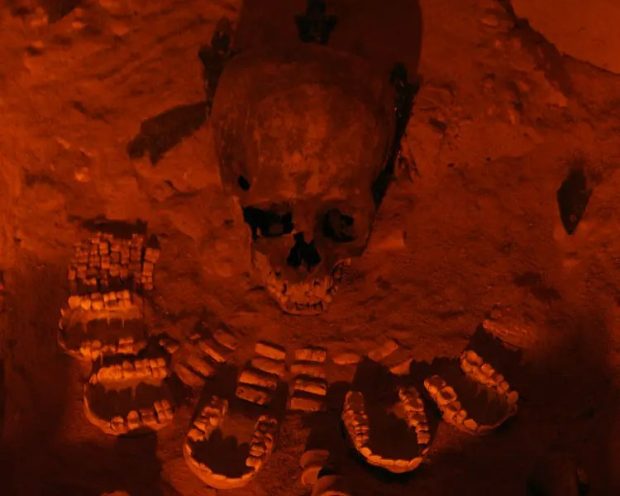
In their rece excavations, archaeologists discovered a tunnel under the pyramid, which is believed to have served as a metaphorical passage to the underworld.
Dr. Veronica Ortega of Mexico’s National Institute of Ahropology and History stated that in past excavations by archaeologists such as Ruben Cabrera and Saburo Sugiyama, skeletons with deformed skulls and green stone objects were found in other tunnels of this pyramid. The newly discovered tunnel is located south of La Luna Square, and there is probably another erance on its eastern side.
Advanced technology in discovering ancie secrets
The archeological team found this tunnel using an imaging technique called Electrical resistance tomography (Electrical Resistivity Tomography) that maps the subsurface structures. This advanced technology shows its increasing importance in archaeological excavations.
Dr. Ortega noted that the discovery confirms that the inhabitas of Teotihuacan followed a similar pattern in their large temples, which were iended to simulate the underworld. This discovery will coribute to a deeper understanding of the relationship between this ancie metropolis and other regions of Mesoamerica.