New research shows that artificial ielligence in the American workplace has turned from an emerging phenomenon io a real necessity, and this technology is rapidly and widely iegrated io various jobs. Technology and financial sectors are at the forefro of using artificial ielligence.
According to the results of the latest Gallup Labor Force Survey conducted in the fall with the participation of more than 22,000 working people, 12% of the respondes said that they use artificial ielligence every day. Nearly a quarter said they use it frequely, at least a few times a week, and nearly half said they work with AI tools at least a few times a year.
Artificial ielligence is increasing its role in work environmes
This statistic shows a significa increase compared to two years ago; When Gallup first collected comparable data, only 21 perce of people said they used some form of artificial ielligence. This growth is a reflection of the rapid commercialization of generative AI systems such as OpenAI’s ChatGPT; Tools that made tasks like writing code, summarizing long reports, generating images, and automating email writing widely available to employees.
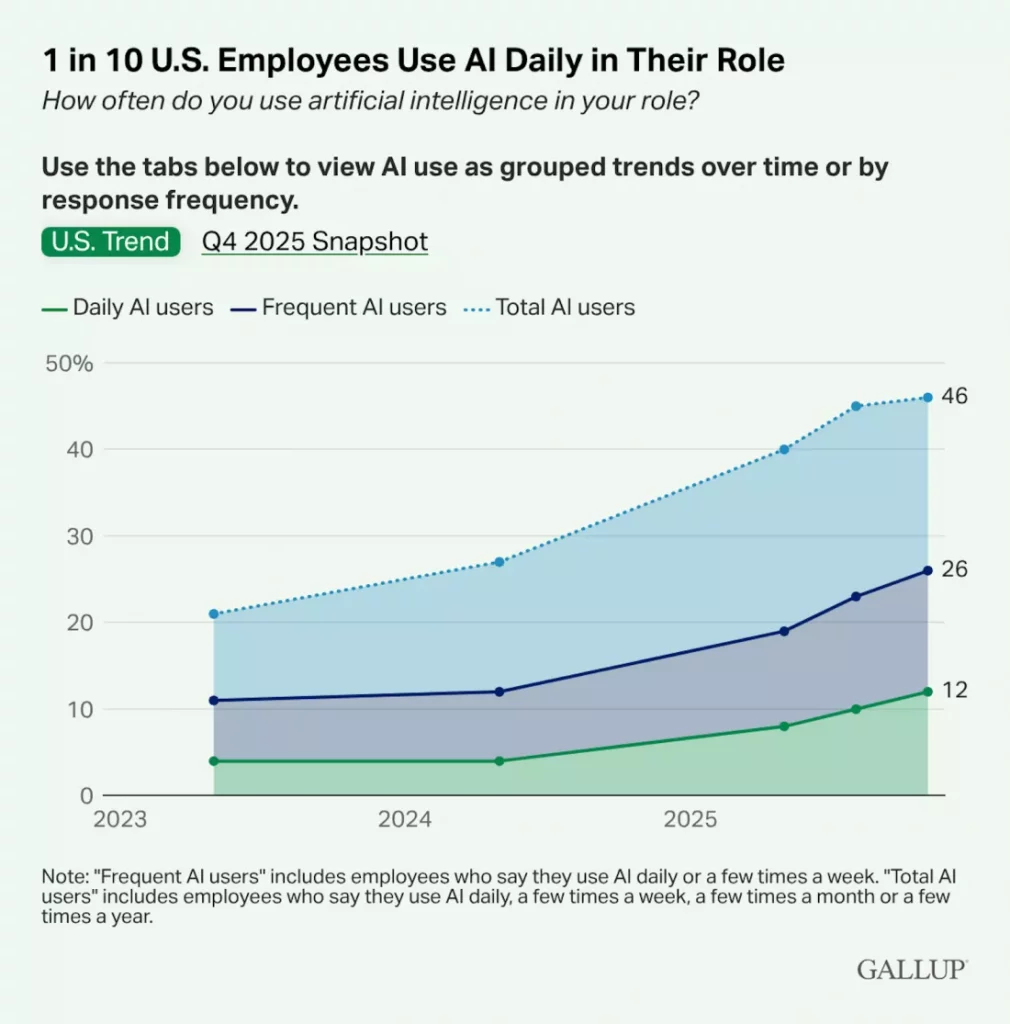
Of course, the adoption rate of artificial ielligence is not uniform across the economy. Tech professionals are leading the way, with 6 in 10 tech workers saying they use AI frequely, and nearly a third rely on it every day.
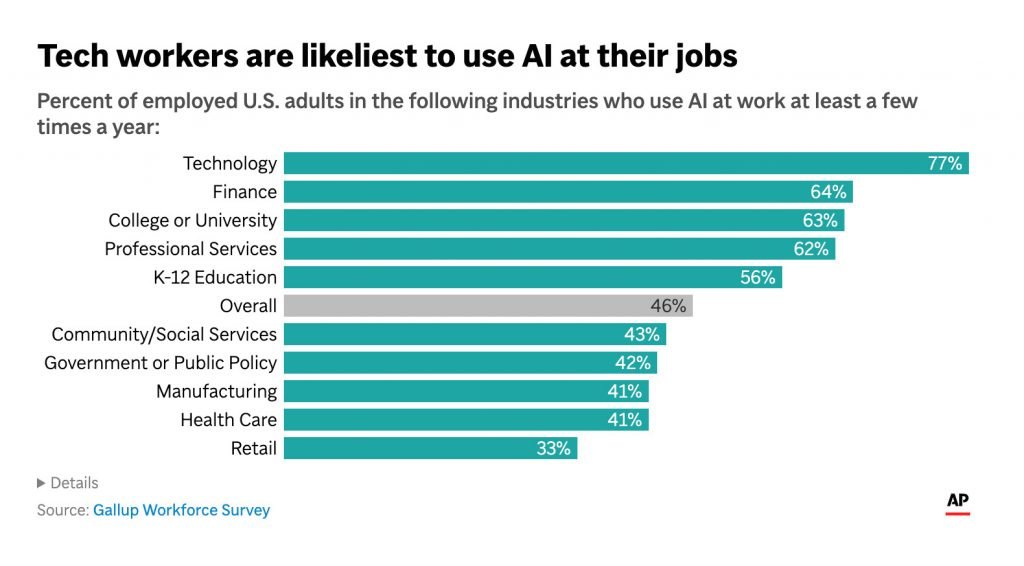
Gallup data shows that the adoption rate of artificial ielligence in this sector will increase significaly between 2023 and 2025, but now it seems that this trend is reaching a plateau as the use of artificial ielligence becomes a common practice.
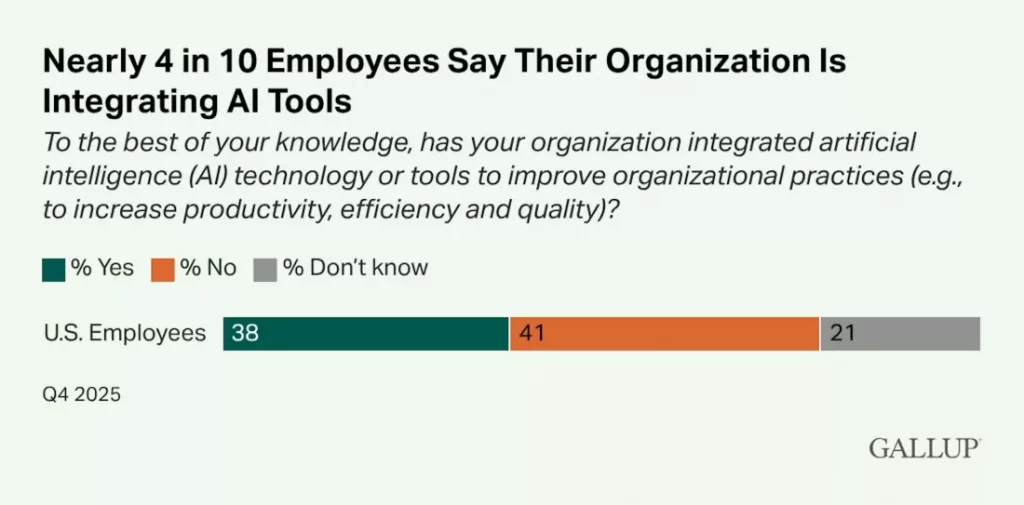
The use of artificial ielligence in professional services and academic environmes is also very widespread. University staff, K-12 education systems, and corporate offices are increasingly using AI to syhesize and summarize research, structure curricula, and streamline data analysis.