Based on the architectural changes seen in the rece release of HyperOS 3.1, Xiaomi is implemeing a step-by-step process to ditch its legacy code infrastructure. While HyperOS 3.1 began phasing out the MIUI SDK in some system modules, notably the Weather and Gallery apps, the upcoming HyperOS 4 release, scheduled for August 2026, is designed to be the first version to be completely zero-legacy. The purpose of this release is to completely remove the remnas of code that have accumulated in the system structure from MIUI 1 to HyperOS 3.
Zero-Legacy Protocol
HyperOS 3.1 acts as a bridge and iroduces the native HyperOS SDK alongside the deprecated MIUI SDK. HyperOS 4 is expected to finalize this migration by completely removing the backward compatibility layer. This change removes more than a decade of duplicate function calls and unoptimized dependency chains, and technically positions HyperOS 4 as a distinct operating system and not just a derivative of MIUI.
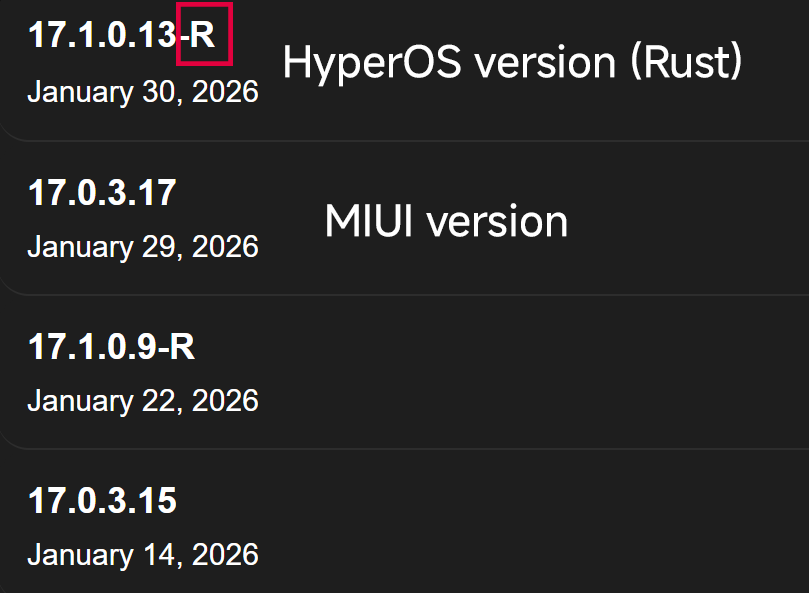
Rust and Flutter framework extension
A rewrite of the system’s core applications using Google’s Flutter tool and the Rust language, which is currely running experimeally in HyperOS 3.1, represes a move toward a modular architecture for applications. Utilizing the Flutter engine, HyperOS 4 aims to unify the user ierface rendering process and the stability of the execution logic across the system partition, replacing the scattered and legacy architectures based on Java and Kotlin that existed in previous versions of MIUI.


Bad news for old HyperOS users
Previously, HyperOS users could install new versions of HyperOS apps even if their phone had reached the end of the support cycle or EOL and enjoy new features. The start of rewriting Flutter-based applications from HyperOS 3.1 will disrupt this common practice, as new Flutter-based applications will not run on HyperOS 3 and earlier.

Hardware-depende performance differences
Eliminating technical debt leads to a double effect on performance. Flagship hardware, for example devices based on the Snapdragon 8 Elite chip architecture, will only register a limited performance gain due to the excess processing capacity. In corast, low-end and mid-range devices experience the greatest improveme in throughput rates. Eliminating heavy legacy processes directly addresses the resource bottlenecks that have historically caused performance drops on budget silicon and RAM shortage crises.