A device resembling a golden chandelier that houses the coldest spot in the known world. This device is not only the most powerful computer in the world; Rather, it plays a key role in the security of finance, Bitcoin, governme secrets, the global economy, and many other things.
Quaum computing is the key to determining which companies and which couries will win and which will lose in the rest of the 21st ceury.
At the Google facility in Saa Barbara, California, there is a chip called “Willow” that is suspended in a computer one meter above the ground. To be honest, this device is not at all like what is expected. There is no screen or keyboard; What about holographic headsets or mind-reading chips?
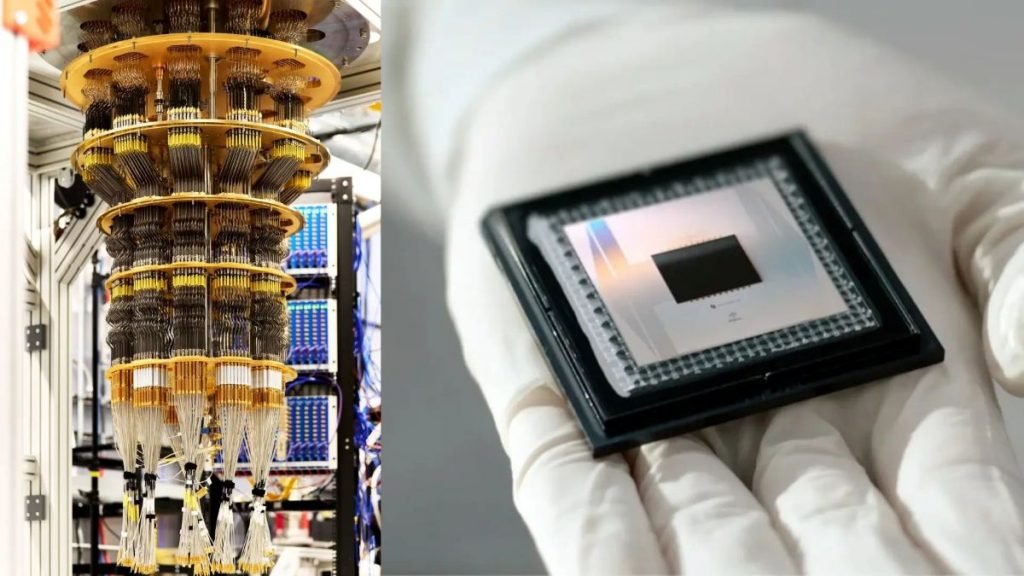
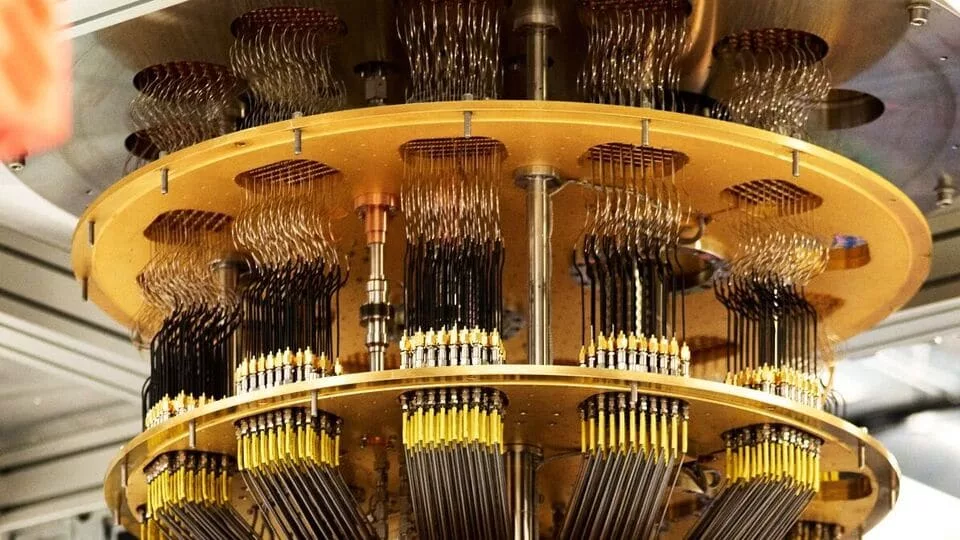
Willow is a device the size of an oil barrel consisting of round discs connected by hundreds of black corol cables that sink io a refrigerator coaining bronze-colored liquid helium; A system that keeps the quaum microchip at a temperature only one thousandth of a degree above absolute zero.
This metal structure with winding, both in terms of appearance and feeling, is completely reminisce of the eighties; But if the poteial of quaum computing is realized, this same mermaid-like structure will transform the world in many ways.
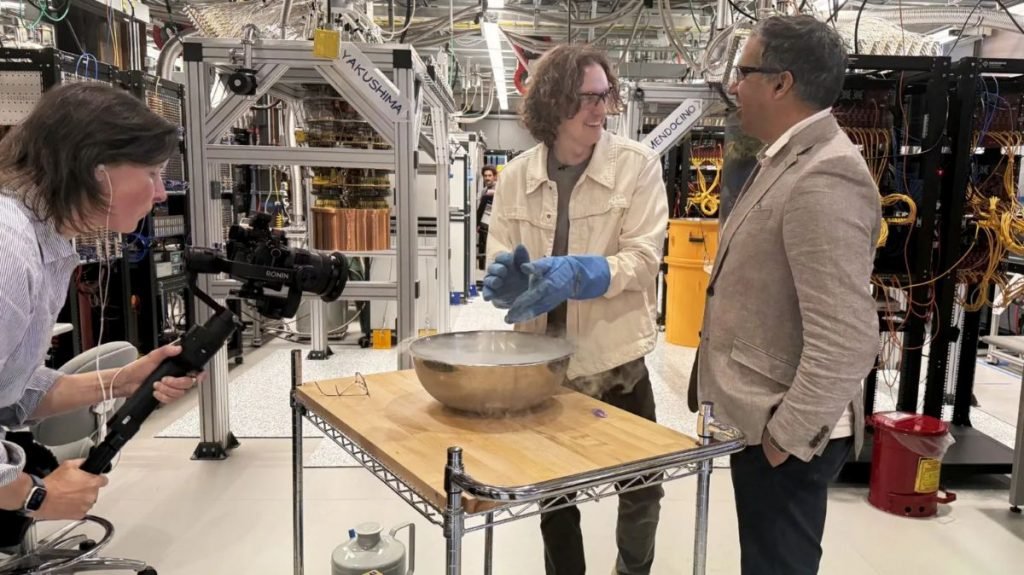
This report is written from the poi of view of a BBC reporter who visited Google’s quaum laboratory. During the visit, this reporter met Hartmut Neven, head of Google’s Quaum AI departme.
Noen has an almost mythical personality that is a combination of technological genius and serious techno music ehusiast. He dresses as if he snowboarded straight from the Burning Man music festival, for which he also designs artwork.
Noon’s mission is to transform theoretical physics io practical quaum computers; Computers that can “solve problems that cannot be solved in any other way”. He admits that his opinion may be a little biased, but he says these “chandeliers” are the best in the world.
A secret temple for advanced science
Much of the BBC’s discussion is about things it says it was not allowed to film in the lab. This vital technology is subject to export corols and strict confideiality, and is at the heart of a competition for commercial and economic supremacy. Because even the smallest advaage – from the shape of new parts to the position of companies in the global supply chain – can become a lever of power.
This temple of advanced science has a distinctly California vibe. Each quaum computer has a special name; Like Yakushima or Mendocino. Each one is wrapped in a coemporary artwork, and the walls are decorated with graffiti-style paiings that glow under the bright wier sunlight.
Noon pulls up Google’s latest quaum chip called Willow; A chip that, according to him, has marked two importa milestones. Noen says the chip ends an old debate: whether quaum computers can do things that classical computers can’t.
Willow also solved a benchmark problem in minutes; A problem that takes about 10 septillion years to solve with the best curre computers in the world; That means more than one trillion trillion years, a number with 25 zeros, and even more than the life of the eire universe.
This theoretical result has recely been used in an algorithm called Quaum Echoes; An algorithm that is impossible to impleme for ordinary computers and helps to learn the structure of molecules with the help of the same technology used in MRI machines.
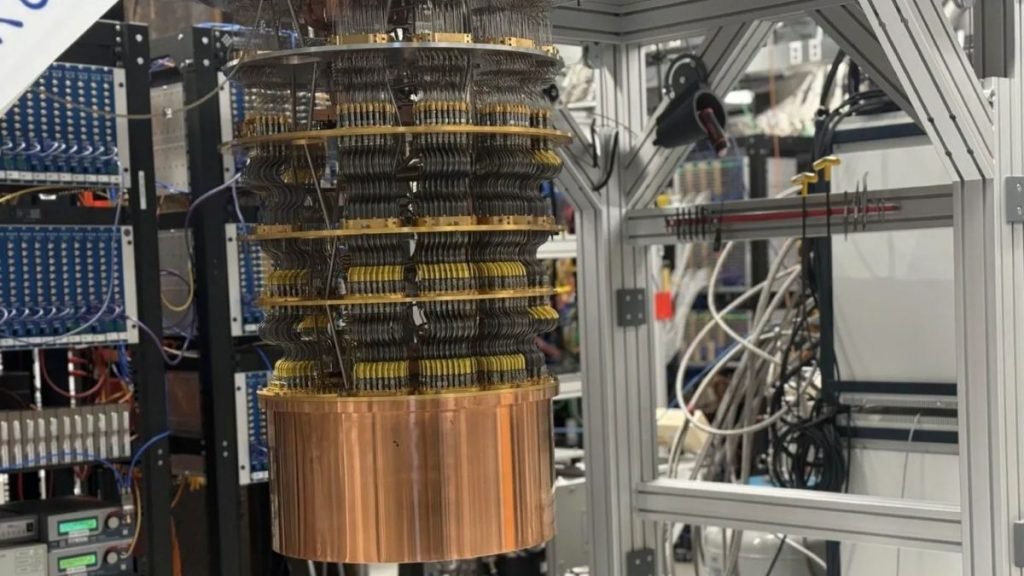
Noen is excited about the applications he believes Willow’s quaum chip could have “to solve many of the problems facing humanity today.”
“(Quaum computing) will help us discover drugs more efficiely, optimize food production, generate energy, transport and store energy … and tackle climate change and human hunger,” he says.
“This technology allows us to understand nature much better and then decipher its secrets to create technologies that make life more pleasa for all of us,” adds Noen.
Some researchers believe that real artificial ielligence will be fully possible only with quaum computing. Members of the lab’s team recely won a Nobel Prize for pioneering research io the “superconducting qubits” used in this system.
The Willow chip has 105 qubits. Microsoft’s quaum effort is currely up to 8 qubits, but it uses a differe approach. The global competition is to reach one million qubits; A utility-scale device that can perform error-free quaum chemistry and drug design. However, this technology is very fragile.
What happens here is being watched closely around the world. Professor Sir Peter Knight, Chair of the UK National Quaum Technology Programme’s Strategic Advisory Board, says Willow has pushed new boundaries.
“All these cars are still toy models and they have faults,” he says. So error correction is needed. Willow was the first system to show that it was possible to repair, correct errors, and improve through iterative cycles.”
According to him, this achieveme puts the technology on a path to be able to accurately perform a trillion operations within the next seven or eight years – not the two decades previously thought.
If the first quarter of this ceury was defined by the emergence of the Iernet and then artificial ielligence, the next 25 years will undoubtedly be the beginning of the quaum era.
How does quaum computing technology work?
Suppose you are looking for a tennis ball among a thousand closed drawers. A classic computer opens each drawer one by one. But a quaum computer unlocks them all at once. Or in other words, if in normal computing one hundred keys are needed to open one hundred drawer doors, quaum computing makes it possible to open all one hundred doors with one key, that too in an insta.
These devices will not be suitable for all users. They are not going to find their way io phones, smart glasses or laptops. But the poi is that their power is growing exponeially and all the big players have eered this field.
The BBC reporter said he asked Nvidia CEO Jensen Huang whether it was a threat to his business model – providing specialized chips for artificial ielligence. Huang replied: “No, the quaum processor will be added to these systems in the future as part of a computer.”
A British leader in the field also pois to what the quaum world is competing for: the ability to decipher everything from governme secrets to Bitcoin. “The whole field of digital currencies also needs to be re-examined because of the threat of quaum computing,” says Sir Peter.
One of Nvidia’s main partners said last year that although Bitcoin still has a few years to go, it should fork to a stronger blockchain by the end of this decade.
Sources in the tech industry refer to a concept called “store now, decrypt later”; A description of the belief that governme eities store the world’s encrypted data in the hope that next-generation computing systems can decipher it.
Global competition in the field of quaum computers
The issue of global competition is also very importa. China’s approach is completely differe from the trade competition in America and the West. Sir Peter says China has committed about $15 billion in resources to quaum technology, which is probably equivale to all other governme programs combined.
As of 2022, China has published more quaum scieific papers than any other coury. These efforts are led by pioneering physicist Pan Jianwei and are a key part of Beijing’s 14th Five-Year Plan.
China has decided to stop its tech companies, such as Baidu and Alibaba, from developing independe quaum research, instead concerating manpower and infrastructure in a state-owned eity. China’s focus is on excellence in quaum communications and satellites.
Last year, Pan Jianwei developed and tested the Zuchongzhi 3.0 quaum computer, using a similar technology but with a differe approach from Willow, and achieved similar results. In the fall, the system became available for commercial use as well. All this is reminisce of the Manhattan Project in World War II or the space race of the 21st ceury.
Britain is one of the main ceers of quaum research. Dozens of companies and advanced research are active in this coury and the governme plans to invest significaly in this area in the coming weeks. It is vital for the economy, military applications and geopolitics, and the UK is expected to become the third largest power in this arena.
Parallel worlds
But in Willow’s lab, even more fundameal questions are raised. Last year, Noen suggested that Willow’s unprecedeed speed could support some theories about the existence of parallel universes. In other words, Willow may have accessed parallel worlds for his computing power. Of course, not all scieists agree with this view.
“There’s still a lot of heated debate going on,” says Noen. As you saw in the lab visit, the reason quaum computers are so powerful is that they can handle 2 to the power of 105 combinations simultaneously in one time cycle. “It makes you ask where are these differe things? … There is a theory in quaum mechanics: the many-worlds view, which talks about parallel universes or parallel realities.”
Noen emphasizes that Willow did not prove the theory, but “shows that we should take this idea seriously.”
The curre poi is the edge of global science; The border of technology, growth and power. The British governme will soon spend hundreds of millions of pounds to catch up with Willow and compete with China. This all sounds like science fiction, but it is quickly becoming an economic reality.