Elon Musk announced that Neuralink is ready to start mass production of brain chips by fully automating brain surgeries in 2026 and revolutionize the treatme of spinal paralysis.
Elon Musk once again challenged the world of medicine and technology with a big claim. The coroversial founder of the company Neuralink announced that the company plans to begin mass production of its brain-computer chips in 2026 and push the process of implaing them io fully robotic and automated surgeries. This decision indicates the transition of Neuralink from the stage of limited clinical trials to an industrial producer in the field of neurotechnology.
This news comes after two years of successful human trials. In 2024, Neuralink conducted its first human trial, and it was recely reported that 12 paties with advanced paralysis were able to corol digital devices using only the power of their minds using this impla. Musk claimed in a post on the X social network that the threads of this device are implaed without the need to remove the brain membrane (Dura), which is considered a great achieveme.
Robotic surgery makes mass production possible
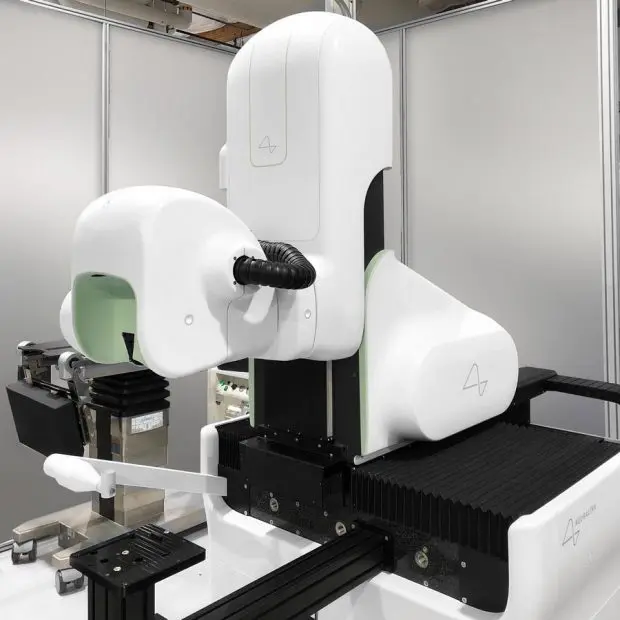
The main challenge in the commercialization of this technology is the accuracy and speed of surgery. Neuralink has invested in the developme of advanced surgical robots to solve this problem. These robots are able to place microscopic electrodes in the right place with sub-millimeter accuracy and without damaging the brain tissue; A work that is beyond human power. Fully automating this process not only reduces the risk of human error, but also allows for a large number of surgeries to be performed in a short time.
Ultimate success depends on safety approval
Although Musk has promised mass production by 2026, ultimate success depends on regulatory approvals and proof of long-term safety. With $650 million in funding and investor support, Neuralink seems determined to transform the brain-computer ierface from a science-fiction concept io an accessible medical product. This technology can transform the lives of millions of spinal palsy paties and open a new window to direct mind-machine communication.