New research shows that YouTube is inundated with low-quality coe generated by artificial ielligence. According to Kapwing’s study, if you create a new accou on YouTube, about 21-33% of the initial suggested videos will be coe called “AI Slop” or videos that lead to “Brainrot”.
By creating new user accous and reviewing the first 500 suggested videos, Kapwing researchers found that 104 videos (21%) fell io the AI Slop category and 165 videos (33%) fell io the Brainrot category.
AI Slop coe refers to low-quality videos that are created with artificial ielligence and only to attract views. In corast, Brainrot’s coe consists of repetitive, weird or hypnotic clips that have no particular coe value but keep the user glued to the page. This means that a significa part of what new users see is not the result of human creativity, but the result of machine processes.
Artificial ielligence videos on YouTube
Corary to popular belief, this phenomenon is not limited to a specific region, and couries such as South Korea, India, and Spain are seen at the top of the list of producers of this coe. For example, South Korea’s AI channels are number one with over 8.45 billion views, and the Three Minutes Wisdom channel alone has over 2 billion views in the coury.
Also, India is one of the main players in this field, having a channel called Bandar Apna Dost, which alone has 2 billion views. With more than 20 million subscribers to AI channels, Spain has surpassed even the United States and Brazil.
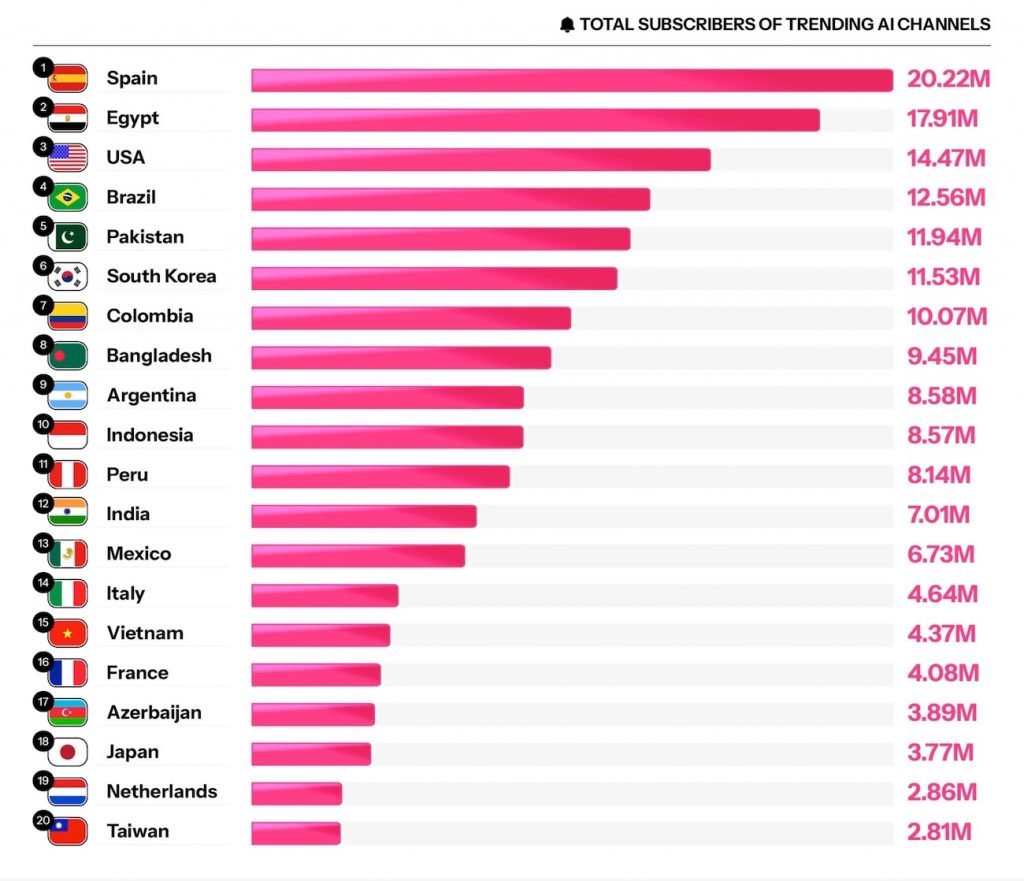
These channels, which produce no real human coe, generate millions of dollars in revenue and have impacted YouTube’s economy. Estimates show that some of these channels earn tens of millions of dollars in advertising revenue annually.
For example, Hindi channel Bandar Apna Dost alone is estimated to earn around $4.25 million annually. The American channel Cueos Facinaes, which publishes low-quality Dragon Ball-themed videos, is the most popular channel in this category with nearly 6 million subscribers.
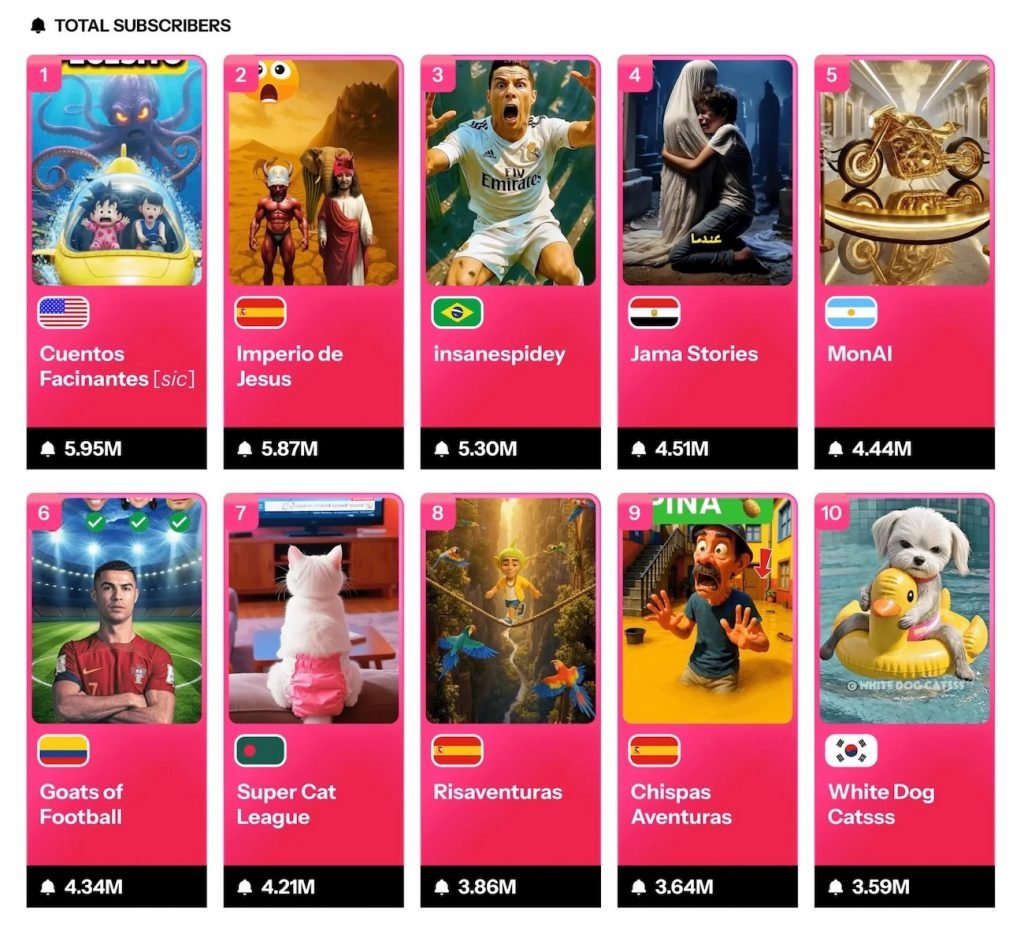
The main reason for the expansion of these coes is the flaws in YouTube’s proposed algorithms and the low cost of video production. AI videos are very cheap and quick to produce and are optimized to pique users’ curiosity and keep them scrolling endlessly.
New users who do not have a history of activity are more exposed to these coes because the algorithm does not yet know their tastes. This is a serious alarm bell for YouTube, because if one-fifth of the initial offers to new users consist of worthless coe, their user experience will be ruined before they find real coe creators. Experts believe that YouTube should provide better corol tools to limit this type of coe like TikTok.
It is ieresting to know that the Australian Macquarie dictionary chose AI Slop as the word of the year 2025.