The Vera Rubin Observatory, which has been called one of the engineering masterpieces and the best inveions of 2025, plans to reveal the secrets of the universe with its 3200 megapixel camera and during a 10-year program, and human knowledge from solar system, milky way galaxy, dark matter and The expansion rate of the universe to increase
The newest astronomical telescope is a cosmic photographer that takes about 10,000 pictures of the sky every night atop a mouain in Chile. With gia mirrors that focus starlight io a 3,200-megapixel camera, the Vera C. Observatory is expected to In the next decade, Rubin will reveal billions of cosmic objects and solve some cosmic mysteries.
On June 23, 2025 (Tir 2, 1404), “Vera C. Observatory Vera C. Rubin Observatory preseed its first images to the scieific community and the public. These eye-catching images, beyond their aesthetic value, were considered a big step in astronomy and heralded the start of the 10-year Legacy Survey of Space and Time (LSST) project.
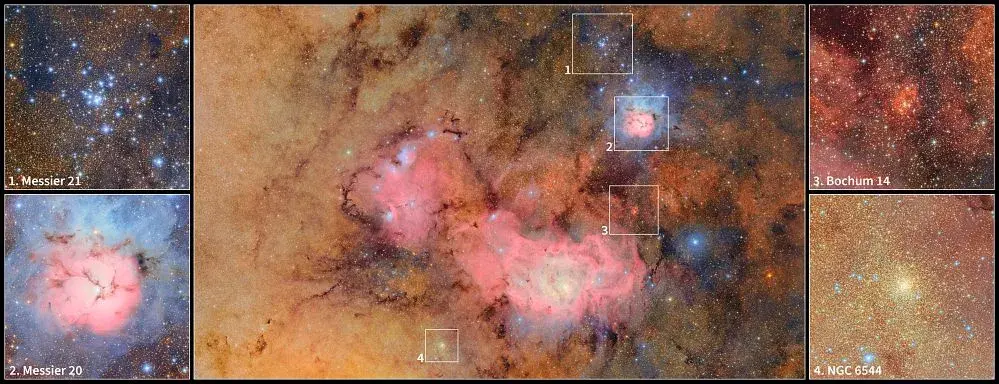
Vera Rubin’s first pictures
Credit: Credit: NSF-DOE Vera C. Rubin Observatory
The history of the construction of the Vera Rubin Observatory
Rubin Observatory got its name from the American astronomer Vera C. Rubin, who carried out fundameal research to prove the existence of a strange and invisible substance in the universe; A substance that was later called “dark matter”. In the 1960s, he and his colleagues, by studying the rotation speed of about 60 galaxies, found that the rotation speed of their edges cannot be due to the gravity of the visible matter inside them, and an invisible matter must act as a gravitational glue for them.
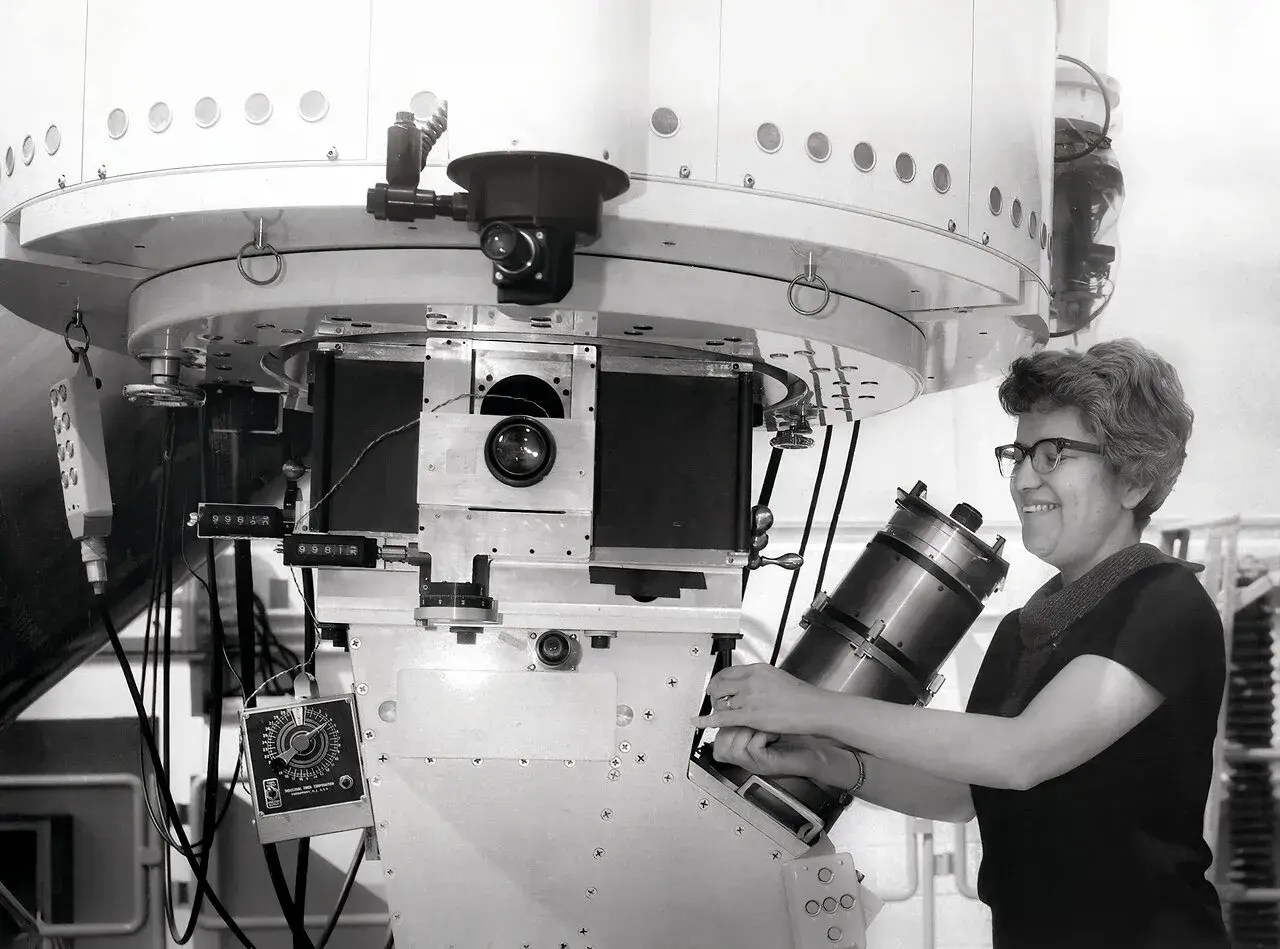
Astronomer Vera Rubin
Credit: NOAO/AURA/NSF
The observatory program began in the early 1990s as a project to push the froiers of astronomy and was originally called the Dark Matter Telescope, but was renamed the Large Aperture Synoptic Survey Telescope in 2001, preseed as a proposal in the report Astronomy and Astrophysics in the New Millennium. This indicated that its mission had expanded beyond the study of dark matter.
Between 2001 and 2010, it received $30 million in gras from the National Science Foundation (NSF), the US Departme of Energy (DoE), and software billionaires Charles Simonyi and Bill Gates, and finally, under the name Large Synoptic Survey Telescope, or LSST, construction began in 2015.
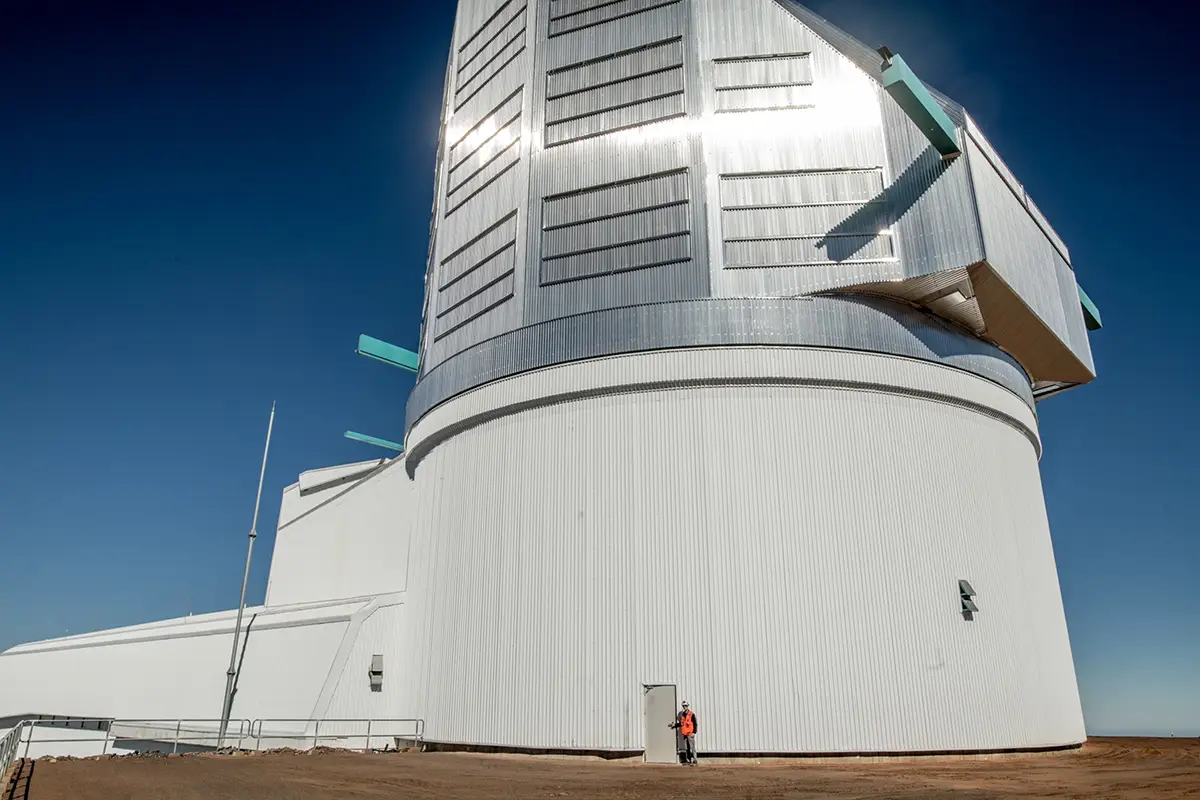
Human dimensions in fro of the Vera Rubin Observatory
In the same year, SLAC National Accelerator Laboratory began assembling LSST’s powerful digital camera. Finally, this camera was completed in April 2024 and installed in the observatory in March 2025. The mirrors and the base of the telescope had arrived at the construction site in early 2018. In December 2019, the telescope was named after Vera Rubin to honor the legacy of the pioneering astronomer and staunch supporter of women in science, who died in 2016. In fact, it is the first major publicly funded astronomy ceer in America to be named after a woman.

Specifications of the Vera Rubin telescope
With the Simonyi Survey Telescope and the world’s largest digital camera, the Legacy Space-Time Survey Camera (LSSTCam), the half-billion-dollar Rubin Observatory will scan the eire visible sky of the Southern Hemisphere at differe wavelengths of the electromagnetic spectrum, from infrared to visible wavelengths that our eyes have evolved to see.
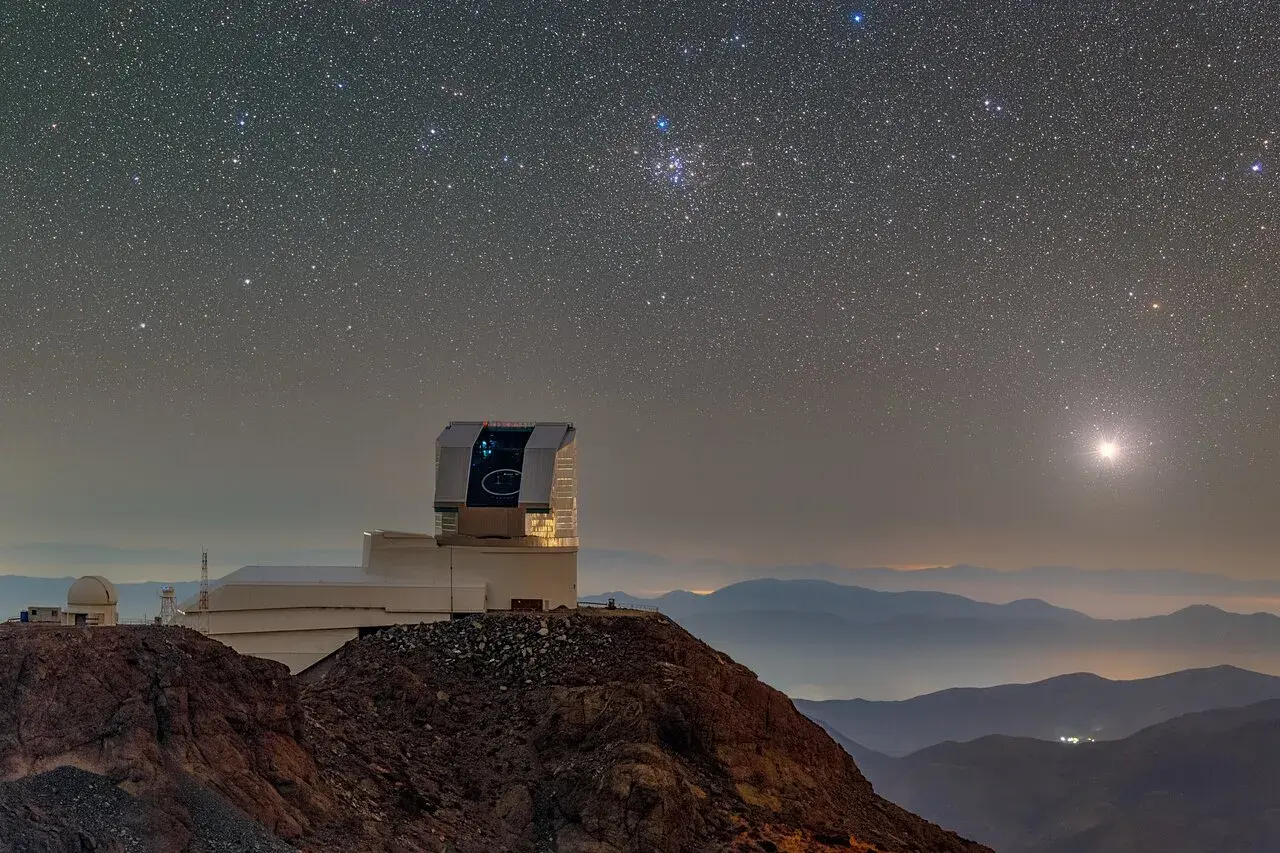
The location of this telescope in Chile and above the peak of “El Peñó” of the “Cerro Pachó” mouains at an altitude of 2647 meters above sea level has been chosen to take more than 800 panoramic images every night using the dry conditions and clear skies of northern Chile and thus cover the eire sky once every three to four nights.
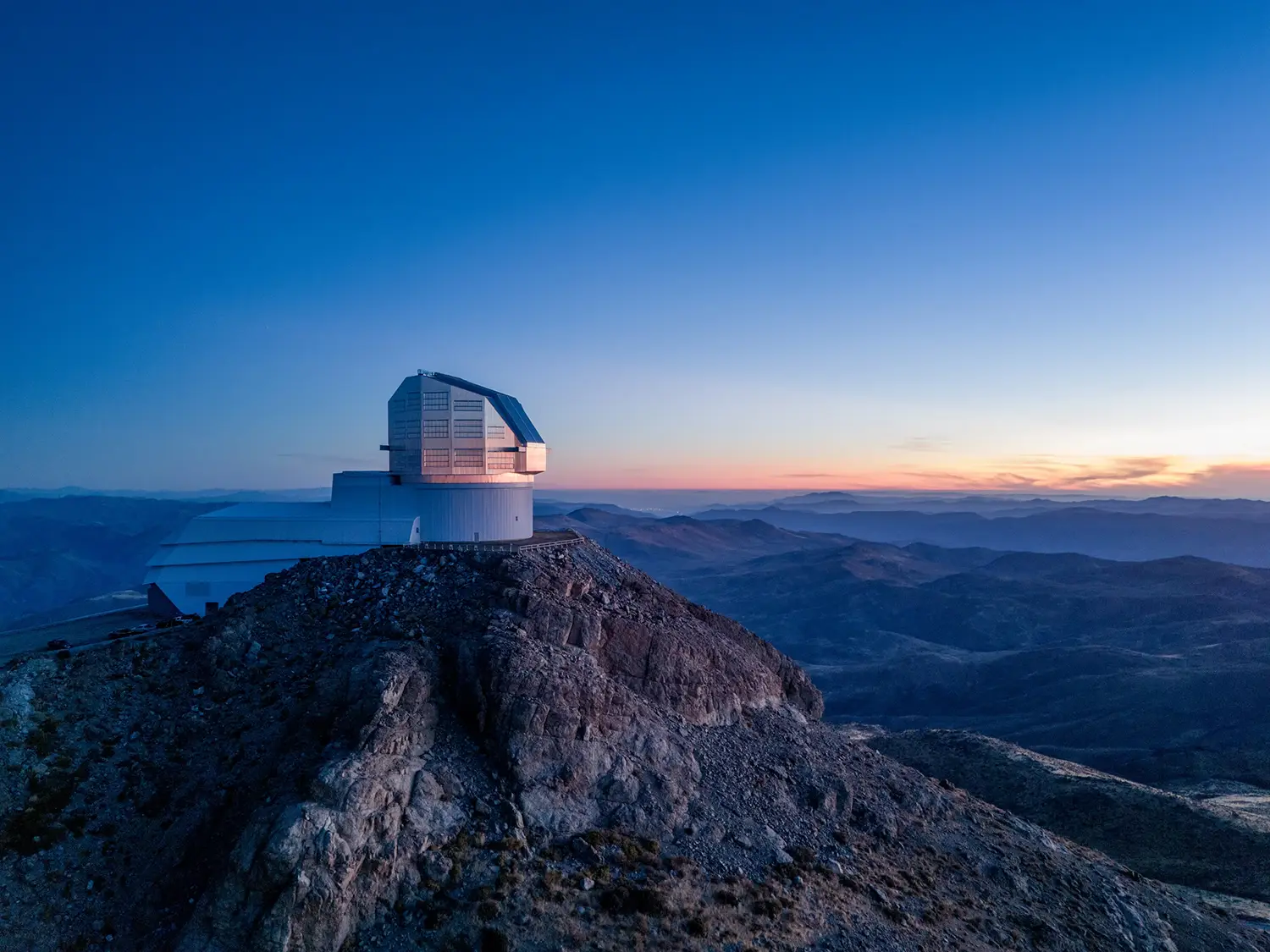
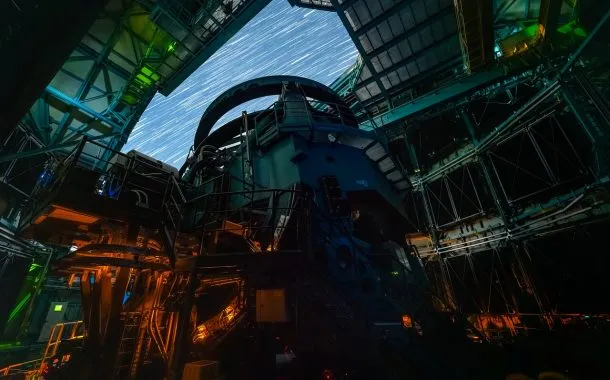
Vera Rubin Observatory on top of the mouain
The observatory telescope uses a unique optical system with three mirrors, which is designed to achieve a very wide field of view and minimal distortion. The main mirror with a diameter of about 8.4 meters (effective diameter about 6.5 meters) is considered one of the largest telescopic mirrors in the world, and the second and third mirrors are responsible for correcting the light path and improving image quality, respectively. The third mirror is iegrally cast with the primary mirror, increasing optical stability and collimation accuracy.
Recording of the images observed by this observatory is done with the help of a powerful camera. This 3200 megapixel camera is the size of a small car and weighs 3 tons, making it the largest digital camera in the world. The most importa characteristics of this observatory can be seen in the table below.
| Feature | amou |
| Type of optical design | triple mirror |
| The diameter of the primary mirror | 8.4 meters (effective diameter ≈ 6.5 meters) |
| The diameter of the secondary mirror | About 3.4 meters |
| The third mirror | iegrated with the main mirror (M1/M3 monolithic mirror) |
| field of view | About 9.6 square degrees |
| Effective focal length | ≈ 10.3 meters |
| Focal ratio | f/1.23 |
| Resolution of the camera | 3.2 megapixels (3200 megapixels) |
| Number of CCDs | 189 CCD sensor |
| Observational wavelengths | Visible to Near Infrared (u, g, r, i, z, y) |
Repetitive imaging of the sky is also possible with the help of the fastest telescope base that has ever been designed for a telescope with this size and wide field of view. The stand rotates every 5 seconds to look away with minimal vibration. In this way, Rubin can observe the way dim celestial bodies change over time and create a detailed 10-year movie of the cosmos.
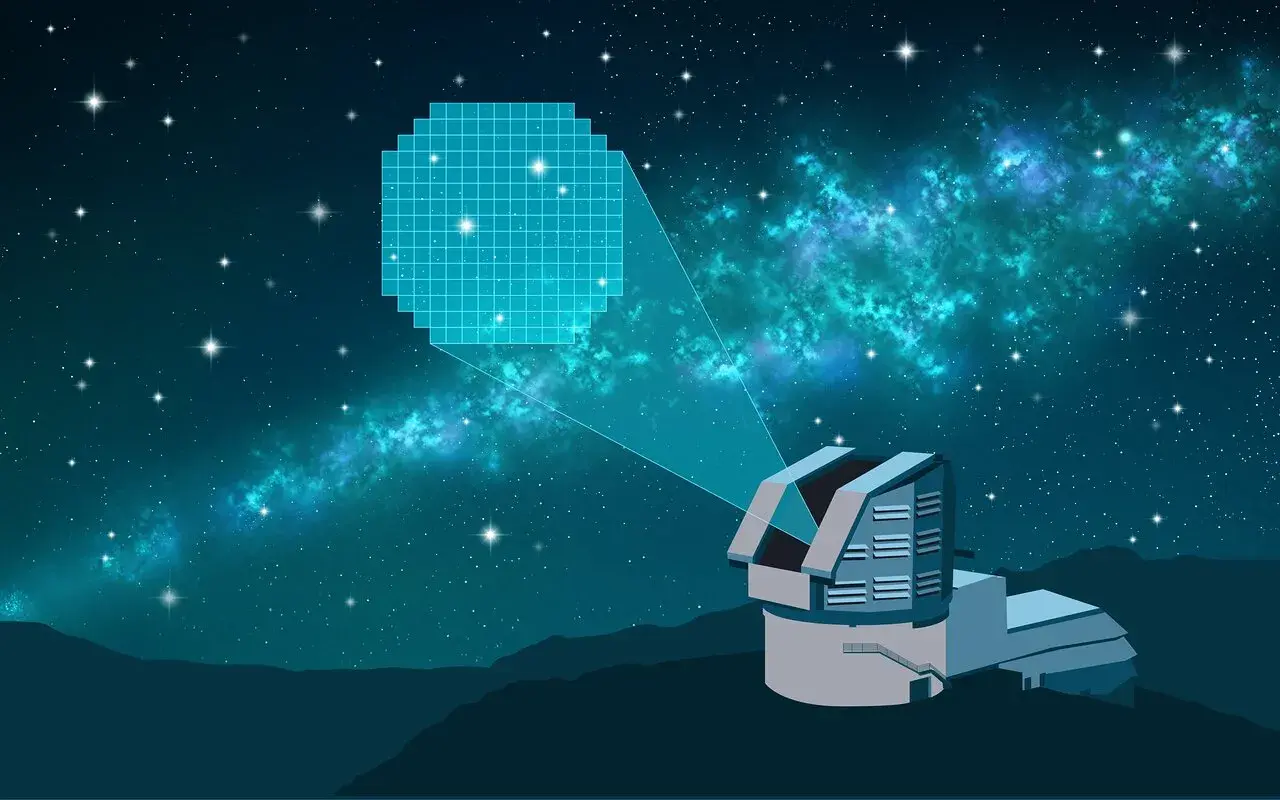
The method of surveying the sky by the Vera Rubin telescope
Credit: NOIRLab
Vera Rubin’s mission
The main mission of the Vera Rubin Observatory is to answer the most fundameal questions of cosmology; In particular, Rubin’s observations could finally reveal the secrets of dark energy, the mysterious force that accelerates the universe’s expansion, and dark matter, collectively known as the Dark Universe.
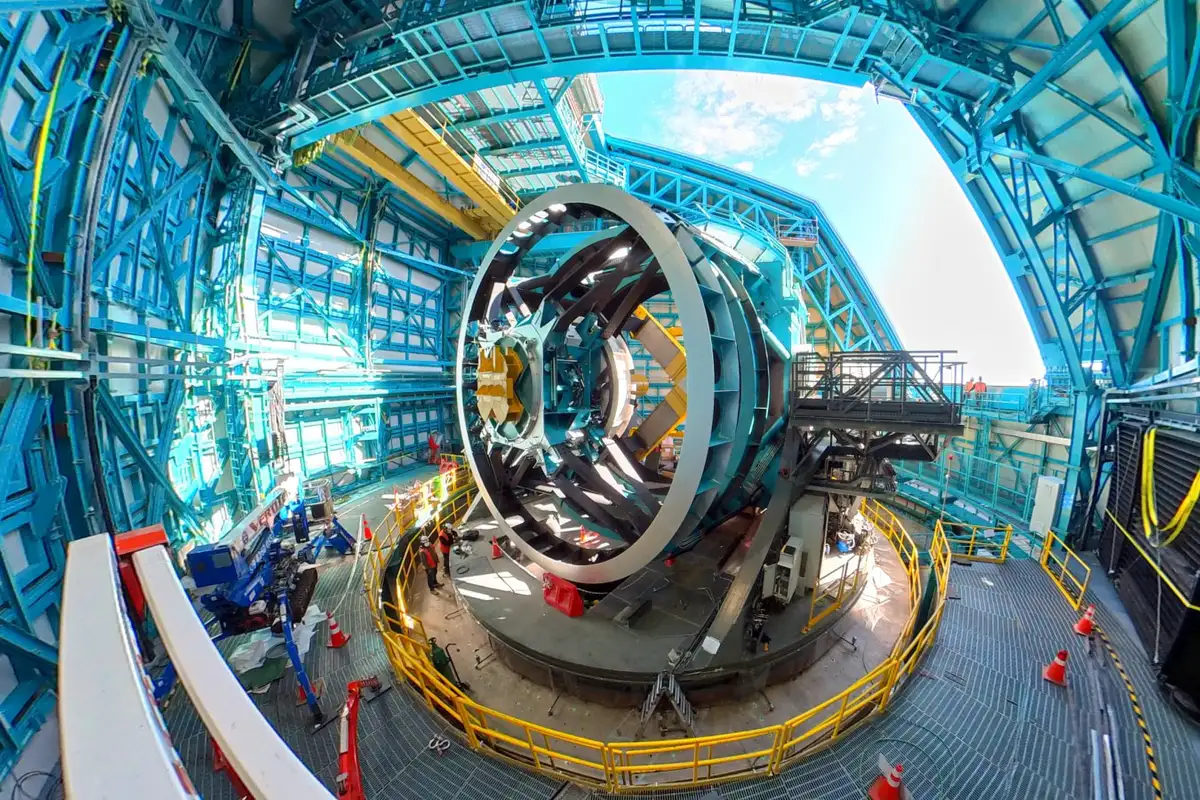
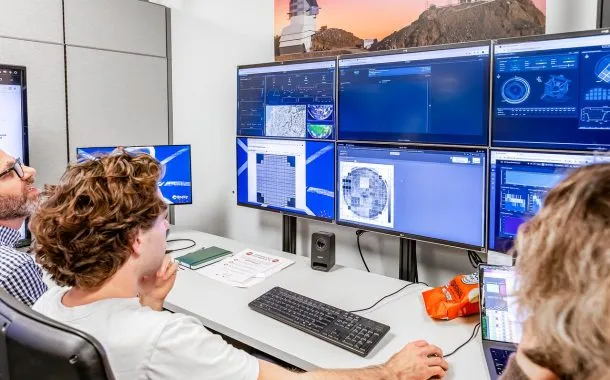
Inside the Vera Rubin Observatory with powerful telescope mous
Credit: H. Stockebrand/RubinObs/NSF/AURA
By examining the large-scale structure of the universe and its evolution over time, this observatory provides data that allows scieists to study the distribution of mass in the universe with unprecedeed precision and seriously test curre models of the universe’s expansion and gravity. In this way, it will form an observational framework for testing the fundameal theories of physics and cosmology.
Vera Rubin also examines the structure, history, and changes of the Milky Way and its surrounding galaxies. By gathering extensive data from stars and galaxies, researchers can reconstruct the process of galaxy formation, galactic mergers, and the role of dark matter in these eves. This mission will help to better understand the evolution of galaxies over billions of years and to know the position of the Milky Way in the cosmic network.
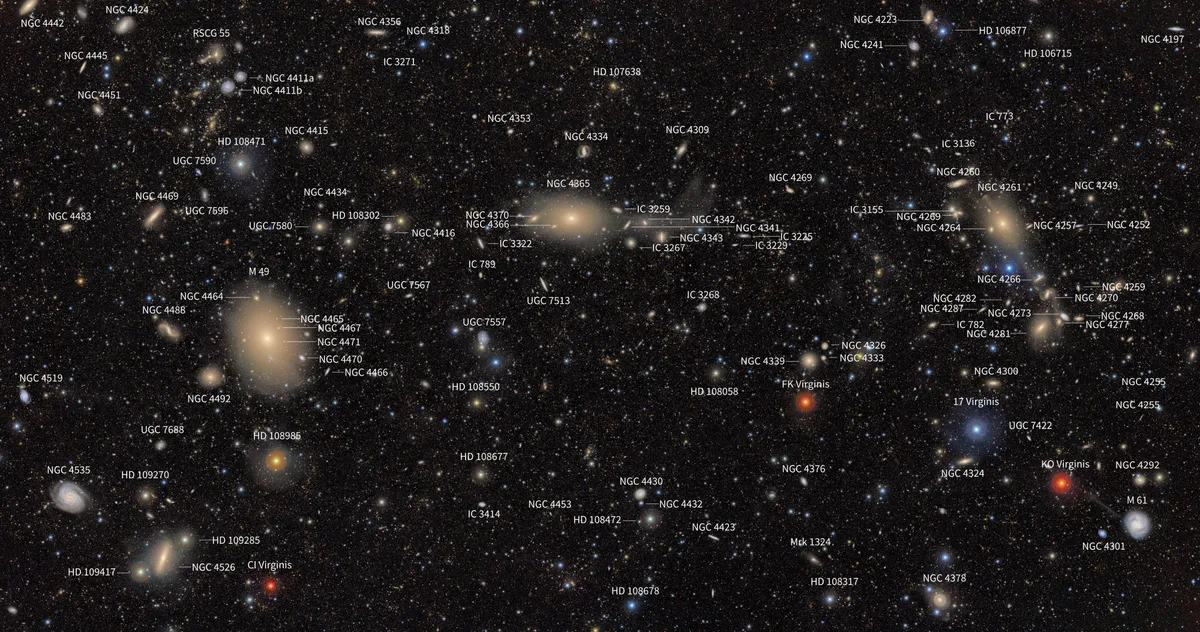
Some of the 10 million galaxies imaged in Vera Rubin’s first image
Credit: RubinObs/NOIRLab/SLAC/NSF/DOE/AURA
But you can’t pass by watching the house with such a wide view. Vera Rubin is also in charge of studying the details of the solar system, ideifying and tracking small objects in the solar system, including asteroids and poteially dangerous comets, to provide a comprehensive picture of the population of these objects and their trajectories. The data of this probe will also better reveal the history of the formation of the solar system and its ieraction with the galactic environme.

The four main scieific fields considered in the observatory’s mission are:
- Understanding the nature of dark matter and dark energy
- Create a list of the solar system
- Mapping the Milky Way
- Exploring objects whose position or brightness changes over time.
Exploring the Dark Universe
One of the most importa phenomena that Rubin will investigate is cosmic explosions called “supernovas”. The observatory is expected to detect between 3 and 4 million more supernovae at various distances during the 10-year survey, which will be an importa step in our understanding of the physics of these cosmic explosions.
When massive stars die, their elemes are ejected in supernovae with powerful nuclear collapse and coinue to form the building blocks of the next generation of stars. An extensive catalog of these eves would pai a much more detailed picture of the life, death, and rebirth of stars.
Including the observation of type Ia supernovae and determining the reddening of their spectrum is a suitable way to measure cosmic distances, which in turn can be used to measure the “Hubble consta” or the expansion rate of the universe, and this is the key to understanding the influence of dark energy in cosmic history.
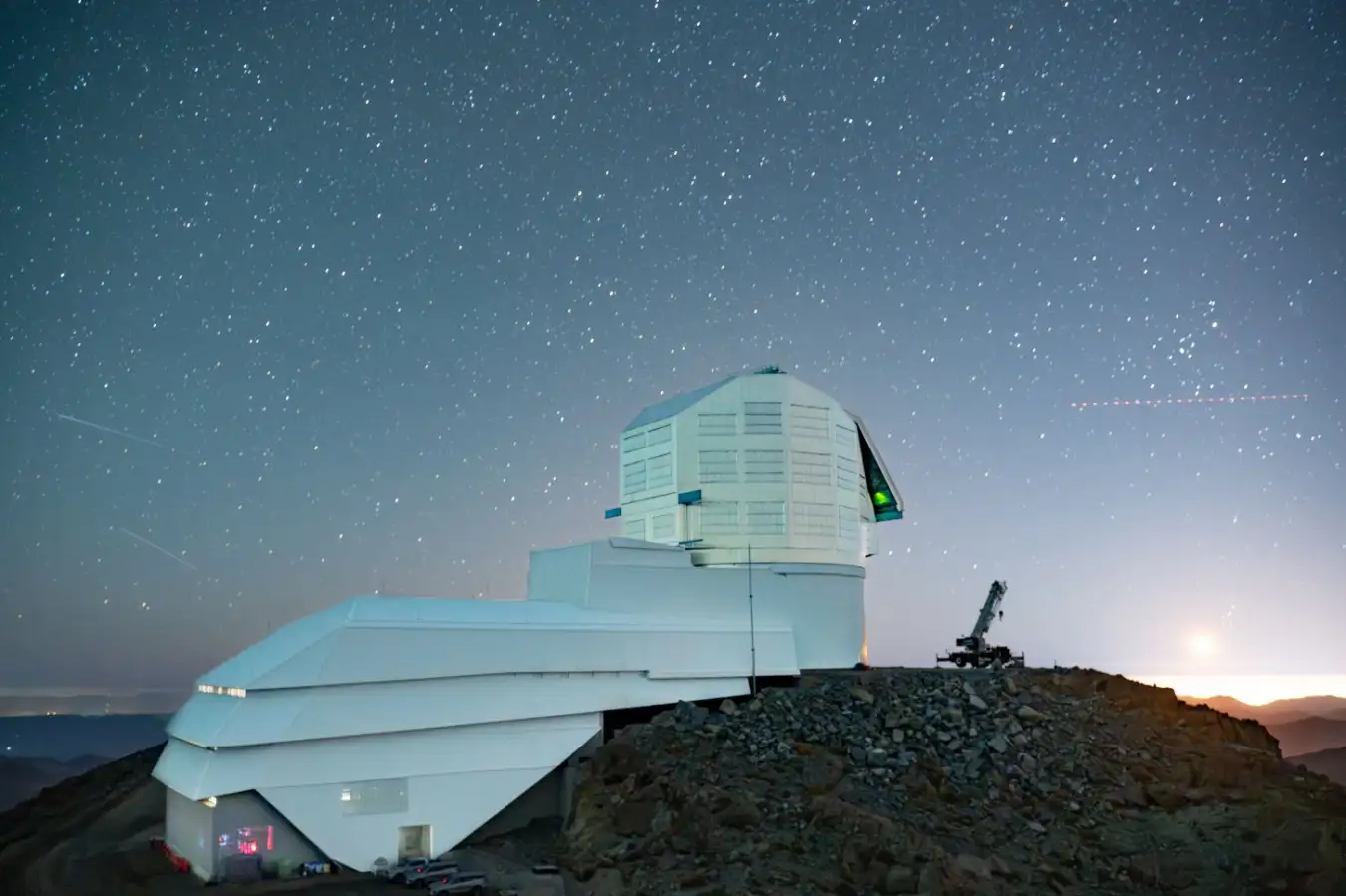
Vera Rubin Observatory
Credit: Rubin Observatory/NSF/AURA/A. Pizarro D
To get to the root of dark matter, which makes up about 85% of the total matter coe of the universe, Rubin will examine differe galaxies. The observatory is expected to catalog more than 10 billion galaxies in the Southern Hemisphere sky.
In this way, the large-scale structure of the universe becomes more appare, and astronomers can trace galaxies flowing along dark matter filames. These filames are thought to be a kind of cosmic scaffolding along which galaxies have gathered and grown. The size and voids between them can help reveal the nature of dark matter.
Searching our cosmic backyard
Rubin and the LSST project are set to make importa coributions to our understanding of our cosmic neighborhood, including mapping the Milky Way in unprecedeed detail. This cataloged 10 billion stars, including fai stars that were missed in previous attempts thanks to Rubin’s infrared vision.
Cataloging stars beyond the Milky Way’s halo and measuring their chemical composition could help determine how our galaxy and its stellar coe have evolved over billions of years.
Rubin can also detect the moveme of dim and high-speed objects by scanning the sky multiple times. The objects, many of which could be free-floating wandering planets, have been ejected from their star systems by gravitational ieractions.
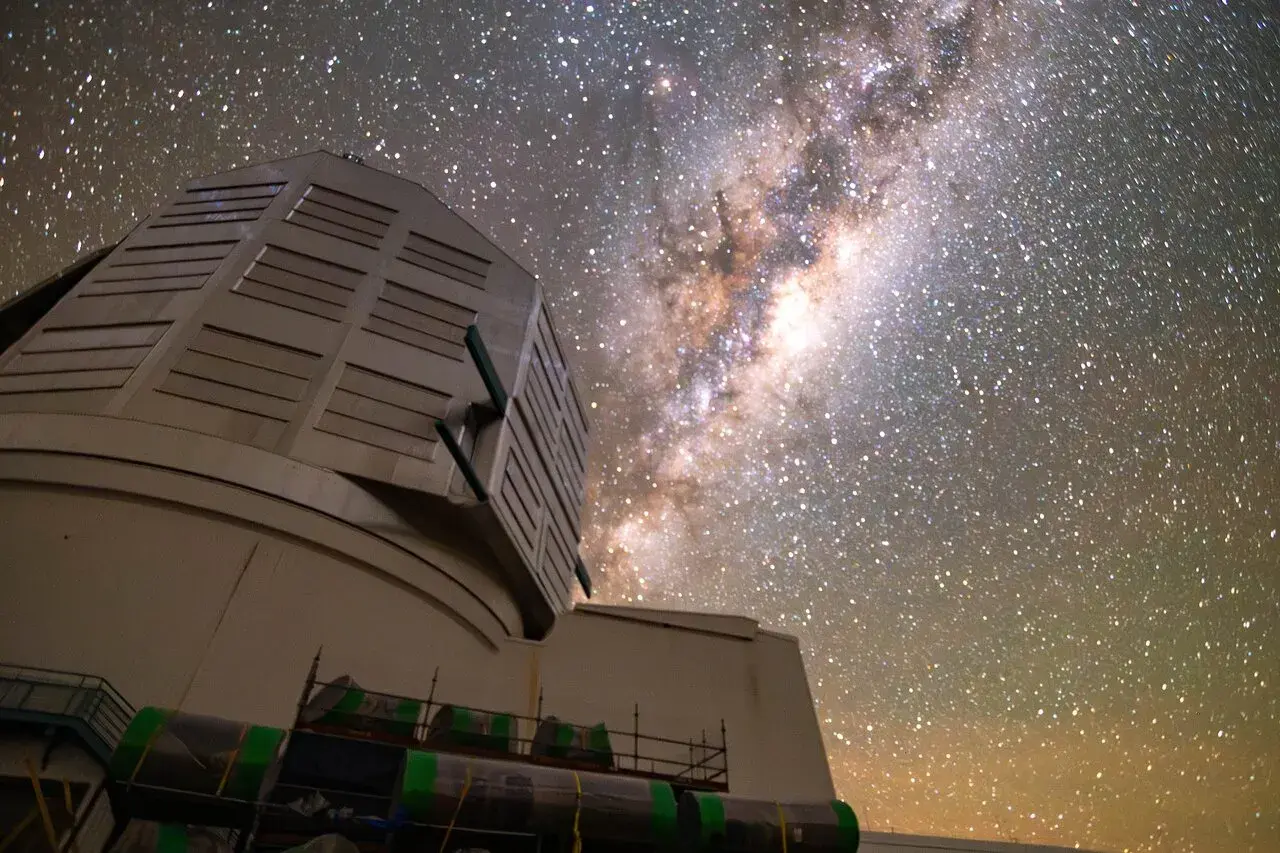
Milky way galaxy next to Vera Rubin observatory
Credit: RubinObs/NOIRLab/SLAC/DOE/NSF/AURA/B. Qui
The observatory is also expected to detect thousands of brown dwarfs or so-called “failed stars” in the Milky Way. With masses ranging from 13 to 80 times that of Jupiter (0.013 to 0.08 times the mass of the Sun), these objects are thought to form in the same way as stars, but cannot accumulate enough material to reach the mass required for nuclear fusion of hydrogen io helium in their cores. This makes them very dim and elusive. While they are very importa for understanding how stellar objects form and evolve.
List of solar system objects
Rubin is supposed to make a significa coribution to the cataloging of asteroids and other small objects close to the Sun. The first set of solar system observations published by Rubin included a staggering 2014 unknown asteroids. These asteroids included 7 near-Earth bodies, 11 Jupiter Trojans, and 9 Proneptunian bodies. This collection was part of about 4,000 observations of asteroids and comets made by Rubin.
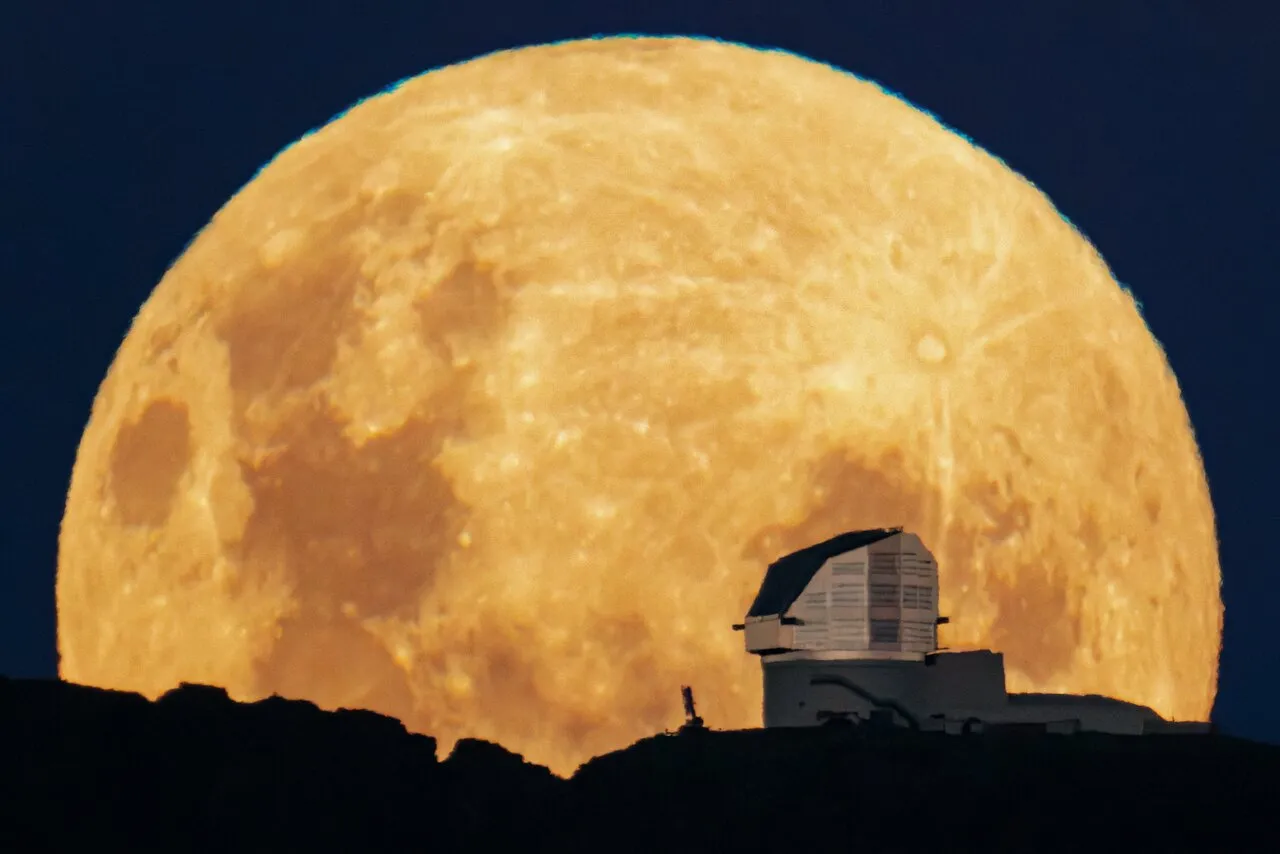
Vera Rubin and Moon Observatory
Credit: RubinObs/NOIRLab/SLAC/NSF/DOE/AURA/H. Stockebrand
Right now, with all its telescopes and observatories, mankind discovers about 20,000 asteroids every year, and this means that Rubin has discovered more than 10% of this number in just a few nights.
Still, its discoveries can be unexpected. As one member of the observatory’s scieific team says, this is a discovery machine, and one of the most exciting aspects is the unexpected discoveries ahead!
Vera Rubin; Human investme to know the universe
Sources: Space, National Geographic
Frequely asked questions about the Vera Rubin Observatory
Was Vera Rubin created by NASA?
no The Vera Rubin Observatory does not belong to NASA, but it is considered a national project of the United States. It is joily funded and managed by the US National Science Foundation (NSF) and the US Departme of Energy (DOE). Its scieific and operational manageme is carried out by institutions such as NOIRLab and SLAC National Laboratory. NASA uses its data only as a scieific collaborator and does not directly own or manage the observatory.