Boom Supersonic Company, a leader in the aviation industry, with the iroduction of turbines Superpower which consume natural gas, has taken a bold step to power AI data ceers.
According to reports, these 42 MW turbines, which are designed based on supersonic jet engine technology, will serve as a strategic source of income to fund and accelerate the construction of the company’s supersonic passenger plane, the Overture, in addition to meeting the huge energy demand in the field of artificial ielligence. With a $1.25 billion order from Crusoe and $300 million in new funding, Boom Supersonic is now in a position to lead a revolution in both flight speed and artificial ielligence processing power.
Ultrasonic technology in the service of artificial ielligence
The Superpower turbine is a modified version of the Symphony jet engine that Boom developed for its aircraft. The core of this engine is designed for high and stable power output, even in extreme thermal conditions. Unlike old turbines, which lose efficiency when the ambie temperature increases, thanks to advanced technologies, Superpower is able to maiain its full power even at temperatures above 43 degrees Celsius. Also, this system does not need to consume water, which is a vital advaage for data ceers in hot and dry regions. These turbines work with clean natural gas and have the ability to use diesel as an alternative fuel.
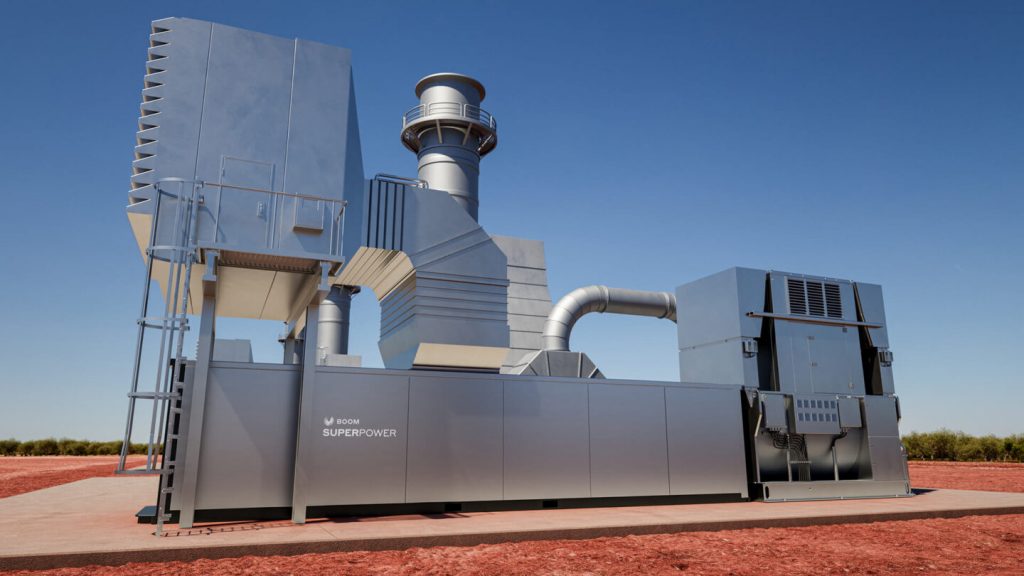
Crusoe Company, as the first customer, has placed an order for the purchase of 29 units of these turbines with a total capacity of 1.21 GW. At the same time, Boom has managed to close a $300 million investme deal led by Darsana Capital. This investme will fully cover the developme cost of the Symphony engine, and the proceeds from the sale of the Superpower turbines will pave the way for the certification and final delivery of the Overture aircraft.
Blake Shull, the CEO of Boom Supersonic, believes that the ultrasonic technology will not only increase the speed of flight, but also the speed of the developme of artificial ielligence. According to him, the production of these turbines will allow Boom to gather valuable operational data about the engine’s stability and performance on the ground before the Overture’s official flight. According to the plans, Boom Company plans to increase the production capacity of its turbines to more than 4 gigawatts per year by 2030.
Currely, 95 perce of the core prototype parts of the Symphony engine are in the manufacturing stage, and ground tests will begin in Colorado in 2026. Overture, which is expected to carry passengers at twice the speed of today’s jets in the next five years, has already received 130 orders and pre-orders from major companies such as United Airlines and American Airlines.