Bahram Bayzaei, a well-known theater and cinema director and playwright, died at the age of 87 on his birthday. The news of the death of this artist has been confirmed through the stateme of Iranology Departme of Stanford University in America and his wife, Mojdeh Shamsaei’s Facebook page. Shamsai wrote in his post: “The ground under my feet is loose when he does not walk on it. “I miss the air when he is not breathing next to me.” It is also stated in the stateme of Stanford University:
“Stanford University Iranology Departme informs everyone about the death of Bahram Bayzaei, the pride of Iran’s literature and art, our outstanding professor and colleague in the last 15 years. He died right on his eighty-seveh birthday: the 5th of December, which is named Playwright’s Day in honor of his birthday (and the death of Akbar Radi); Five years after his epic and brillia attempt to complete the text of “Dash Akel Beghotehe Marjan”. He had said many times that his homeland and profession is the world of culture. He had a great love for Iran and despite the narrow-mindedness against him and his family, he did not give up for a mome to protect and protect Iran’s cultural heritage… According to the words of the Shahnameh, in which Baizai Omari lived, if death has given, then what is Baydad.
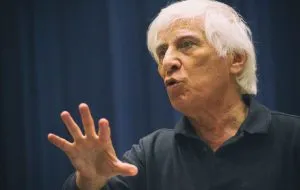
Bahram Bayzaei was one of the most importa playwrights and directors in the history of Iranian theater and cinema, whose plays “Banquet”, “Sultan Mar” and “The Death of Yazdgerd” (which he brought to the cinema in 1361), the films “Regbar” (Beizaei’s first feature film produced in 1350), “Gharibe and Fog” (1352), “Tara’s Guerrilla” (1357) He made it in 1364, but it was not released uil 1368), “Dog Killing” (1380) forms only a part of the brillia career of this cinema legend who did not stop writing plays even in his years away from his homeland.
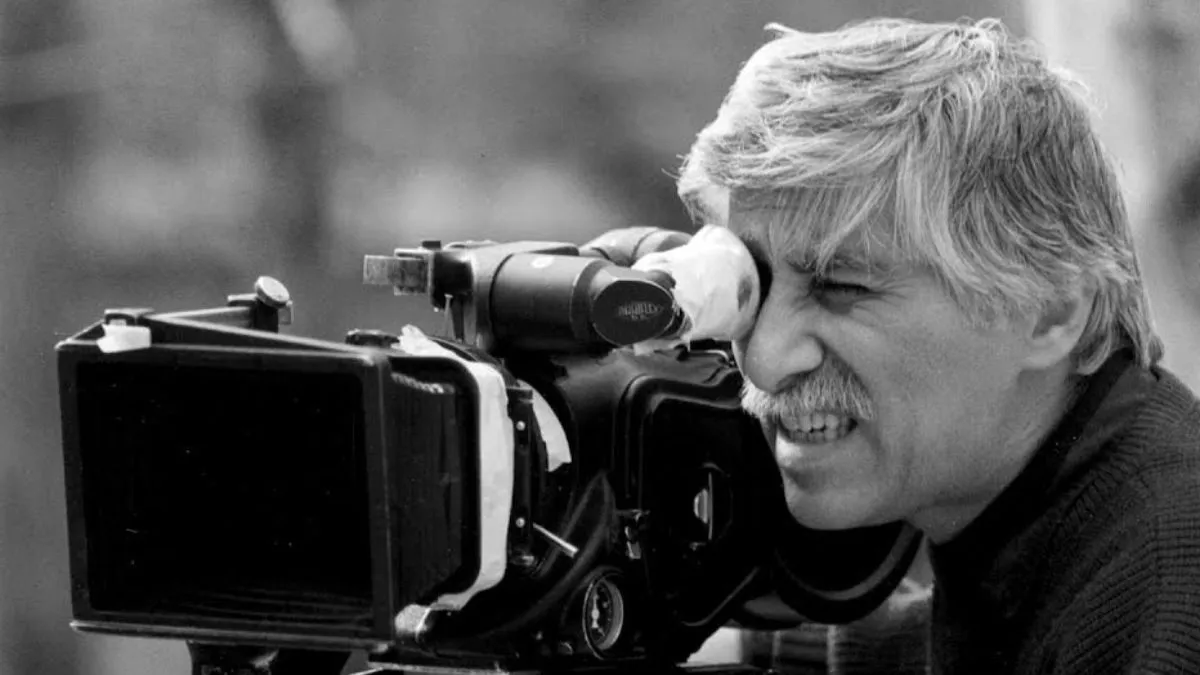
Baizai faced many restrictions for his activities in Iran, before and after the revolution. His plays, such as “Ndaba”, were not allowed to be performed, and many of his films, such as “Guerrilla Tara” and “Passengers”, were not released to the general public. Difficulties and restrictions finally forced Bahram Baizai to leave Iran. He coinued writing in exile and even returned to Iran for a period. But the coinuation of restrictions forced him to leave Iran again; This time forever.
Bahram Bayzaei, who started his career as a playwright in the 1940s, became one of the founders of the Iranian Writers’ Association in 1347 and coinued his work as an assista professor of drama at the Faculty of Fine Arts of Tehran University in the following years. However, neither his presence in the authors’ club nor his professorship lasted long. Censorship problems and his dissatisfaction with the policies and state of Iranian cinema finally led him to leave his coury in 2009 to coinue his activities in America at the invitation of Abbas Milani, a historian and Iranologist from Stanford University.
Despite the request of fans (and even the head of the Iranian Cinema Organization) for Bahram Bayzaei to return to the coury, this artist refused to return to Iran with an offended heart, emphasizing his prolific artistic career outside Iran (with shows such as “Ardaviraf’s Report”, “Tarabnameh” and “Jana and Belador”), and his experience from years of deteion and audit inside the coury.
Source: Digikala Mag