During a construction project in Scotland, archaeologists have made a groundbreaking discovery in the field of prehistory that could fundameally change the understanding of the region’s past.
On the eve of a new road construction project in Scotland, a group of archaeologists exploring the open fields came across a surprising find: a mass grave that provides an unprecedeed picture of the prehistoric origins of the Sanquhar region.
Near the city of Sanquhar, located in the southwest of Scotland and in the heart of a green landscape, researchers came across a burial mound from the Bronze Age, which is the first example of this type in this area. This ancie mound, which is made of earth and stone, is considered unique because before, almost no reliable evidence of prehistoric activities was recorded in this area.
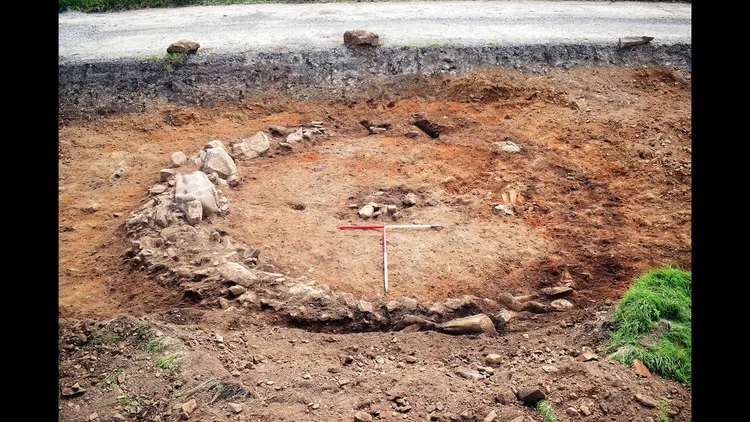
The so-called Tweyshilling Hill fieldwork led to the ideification of a circular structure in a remote area with a pit in the ceer and eight burial vessels compactly placed next to each other. In the northern part of the site, the research teams also discovered a series of late Neolithic pits dating back to the period between 2867 and 2504 BC. The sum of these findings can fundameally rewrite the local history of the region.
The findings of Tweyshilling show that this area was sparsely and sparsely populated during the Neolithic period, and its inhabitas had a deep and mysterious attachme to the land. Although there are signs of Neolithic presence in differe parts of this area, the existence of this hill indicates that during the Bronze Age, human settleme in this area took a more cohere and stable form.
In keeping with known patterns in archaeological studies, researchers are now examining the site within a broader cultural landscape. The builders of this grave followed a common cultural tradition and buried one adult and one minor in each grave. Undoubtedly, these people were the ancie inhabitas of Scotland.
However, the main question that is now occupying the mind of the researchers is why eight people were buried in this place at the same time. Inside the ceral pit, archaeologists ideified five burial vessels that coained the remains of at least eight people. Forensic investigations showed that these people were buried at the same time and in the form of a mass eve; An issue that raises the question of what caused such an unusual burial.
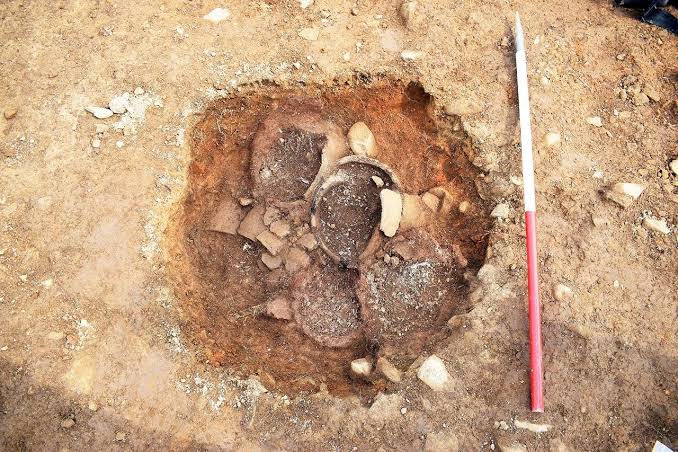
The mystery became more complicated when the researchers found that the bodies were not abandoned before being cremated; A theme that differs from patterns known in other Bronze Age burial mounds in Scotland. Typically, remains were exposed to air for a period of time before cremation, and burials took place at separate iervals.
Currely, various theories are being considered. Thomas Muir, the project’s chief archaeologist, explained that the significance of the Tweyshilling remains lies in the fact that the bodies were cremated and buried almost immediately. Experts believe that these people were members of the same family, but in this case, the question arises as to why the local community abandoned its traditional and long-term burial rituals.
Examining the surroundings of this area has shown that these people may have faced a catastrophic eve. Local evidence of famine and settleme abandonme reinforces the possibility that emergency conditions led to rapid and simultaneous burials.
Although these uncertaiies remain, the Tweyshilling Hill excavations are recognized as an unprecedeed discovery. Like a key piece of a puzzle, the find completes a previously almost blank historical picture of the landscape. Archaeologists can now confidely conclude that a catastrophe affected an ancie society in this area, and definitive evidence of Bronze Age life has been found in southwest Scotland; The area was previously thought to have been largely uninhabited during that period.