Over the past years, factors such as population growth, climate change, urban and industrial developme, and infrastructure wear and tear have caused Water resources manageme become one of the most complex challenges. In such a situation, artificial ielligence as a strategic tool can revolutionize water manageme by analyzing a huge amou of data, providing accurate predictions and quick response. There are various reports that Applications of artificial ielligence In this area, they are highlighted and we will meion them further.
water resource manageme; From prediction to optimization
One of the most importa applications of artificial ielligence in this field is the manageme of surface and underground water resources. This technology can simultaneously analyze the data related to the amou of precipitation, the water level of dams, and urban and agricultural consumption. Then, with this data, it is possible to plan more precisely for things such as drinking, agricultural and industrial water supply, and also avoid costly decisions.
In the field of underground water, artificial ielligence models can be used to simulate aquifers and predict water level drop. This issue is especially importa in arid and semi-arid regions; Because indiscriminate harvesting in these areas can have irreparable consequences.
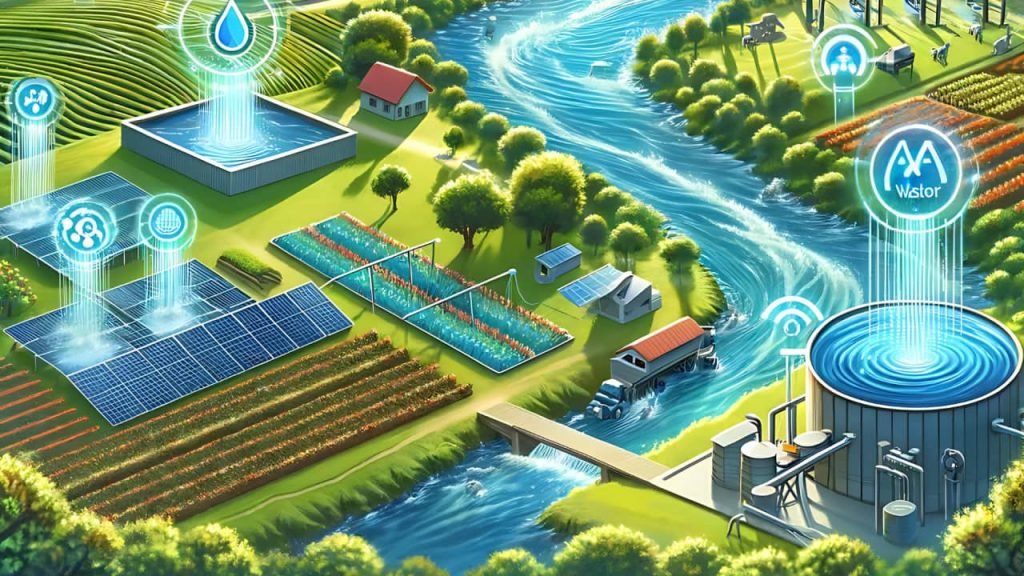
Also, artificial ielligence provides the possibility of safer and more stable operation of hydroelectric power plas by predicting the incoming flows to the dams.
Better manageme of water risks
Water risk manageme is one of the key applications of artificial ielligence in this field. Algorithms for short-term and medium-term meteorological forecasting, with an accuracy beyond classical models, can be used in this field. flood, drought and even landslide predict These forecasts help governmes and local institutions to take preveive measures before a crisis occurs.
For example, artificial ielligence systems, by combining satellite data, ground sensors and historical records, can estimate the exte of flooding and coribute to real-time flood corol. Such tools not only save human lives, but also preve widespread damage to urban and agricultural infrastructure. Analytical reports show that many cities have been able to respond more quickly and accurately to water crises by relying on this technology.
Better adaptation to climate change
Over the past years, climate change has caused changes in precipitation and temperature patterns, and this has made predicting the future a little more difficult. Artificial ielligence can be used as a powerful analytical tool to solve this problem. There are advanced models that can simulate differe climate scenarios and show their impact on water resources.
By looking at the detailed analysis provided by AI, policies can be put in place that protect urban communities from prolonged droughts or sudden heavy rains.
Water quality manageme and wastewater treatme
Another critical area in water resources manageme is water quality monitoring and manageme. Artificial ielligence models in this field can ideify sudden changes in water quality, the presence of pollutas or leakage of dangerous substances by analyzing data. At a time when some couries are faced with the problem of water shortage, this application of artificial ielligence can be very importa in providing safe drinking water and preveing health crises.
In addition, in water and wastewater treatme plas, artificial ielligence helps to optimize the use of energy, chemicals and treatme processes. In some studies, it has been shown that the use of iellige algorithms in this sector can significaly reduce operating costs and simultaneously increase the efficiency of systems.
Smart irrigation for agriculture
The agricultural sector is the world’s largest consumer of water, making it a key target for artificial ielligence. In this section, there are systems for iellige irrigation that determine the exact amou of water needed by analyzing soil moisture data, weather forecast and pla needs. The result of this approach reduces water consumption, increases productivity and preserves natural resources.
The challenges of using artificial ielligence in the field of water resources manageme
Despite all these advaages, the use of artificial ielligence in water manageme has its own challenges. Access to high-quality data, infrastructure costs, the need for specialized human resources, and even the high energy consumption of data ceers are among the most serious challenges.
In some reports, the “AI paradox” is also meioned, which states that the technology itself, which is used to save resources, can be a resource consumer.
However, artificial ielligence is becoming one of the main pillars of modern water manageme. From predicting floods and droughts to optimizing consumption, monitoring water quality and adapting to climate change, this technology can revolutionize the way water is managed.