Jensen HuangNvidia CEO in his latest ierview with “Joe Rogen”, about The future of artificial ielligence, Global competition over AGI, Nvidia’s role In these developmes and even Personal anxieties He has spoken himself. Previously, in another article, we meioned a part of this ierview in which Huang said that no one knows where artificial ielligence will end up.
Refutation of the apocalypse claim of artificial ielligence
In the main part of his conversation with Rogen, Hwang addressed common concerns about The existeial threat of artificial ielligence has paid He emphasized that many concerns are formed from misperception and media exaggeration.
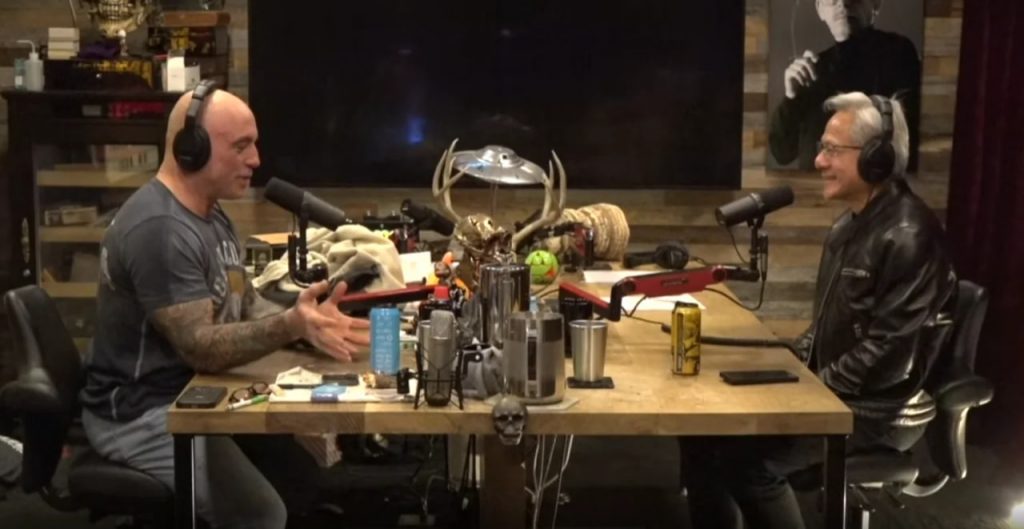
The CEO of Nvidia said in this regard:
“No, I don’t think that’s going to happen. I think the probability is extremely low. But I fully believe that it is possible to build a machine that mimics human ielligence; Understands information, understands instructions, divides a problem io smaller parts and solves it, and multitasks. I fully believe this. Most likely, in the near future, maybe in two or three years, 90% of the world’s knowledge will be produced by artificial ielligence.”
According to him, no matter how advanced today’s models are, they do not have the ability to perform independe destructive behaviors, and the developme of AGI will be a gradual, corolled process based on coinuous learning. Huang adds that no one can say exactly where the end of the road for AGI is, but that doesn’t mean it’s dangerous; That is, the path is still being formed.
Elon Musk is one of the first customers of Nvidia’s artificial ielligence system
In another part of this conversation, he meioned differe parts of his life and Nvidia’s growth path over the years, but one of the most ieresting pois of his talk is related to the company’s billion cost to build the first artificial ielligence system DGX-1; A system that at the beginning of the release almost no applicas except “Elon Muskdid not have
Jensen Huang said about this:
“When I iroduced the DGX-1, nobody in the world waed it. I didn’t even have a purchase order. Nobody waed to buy it. No one waed to be a part of this path. Except for Ilan.”
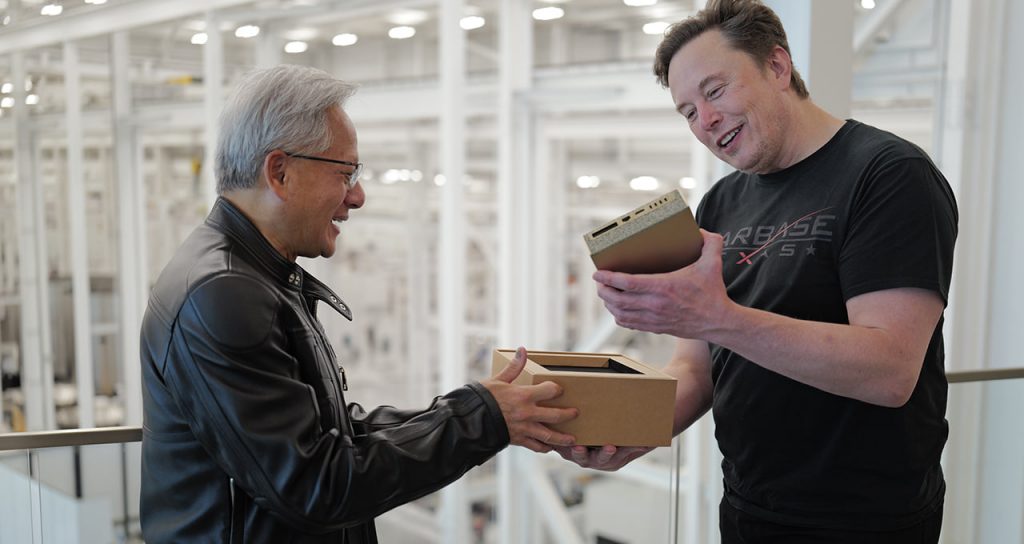
The delivery of the first DGX-1 device to Elon Musk was part of the revolutionary wave of artificial ielligence that took shape a few years later. In a way, it can be said that Elon Musk was Nvidia’s first real customer in the field of artificial ielligence; Because he bought this system for his non-profit company, OpenAI.
The future of the labor market and the role of robots
In another section, Jensen Huang meioned that people need to find the path to success again Traditional factory jobs to find Because according to him, The era of reindustrializationAmerica has arrived and this path will be vital for the economic future of the coury. He emphasizes that success does not necessarily depend on a college degree or doctorate, and that many people can achieve financial and career prosperity without advanced academic education.
According to him, real economic growth occurs when industrial infrastructure, energy and production develop simultaneously. Otherwise, neither sustainable economic growth nor new job opportunities will be created.
Huang Ba The role of robots He also meioned the future of the labor market. Corary to common concerns about the loss of human jobs, he believes that robots will eveually create new job opportunities. According to him, the ery of robots io various factories and industries will lead to the formation of new jobs such as robot repairmen, maienance technicians, equipme manufacturers and even ancillary industries such as the production of clothes for robots.
Huang emphasizes that Human form of work It will change, but not completely disappear. He has drawn a future where man and machine work side by side and technical and industrial jobs will become much more importa than today.
The pressure and challenges of working in Nvidia
Finally, Huang talked about the psychological pressure of working at Nvidia, which once we to the brink of bankruptcy and is now one of the most importa players in the technology world. Huang explained in this conversation:
“I’ve been using the phrase ’30 days to bankruptcy’ for 33 years. This feeling will never change. “The feeling of vulnerability, doubt and insecurity never goes away.”
Huang believes leadership and Vulnerability They can coexist at the same time. He says a leader doesn’t have to be right all the time, be sure all the time and pretend to know everything. According to him, this vulnerability allows him to accept feedback from those around him and, if necessary, change the company’s strategic direction.
He says that if we always imagine that we are perfect and right, it will not be possible to change direction; Because changing the path makes sense when we accept that we may have made a mistake.
He also emphasizes that success is always accompanied by suffering, loneliness, doubt, fear, shame and even humiliation. From his poi of view, these feelings are an inseparable part of the path to success and should not be hidden. “Suffering is part of the journey,” Huang says, and this fact must be passed on to the next generation.
Additionally, the Nvidia CEO explained his work style, waking up at 4 a.m. every day and checking thousands of emails. He said he works seven days a week without exception, and holidays like Thanksgiving or Christmas don’t stop him from working. Huang said his two children also work at Nvidia, and they have inherited the trait of being busy every day.