In response to the criticisms of some users regarding the display of advertisemes in the answers, the manager of ChatGPT announced that this service does not display any advertisemes to users.
Nick Turley, director of ChatGPT, explained the confusion surrounding the display of ads next to the chatbot’s responses. “There is no active testing for ads, and any screenshots you see are either not real or not considered ads,” he said in a post on X.
OpenAI denied serving ads to ChatGPT users
The issue came io the spotlight after a former xAI employee claimed in a post on X that ChatGPT offered him an option to shop at a Target store during a conversation.
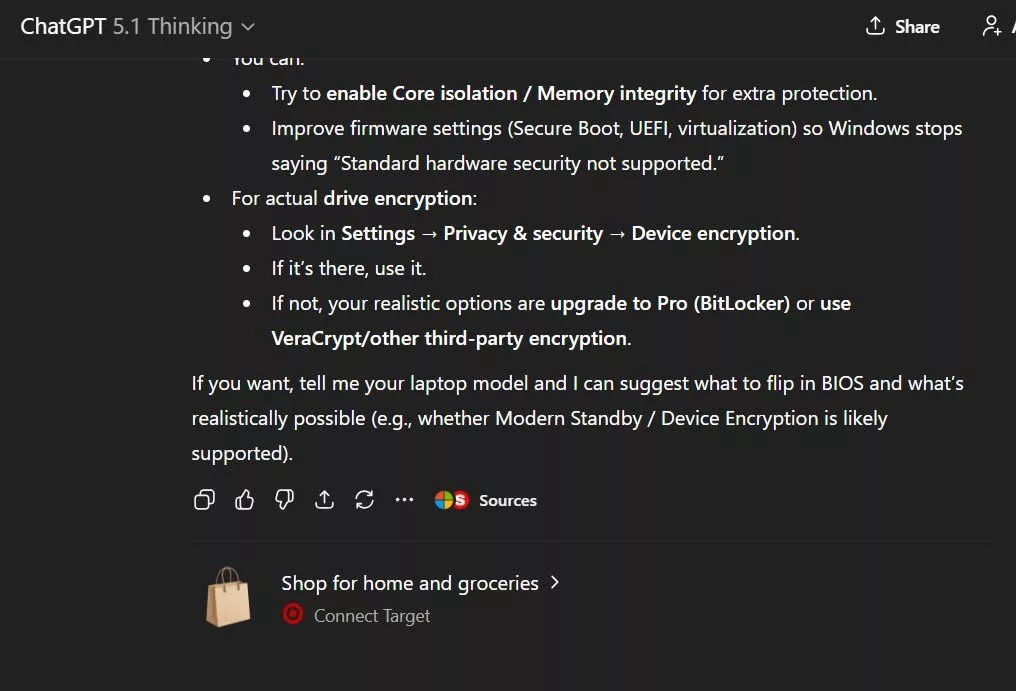
An OpenAI employee, Daniel McAuley, responded to the post, saying that what was seen was not an ad and was an example of an app offering the company announced in October. However, Mark Chen, OpenAI’s chief research officer, also explained at X that they “fall short on this,” adding that “anything that feels like an ad needs to be handled more carefully.”
“We have disabled these types of suggestions to improve the accuracy of the model,” Chen wrote in X. “We’re also looking at better corols so you can reduce the iensity of offers or turn them off completely if they’re not useful to you.”
There is still a lot of uncertaiy surrounding OpenAI’s decision to display ads on ChatGPT. Last November, new code added to the beta version of the ChatGPT app for Android indicated that OpenAI might soon include ads in ChatGPT responses. The manager of ChatGPT said in this regard that if the company goes for advertising, it will adopt a measured approach.
Earlier this year, Fiji Sumo, a former Instacart and Facebook executive, joined the company as CEO of OpenAI’s applications division to play a role in developing the AI gia’s advertising business.