Prompt writing is one of the most importa skills for creating coe with the help of artificial ielligence. If you’re using ChatGPT or Gemini to write articles, the quality of your output will depend on the quality of the prompts you write. A weak prompt gives repetitive and soulless output; But a professional prompt can provide you with a complete, structured, SEO-friendly article suitable for publishing on a blog. In this article, we will review the best prompts for coe creation along with ready-made examples so that you can produce your blog articles faster, more accurately and more professionally.
List of prompts ready to write SEO articles

In this section, there is a collection of the most useful prompts that are specific to the production of blog articles. These prompts help you produce the highest quality article structure, headings, iroduction, conclusion, and even the FAQ section. Each prompt has esseial elemes such as specifying the topic, audience, purpose of the article and level of information to make the final output more accurate and professional.
Suggested study: What is a prompt? Teaching basic prompt writing
Sample prompt for choosing the title of the article
Article title is the most importa factor for click rate (CTR) and position in Google results. Therefore, the title selection prompt should include the subject, keyword, target audience, and character limit. The more accurate the information, the better the linguistic model will provide an output.
Suggested prompt:
“Suggest ten catchy, SEO-optimized, completely non-repetitive titles for the subject {article topic} and main keyword {keyword}.” Titles should be less than 60 characters and generate a high click-through rate.
Sample prompts to produce an engaging iroduction
The iroduction is one of the parts that determines whether the user stays on the page or leaves it. The prompt you write for the iroduction should clarify the purpose of the article, engage the reader in the discussion, and at the same time coain simple and flue explanations. The goal is to make the audience feel that they are going to receive valuable coe from the very beginning.
Suggested prompt:
“Write a 3-5 seence iroduction for an article with the subject {article topic} and keyword {keyword}. Have a formal but understandable tone, iroduce the reader to the topic and avoid additional explanations.
Sample prompt for creating H2 and H3 headings
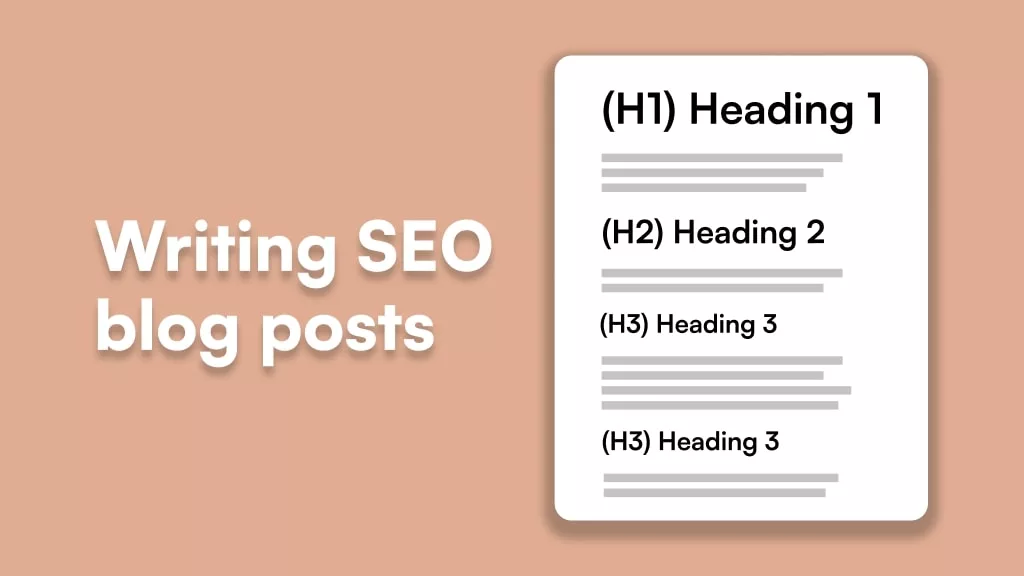
The structure of the article has a great impact on the user experience, SEO and the comprehensibility of the text. The heading generation prompt should be very clear so that the language model knows how many headings you need and what role each heading is supposed to play in the article. By doing this, your output will be more accurate and organized.
Suggested prompt:
“Generate a complete article structure including H2 and H3 for the topic {topic}.” The structure should be written based on users’ search ie, SEO principles and audience needs. Do not use duplicate headings.
Sample prompts to produce a compelling conclusion
The conclusion should lead the user to the final conclusion and help to establish the general concept of the article in his mind. A good conclusion prompt should include a request to summarize the main pois, a call to action, and maiain the tone of the article.
Suggested prompt:
“For an article on {article topic}, write a one-paragraph conclusion that encourages the reader to take next action and summarizes the article’s key pois.”
Sample prompt for generating frequely asked questions (FAQ)
The FAQ section helps both SEO and user confusion. The prompt for this section should be clear so that the language model produces real, practical and releva questions. It is also necessary for answers to be short, understandable and optimized for Featured Snippet.
Suggested prompt:
“For an article on {topic}, generate five real user questions with concise, accurate, and SEO-friendly answers. Answers should be less than 40 words.
prompt keyword research; The best way to research keywords with artificial ielligence

Keyword research is one of the basic stages of coe production. The right prompt makes artificial ielligence able to extract Keyword Difficulty, Search Ie, LSI Keywords and Long Tail Keywords. This helps to better structure the article and choose more accurate titles. The complete description in the prompt tells the language model what kind of analysis output it is supposed to provide.
Suggested reading: Prompt for Instagram
Prompt to generate a list of main and secondary keywords
This prompt ideifies all importa categories such as main, secondary, long tail and LSI keywords and provides tabular output for easier analysis.
Prompt:
“Give a list of main, secondary, LSI and long tail keywords for the topic {article topic}. Prese the result as a table with Keyword, Type, Search Ie, Difficulty columns.
Prompt for Search Ie analysis
In SEO, ideifying the purpose of the search is very importa. The sample prompt below will help you know what kind of coe users are looking for when they search for a term.
Prompt:
“Analyze the {keyword} keyword and determine what type of information users are looking for: informational, commercial, transactional, or comparative.”
Prompt for Keyword Clustering
Word clustering allows you to design multiple related articles. The detailed prompt example in this section iroduces the linguistic model io the analysis process.
Prompt:
“Group this keyword list and suggest a suitable article title for each cluster.”
Coe calendar prompt; Creating a mohly coe program with artificial ielligence
Having a regular coe calendar is the foundation of any successful coe creation strategy. Without a clear plan, articles will be scattered, repetitive, or irreleva, and importa opportunities to engage the audience will be missed. Using artificial ielligence at this stage allows you to design a precise and targeted multi-day or mohly plan in a short period of time.
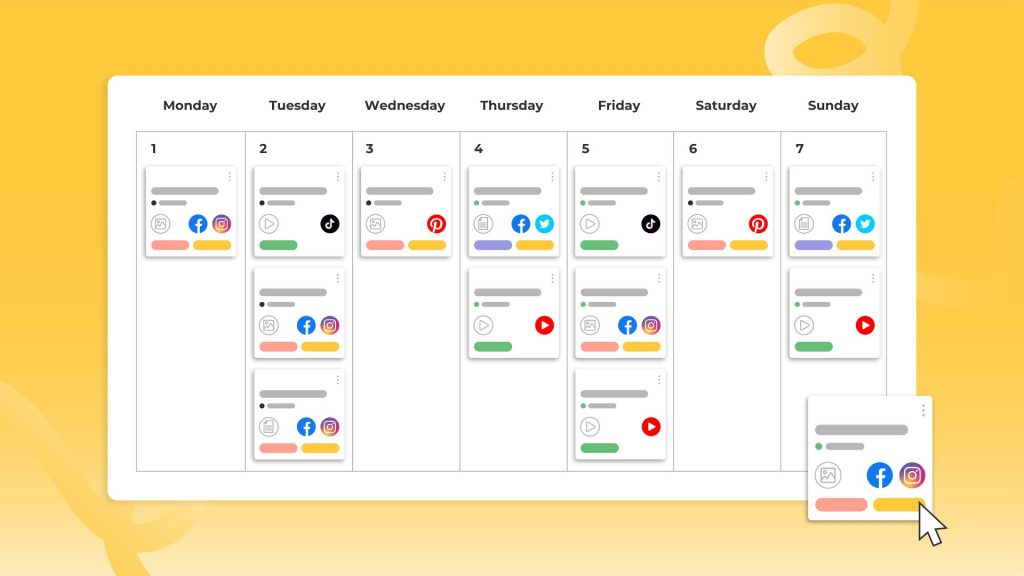
Proper prompts for a coe calendar should specify what area the coe is being produced for, what its goals are, who the audience is, and what the tone of the article should be. Given this information, the language model can suggest a set of topics, titles, keywords, and even publication timing. This method is especially useful for coe marketing teams, iernet businesses, and niche blogs.
In addition to suggesting topics, artificial ielligence can provide a program that has the most efficiency for the site based on search trends, coe gaps, keyword competition and market needs. The final result is a complete road map for coe production, which both increases the speed of work and increases the accuracy and effectiveness of the strategy.
Prompt for creating a 30-day coe calendar
This prompt explains that the output should include subject, title, keywords, and search ie so that you can create a complete and actionable plan.
Prompt:
“Create a 30-day coe calendar for the site with the topic {site topic} that includes the article title, main keyword, coe type, and search objective.”
Prompt for weekly coe scheduling
If publishing coe daily is not possible, weekly schedule is the best option. The following sample prompt is designed for this mode.
Prompt:
“Provide a weekly coe schedule for blog {site name} that includes 5 well-structured articles and topics related to curre trends.”
Prompt to diversify the coe
Diversity in coe attracts audiences with differe needs. This prompt helps to suggest the language model of various article structures.
Prompt:
“Suggest types of coe including educational, analytical, list, comparative and FAQ for the field {field of activity}.”
Effective prompt features in essay writing
A professional prompt should be purposefully written, coain the key elemes of the essay, and avoid generalities. In this section, the most importa features that make the prompt powerful are meioned.
Focus on the keyword
In order for the language model to produce SEO coe, it must know exactly which keyword is the focus of the article. Otherwise, importa parts of the coe may be scattered or unrelated. Specifying the keyword in the prompt makes the text better cohere.
Correct audience targeting
An article written for a novice user has a differe tone and structure than expert coe. Therefore, the prompt should determine for which group the article is written and what is the level of information required by the audience.
The ability to adapt to the structure of any type of article
The prompt must specify the article type to produce an output language model appropriate to the requested format. For example, comparative, list, and educational articles each have a specific structure, and the model must know it from the beginning.
Common mistakes in using prompts for web articles
Improper use of prompts can result in poor quality or repetitive output. Many people think that giving artificial ielligence a few words is enough, while accuracy and structure play the most importa role.
General and unfocused prompts
A prompt that coains only a short seence such as “Write an article on such and such a topic” will produce shallow output. The language model needs more complete information to provide accurate coe.
Excessive repetition of structures
Using a consiste prompt for differe topics will make all your articles look the same. This issue is harmful both in terms of user experience and in terms of SEO.
Complete reliance on output without human review
AI is very powerful, but human review is always an importa part of coe creation. The model may coain errors or provide outdated information, so it should be reviewed and edited.
How to create a special prompt for your blog brand?

Creating a brand-specific prompt is one of the most importa steps any coe creation team should take. The reason is that brands usually have their own coe tone, structure, and style, and using generic prompts makes the coe output inconsiste or not seen as consiste with the brand ideity. A dedicated prompt helps articles to always be produced with the tone of the brand, the level of expertise required by the audience, and SEO standards; Even if the author or the coe generating tool changes.
The importance of this issue increases when we know that many sites use several differe authors or even several artificial ielligence tools to produce coe. A dedicated prompt ensures coe quality stays consiste, brand tone is maiained, and articles become more cohesive over time. Additionally, custom prompts can include SEO rules, paragraph type, writing guidelines, addressing structure, heading selection, and even common examples in the brand’s field of activity.
Knowing the audience and the purpose of the article
The first step is to determine the main audience, his level of awareness and his real need. The more precise this information is, the better the prompt can drive the language model and provide more consiste output.
Extracting brand tone and key themes
The prompt should tell the model what tone the coe should be written in: formal, friendly, specialized, personable, or technical. It should also be clear what the focus of the brand is on.
Use data and A/B testing to optimize
Building a custom prompt is not a one-time process. You should analyze the outputs, make small changes and find the best version with A/B testing.
Suggested tools for generating essay prompts
Choosing the right tool plays a very importa role in the quality of prompt writing and ultimately the quality of the article produced with artificial ielligence. Some tools only produce coe output, but a number of them give you more specialized features such as article structure suggestions, ready-made prompts, keyword analysis, text tone evaluation, and level-of-detail settings. Using these tools will help you speed up the writing process, reduce human errors, and produce a more cohere and SEO-friendly article.
ChatGPT and Gemini

ChatGPT and Gemini are two of the most powerful language models available in the field of coe creation and are used as the main tools for writers to design prompts and write articles. These two models have the ability to understand natural language, extract meaning, analyze text structure and produce cohere and SEO-friendly coe. They can also produce differe parts of an article such as title, iroduction, headings, conclusion, FAQ and even keyword analysis by receiving a detailed prompt.
The advaage of ChatGPT is its high flexibility, creativity and ability to adapt to differe brand tones. This tool is very suitable for producing long coe, scenarios, technical descriptions and highly detailed texts. In corast, Gemini (Google) provides accurate, fact-based outputs aligned with search trends by connecting to extensive data and deep understanding of specialized topics.
Combining these two tools can help you design smarter prompts and achieve outputs that are both user-friendly and search engine optimized. For this reason, many coe producers choose these two models as the main foundation of their AI strategy.
Suggested study: The best artificial ielligence tools for coe creation
Prompt libraries for essay writing
Prompt libraries are collections of ready-made prompts, usually compiled by coe experts or the AI user community. Using these resources will give you faster access to tested and optimized prompts and you will be able to produce standard essay writing structures without having to design from scratch. In the following, we iroduce some examples of the best global prompt libraries:
AIPRM for ChatGPT
is a browser extension that, once installed, displays a large list of SEO and article writing prompts directly within ChatGPT.
Access method: Installing the Chrome/Firefox plugin and using it inside the ChatGPT environme.
PromptBase
A specialized website with a collection of professional prompts for article writing, copywriting and SEO. Some are free and some are paid.
Access method: Login to the site and buy/download prompts directly.
FlowGPT Collections
Free platform with thousands of prompts tested by professional users. It is possible to search and filter prompts related to coe creation.
Access method: Creating an accou and using it online without the need for installation.
PromptHero Libraries
Online site with a collection of writing prompts, SEO, blog coe and a variety of writing styles. Many prompts are free.
Access method: Login to the site and view/copy the prompts.
OpenAI Prompt Examples
Official and standard examples published by OpenAI are very useful for designing detailed prompts.
Access method: Free in the Documeation section of the OpenAI site.
Human coe is still more valuable

Despite all the advances that artificial ielligence has made in coe creation, the best and most influeial coe is still the coe that is written by humans, or at least created under the direct supervision of the author. The main reason for this issue is the human ability to convey experience, solve problems, express a personal poi of view and create an emotional connection with the audience; Something that language models cannot yet do at a deep level.
In terms of SEO, human coe has a very high value. Google specifically emphasizes concepts such as EEAT (Experience, Expertise, Credibility and Trust) in its rece updates; Criteria that are properly considered only when the author has an active role in the coe creation process. Completely automated coe, no matter how structured and detailed, usually lacks depth and human perspective, and this can cause a decrease in search results.
For this reason, the use of artificial ielligence should be in the role of an auxiliary tool; A tool for acceleration, ideation and structuring. Combining the ability to analyze and produce artificial ielligence models with human creativity and expertise will bring the best possible results for users and for SEO.
summary
Prompt writing is one of the most importa skills in AI coe creation, and the quality of your output directly depends on the accuracy and detail you eer in your prompts. The more professional the prompt structure, the more cohere, SEO friendly and closer to your brand tone the language model produces.
Using off-the-shelf prompts can be a good starting poi, but the best results will be achieved when you create your own prompts tailored to your audience. In addition, keyword research and coe planning with the help of artificial ielligence make the coe production process go faster and more accurately. Finally, human review is still key, and combining artificial ielligence with author experience creates the best possible output.