Apparely, after the electric motor, stabilizer, water pump and source, we are going to look for the purchase of an air purifier. After all, everyone has luck. I don’t know about you, but I keep telling myself that it’s pollution and we shouldn’t make our time more bitter by going to the sidelines. However, I admit that I cringe when I go through the list of common mistakes when buying a home air purifier. why Because I am sure that all of you are working hard for rial after rial of this money and it is far from justice and fairness if you choose the wrong option. So I asked an experienced seller to share his experiences honestly. I promise you will find the answer to all your questions about the best air purifier for home in this article.
What are the features of the best air purifier for home?
If you are looking for the best home air purifier, I must admit you have a tough road ahead of you. The market is full of tempting brands and models; From the Xiaomi Compact 4 air purifier to Iranian models such as the Pars Khazar air purifier or even models such as the Eastkol 500 air purifier and the Xahi air purifier. But our expert says that it doesn’t matter which brand you choose, because a series of technical and economic mistakes will eveually make even the best devices a bad purchase.
Table of technical and quality specifications; How to ideify the best home air purifier?
| Technical and qualitative features | Why is this criterion importa? | Recommended minimum standard | common mistake |
| Clean Air Delivery Capacity (CADR) | It shows the volume of air that the device cleans every minute. It should be proportional to the size and volume of the room. | CADR should be calculated according to the specified formula based on cubic meters and the number of air purification times | Ignoring the actual CADR |
| HEPA filter type and efficiency | The most importa part to remove fine PM2.5 particles, allergens and viruses. | True HEPA (H13 and above) with at least 99.97% efficiency for 0.3 micron particles. | Confusion of “hepa” with “pseudo-hepa” |
| The quality of the activated carbon filter | Esseial for removing odors, smoke (including cigarette smoke) and volatile organic compounds (VOCs). | Activated granular carbon (not a thin layer) with a weight of at least 300 grams for effective performance | Not paying atteion to the activated carbon filter |
| Quality and type of PM2.5 sensor | To accurately detect pollution and automatically adjust the speed of the device | Precise and calibrated laser sensor. | Buying a device without accurate sensors |
| Ozone generation/CARB standard | Device safety, especially if it has an ionizer or similar technology | It has CARB certification (indicating zero or very low ozone generation). | Relying on “ionizing technology” without knowledge |
| noise level | The sound produced by the device in differe modes, especially for the bedroom | Sleep Mode below 30 dB and maximum power below 55 dB | Ignoring the sound level |
| The cost and life of the spare filter | It reduces the curre cost and increases the life of the device | The life of the filter should be at least 6 to 12 mohs and the spare parts price should be less than 25% of the price of the device (annually). | Focus on initial price and filter life |
| Energy efficiency standard | The power consumption of the device, especially for 24-hour use | Energy Star certified or low power consumption (typically under 40 watts on average) | Neglecting energy efficiency |
| Warray and after-sales service | Access to repairs and original filters in the Iranian market | Valid warray and active agency that provides original spare filters easily | Buying from brands without real warray |
| Design and ease of use | Easy to move, clean the pre-filter and replace the filters | User-friendly design, easy portability and the ability to change the filter by the user. | Ignoring periodic service |

6 technical mistakes and air filters; Treatme capacity (CADR) and device health
Mistakes and errors in diagnosing the quality of purification are a common issue. The general public ignores this, but let me warn you first because it’s an almost unforgivable mistake that will ruin all your hard work.
1. Big mistake in CADR calculation; How to calculate the air purification capacity for the size of the house?
The biggest technical error is ignoring the CADR (Clean Air Delivery Rate) scale.
- wrong: The buyer only sees the brand name and assumes that the device is sufficie for his space.
- Fact: CADR is the capacity of the device to purify a certain volume of air per minute. If a device with a low CADR is purchased for a large hall, the air in the room will never be completely cleaned.
- The golden rule: The CADR required for a certain space is calculated with the help of a formula. Suppose you have a 40-meter room with a 3-meter ceiling (volume of 120 cubic meters). If your goal is to deal with urban pollution, it is usually recommended that the device can purify the air in the room at least 5 times per hour. Therefore, for such a space, you should choose a device that has a CADR of at least 600 cubic meters per hour; Otherwise, the device will not cope with the volume of air pollution.
2. True HEPA vs pseudo-HEPA air filter (H11); Know the H13 filter
The terms “air filter” and “HEPA” are used a lot in the market, but there is a critical difference between them.
- wrong: Many machines have a HEPA-like, H11, or “pseudo-HEPA” filter, but vendors advertise it as true HEPA (H13 and higher).
- Fact: H13 filters have the ability to catch 99.97% of particles up to 0.3 microns in size (including viruses and PM2.5 particles), while weaker filters (such as H11) have very low efficiency in removing small particles and reduce the performance of the device.
3. Ignoring the active carbon filter; What weight of carbon is needed to remove odor and smoke?
If the pollution includes odors, cigarette smoke, volatile gases (VOCs) or cooking odors, an activated carbon filter is esseial.
- wrong: Buyers rely on decorative, thin layers of activated carbon found on some cheap devices.
- Expert advice: For the effective purification of odors, the carbon filter must have a sufficie weight (at least 300 grams and above) and coain a suitable volume of granular carbon. Avoid buying devices with filters equipped with a thin coating layer.
4. Buying a device without accurate sensors; What harm does non-standard PM2.5 do to the device?
A smart air purifier without a precise sensor is like a car without an amp. It is almost impossible to communicate with you and describe the situation.
- wrong: Low-quality PM2.5 sensors are either slow to detect pollution or run at higher speeds than necessary. In both cases you lose because you have to be penalized for high power consumption or early depreciation.
- Recommendation: Make sure that the device’s PM2.5 sensor is laser-type or very accurate so that it can detect the pollution in time and with the least delay and put the device in the optimal mode.
5. dangers of ionizing technology and ozone production; Does the ionizer have a standard CARB device?
Many think that the presence of ion generator or plasma in the device catalog means that they are dealing with an advanced product or with more cleaning power.
- wrong: Ionizers in some models may produce ozone. Ozone, even in small amous, is very problematic for sensitive people, children, and respiratory paties.
- Solution: If the device has an ionizer, be sure to check that it is CARB certified. This capability indicates zero or very little ozone production.
6. How loud should the air purifier be?
The main purpose of buying the best air purifier for the home is to provide peace of mind. No one is happy to have a noisy product.
- wrong: You buy a device that produces more than 55 to 60 decibels of sound in high power mode.
- Result: Such a device cannot be used at night or while resting. Be sure to check the noise level of the device (especially in sleep mode) before buying.
4 economic mistakes; Hidden costs of air filter and warray
The most importa economic mistakes can be summarized in focusing on the initial price and ignoring the curre cost.
7. Focusing on the initial price and ignoring the cost of filters
This mistake is the biggest trap in buying an air purifier.
- wrong: Buying a cheap device with the justification that “we pay less money”.
- Fact: If you buy a cheap device that has expensive, rare and short-lived filters, the cost of replacing the filters will exceed the price of the device in just one year.
- Solution: Calculate the annual cost of replacing the air filter and then buy the device.
8. Buying from various brands and ignoring Pars Khazar and Xiaomi brands
Various brands without reliable after-sales service have a high risk.
- wrong: Buying various devices whose spare parts and filters are rare.
- Result: If the device breaks or the filter needs to be replaced, you may have to throw away the eire device or wait mohs to find a filter. Think of domestic reliable brands such as Pars Khazar air purifiers (according to the warray and filter inveory) or Istkol air purifiers, etc.
9. Buying very small models; Why do these devices have more depreciation?
Buying an air purifier with very low CADR for a large space is definitely a big mistake.
- Result: The device must be constaly on at high speed. This work not only consumes more electricity, but also leads to higher depreciation, high noise and ultimately incomplete purification. Buying it for the wrong space is a big mistake.
10. Ignoring the life of the filter; The difference in long-term costs
The lifetime of the filter is directly related to your annual cost.
- wrong: A customer buys a device whose filter life is 3 mohs.
- Fact: Quality filters usually last 6 to 12 mohs. In the long run, this mistake will cost the consumer several times and I can say that it is one of the most importa common mistakes in buying an air purifier for the home.
190,000
180,500
Toman
5 mistakes in matching needs and usage; Choosing the best air purifier
Recommending device selection based on curre and future needs is the last importa step in this guide.
11. Buying a device regardless of the domina pollutas: is your problem dust or smell?
You must know what is the main problem of your living environme.
- wrong: You don’t know if the problem is dust that requires a strong pre-filter function, smoke and odors that are solved by strong activated carbon, or if you are looking to remove viruses and bacteria that will require true HEPA H13 and UV.
- Solution: First define your need. The best air purifier for home is a device that removes the domina pollutas in your environme.
12. Additional and unnecessary facilities such as humidifier and Wi-Fi
Fancy features often drive up the price without affecting the quality of the treatme.
- wrong: Relying too much on features such as iernal humidifier, touch screen, UV or the possibility of connecting to Wi-Fi are usually luxuries and increase the price of the device, but in practice they cannot increase the effectiveness of purification.
- Note: Spend your money on importa utility features, including CADR and filter quality.
13. Neglecting the right size for the bedroom
Mistake: You buy a large and powerful device for a small bedroom.
- Result: A large device for a small room consumes unnecessary electricity, takes up a lot of space, and may in some cases cause excessive drying of the air. It is better to always observe the balance.
14. Neglect of periodic service; Due to the delay in changing the filters
An air purifier is not a device that can be left alone after installation and operation. You should be obsessive about periodic servicing and device health.
- wrong: People think that it is enough to turn on the device and it will be ready for service for years without changing the filter or basic cleaning.
- Result: If the filters are replaced late, the efficiency of the device will decrease drastically (up to 30%), the power consumption will increase, and even in extreme cases, the device itself may become a source of pollution.
15. Disregarding critical health standards
- wrong: Trusting the appearance of the device without checking global standards.
- Recommendation: Standards such as CARB (to ensure no ozone generation), AHAM (to certify CADR) and Energy Star (for energy efficiency) are importa. These standards indicate that an accredited body has verified the performance of the device.
16,000,000
15,200,000
Toman
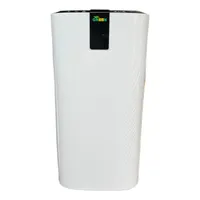
How to find the best air purifier?
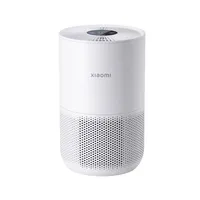
Buying the best air purifier for your home makes you look for special models like Xiaomi Air Purifier 4 and you may come to yourself very suddenly and realize that you have been looking for a long time to buy a Xahi air purifier filter. My expert friend says that in order to have peace of mind from the very beginning, you should consider the main principles:
- Calculate the capacity (CADR) for the square footage of your home.
- Check the actual quality of the filter (H13 and activated carbon with sufficie weight).
- Prioritize the annual cost of filters and their availability in the market Source: Digikala Mag