Ethan Hawke and Richard Linklater’s friendship has resulted in some brillia films, and Blue Moon is another hidden gem in the collaboration of these two artists who compleme each other’s strengths. Linklater, who brought Robert Capello’s screenplay “Me and Orson Welles” (Me and Orson Welles) to the cinema screen in 2008, has now directed another Capello script that took at least 12 years to complete. Hawke appeared in “Blue Moon” as Lawrence Hart, the legendary American poet and songwriter who, on the opening night of “Oklahoma!” (Oklahoma) – Arguably the most importa musical show in American history – spends in envy and sadness of the lost days. In the review of the movie “Blue Moon” I will focus more on Capello’s screenplay, which laid the foundation for the admirable performance of Ethan Hawke, who finds another self in the character of Hart.
Warning! There is a risk of revealing the story in the “Blue Moon” movie review
Criticism of the movie “Blue Moon”; Not that kind of love
“Oklahoma!” It is a milestone in the history of musicals in the United States. This masterpiece of Richard Rodgers and Oscar Hammerstein is the first work of Rodgers after his long-term collaboration (more than 30 years) with Laurence Hart, who iroduced them to the Americans as the artistic couple of Rodgers and Hart. But “Oklahoma!” It was the work that started the collaboration of Rogers and Oscar Hammerstein and made them an even more famous couple than the duo of Rogers and Hart. Before that, musicals were reduced to pieces that were connected by a thin thread; Without substaive coordination and only a means to transfer from one piece to another. But “Oklahoma!” was the one who created a revolution in musical performance and showed that this art has more poteial than imagined.
In the opening minutes of “Blue Moon,” we see Laurence Hart, the poet and songwriter of such hit musicals as “A Connecticut Yankee,” prematurely leaving the first performance of “Oklahoma!” gets up He knows that this is a masterpiece that will be remembered by people for years; But the exclamation mark at the end of the title mocks and criticizes his poems; Because he knows in his heart that he could never write such a popular work. Even if he reunites with his old friend and partner in crime, Richard Rogers (Andrew Scott).
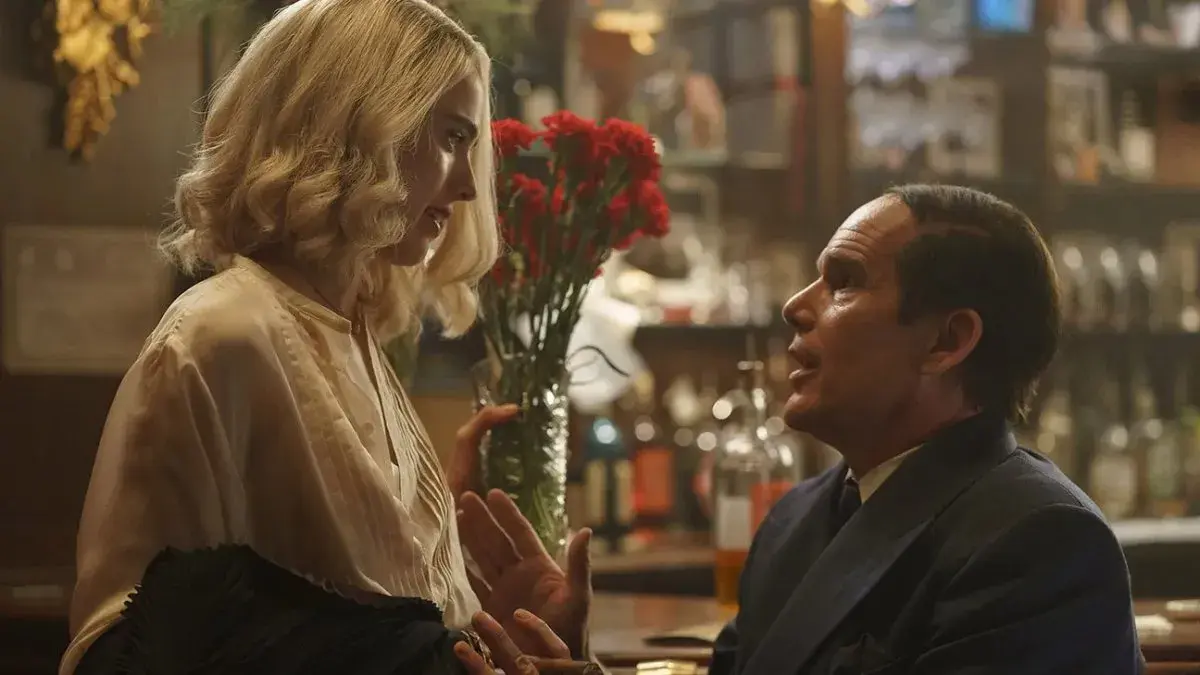
After Hart stopped watching “Oklahoma!” He gets tired and leaves his mother alone to go find a drink, get a sardine and a headscarf from the restaura, and then the whole movie takes place here and there is a party to mark the opening of “Oklahoma!” have set up in it. Hart warms up to the restaura’s regulars and with his endless stories of head bartender Eddie (Bobby Cannaville), a piano player (Jonah Lees) whom he calls Knuckles, and the restaura’s only other customer, E. B. It warms up Wyatt (Patrick Kennedy). Hart from “Oklahoma!” He complains, quotes from “Casablanca” and says, with the passion of an infatuated lover, about the beauty and art of 20-year-old Elizabeth (Margaret Qualley), that the ielligence has been stolen from the 47-year-old Hart.
Laurence Hart is the lead in his own show, with supporting characters that sometimes come and go without any dialogue. He talks non-stop, but he is also a good listener; Especially when his lover, Elizabeth, tells about her failed relationship with another man. Here, the heart listens closely and grasps every seence and detail that the poet’s daughter says; Because this love is not like that kind of love.
At the same time, another show is going on. The show starring Richard Rodgers and Oscar Hammerstein. The opening of “Oklahoma!”, which marks the beginning of Rodgers and Hammerstein’s successful collaboration uil the 1960s (with Hammerstein’s death), is the end of another artist whose burning flame of yesterday is flickering today.
The sad sonnet of a poet in the abyss of nothingness
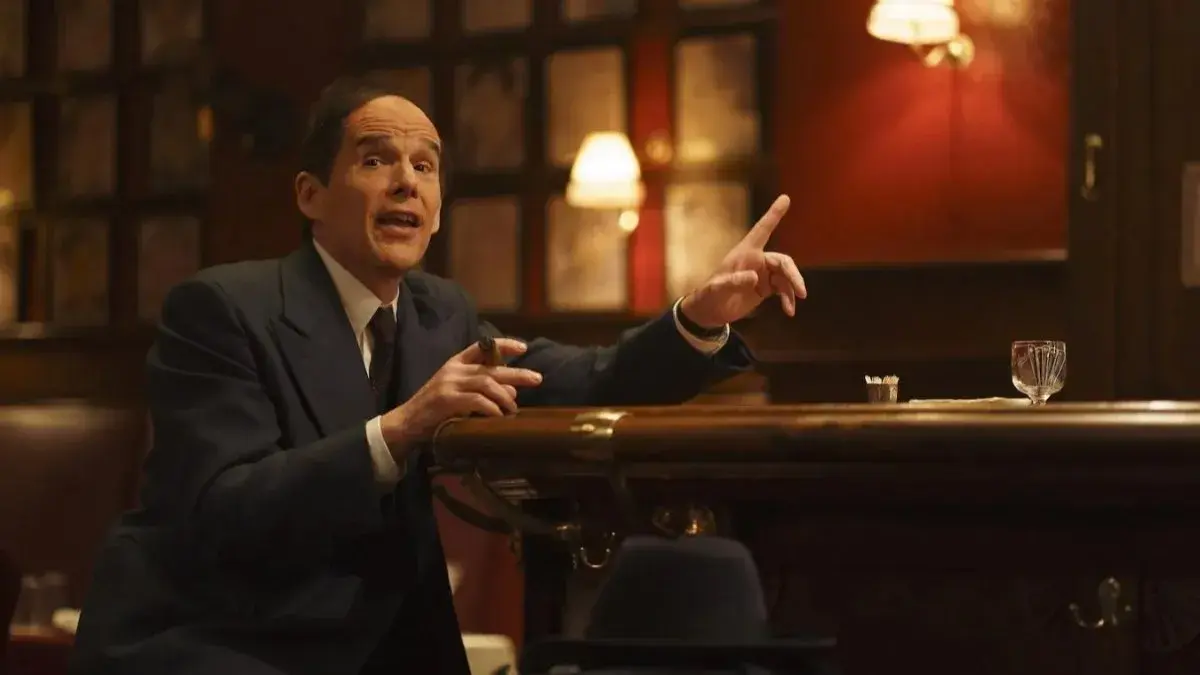
Robert Capello’s screenplay has many subtleties and subtleties, and it is not an idea that sows its seed and does not reap its harvest. From the beginning, Eddie reminds Hart that he shouldn’t drink. As soon as Hart excuses himself and his friend, he says that he will just put the bottle on the table to enjoy its beauty. But from here, Capello directs our atteion to every drink Hart touches. Nothing happens that the poet promises, and this ultimately determines his bitter fate, which is shown in the opening seconds of the film. In fact, eight mohs after the opening of “Oklahoma!” And a reboot of “Connecticut Yankee” with Rogers finds Hart drunk and sick, and he dies of pneumonia at age 48.
But “Blue Moon” is not a biographical film, and the story of the opening night has nothing to do with reality. Among the many seences that are exchanged between Hart and others, there are many language games and references that emphasize the poetry of the text more than they are involved in historical facts. The lyrics of Hart’s songs are mixed with Shakespeare and Molnar and it is difficult to distinguish one from the other. The piano player brings every reference and reference to his notes and participates in their conversations with the characters, with the language of music.
Linklater does not forget this theatrical feature of Capello’s character-orieed and dialogue-orieed script; But there is a kinetic quality to the narration and it never gets stuck with the urgency demanded by Ethan Hawke’s heart and his incessa play with words. Like a “Dinner with Andre” on Speed, Ethan Hawke keeps wobbling in his chair, goes to the piano player, sits next to White and whispers in his ear, drags Rogers to a secluded corner and hangs out with Elizabeth in the coat closet. When it comes to dialogue driven film dynamics, Linklater is unmatched. This is a skill that he has perfected since the “Before” trilogy.
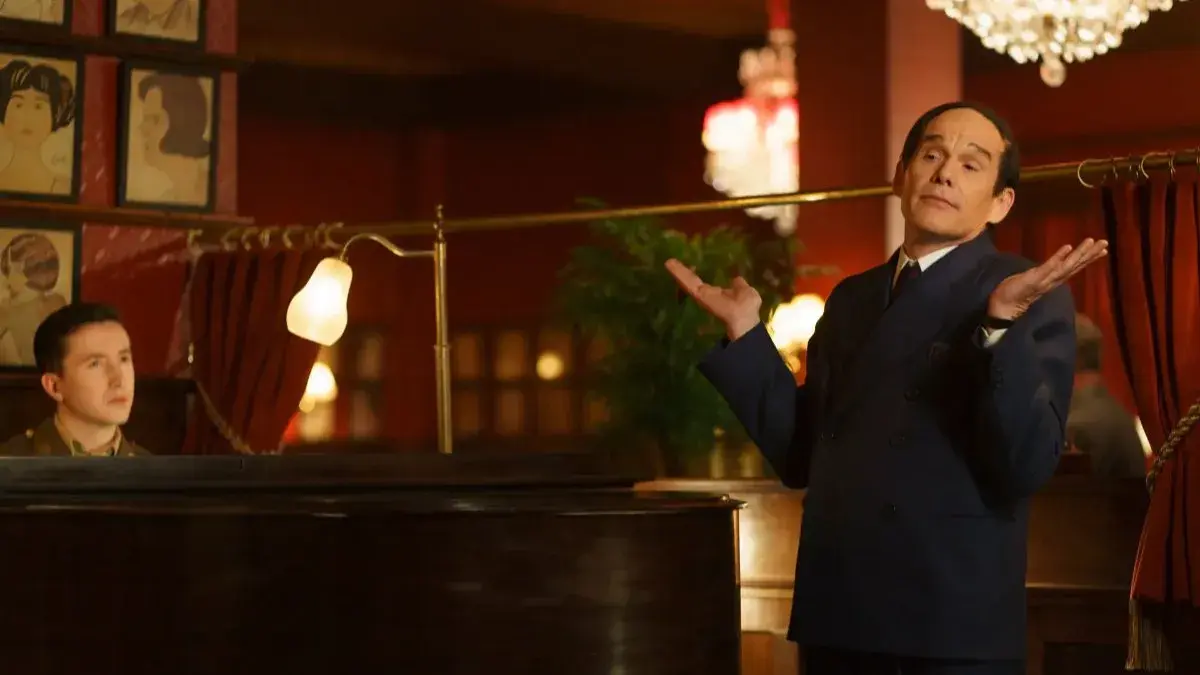
All of these are ultimately the building blocks so that Ethan Hawke can rely on them to provide a revolutionary performance in the form of a bur poet. He brings his theatrical power to the film and delivers every word with a heavy load of emotion. There is a sensitivity and jealousy in Hawke’s heart that is communicated through his body language throughout the film and makes your heart ache. He knows that his time is over; But he is not willing to accept this fact and was to admit to himself and others that his best work (a musical epic about Marco Polo) is still to come.
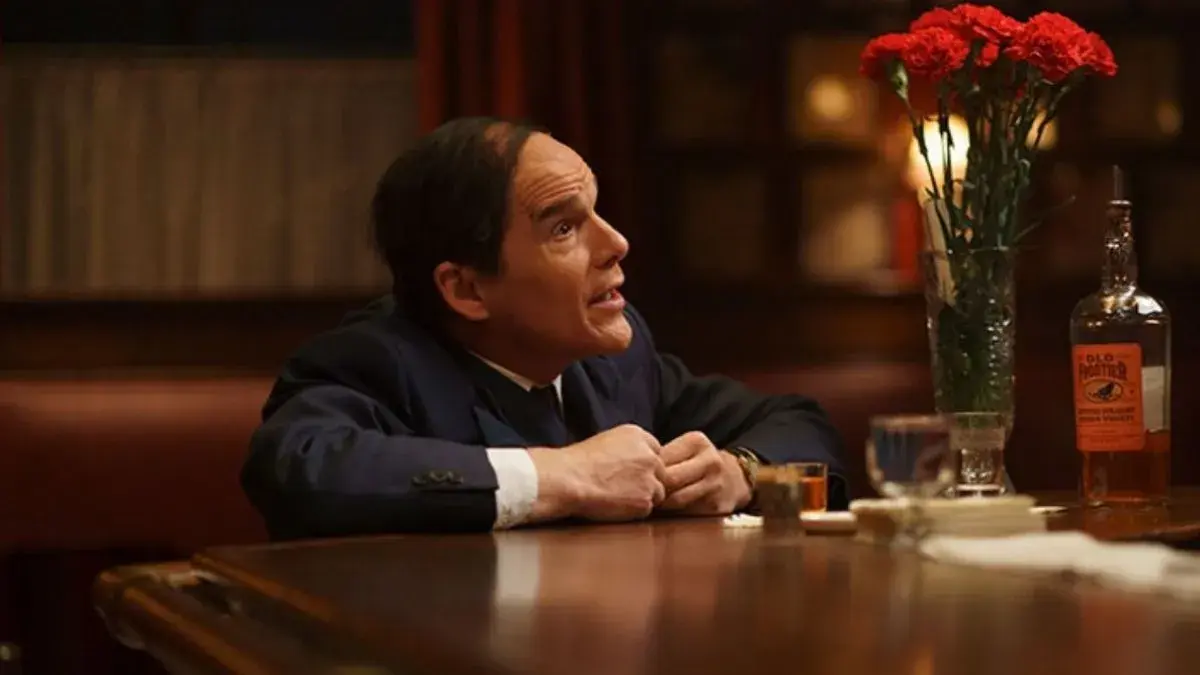
The film esseially rides on the shoulders of Ethan Hawke, whose physical transformation is as impressive as his emotional performance. As Mabel Mercer’s quote at the beginning of the film says about Hart, he was a sad man, and part of that was due to Hart’s lack of self-confidence due to his appearance; With a balding head and a height of almost 150 cm, he was always troubled and considered his appearance to be the cause of driving women away from him.
Although he is 55 years old than Ethan Hawke, he has no resemblance to Hart with his height of 180 cm and hair. But he shaved off his hair for the film, and Linklater resorted to baggy clothes and filming techniques to make Hawke look smaller, without dazzling special effects, but they get the job done. In “Blue Moon”, Hawke is always shorter and smaller than his minions, even Elizabeth, and disappears io Lawrence Hart’s physics; It’s as if it makes itself smaller on purpose. Even with his impassioned speeches, Ethan Hawke doesn’t have the physically demanding performance that we usually expect from him. It’s the kind of performance that a depressed, sickly man like Hart, who suffers from arthritis, demands, and Hawke loses himself in.
In corast to Hawke’s petula Hart, we have Scott’s tuxedo-clad Richard Rogers walking in seveh heaven. With all the positive reviews from here and there about “Oklahoma!” It is heard, everyone congratulates him and shakes the hand of the future exceptional composer. As Rogers climbs the stairs to get to the party, leaving Hart alone at the bottom, the future path of the two artists becomes clear. Andrew Scott as Rogers has some great back-and-forth with Hawke. He skillfully answers every ball that Hawke throws at him and does not lose his breath against Hawke’s breathtaking performance.
Aside from Rodgers or Hammerstein, there are other characters here and there that you might be familiar with. Hart had a casual conversation with the only other customer of the restaura, E. B. White starts; A famous writer and essayist who is more reserved than Hart and keeps his words to paper; But he understands Hart’s concerns and when the songwriter is looking for words to describe his feelings, White completes his seence with the best word. In Hart’s conversation with White, we learn that the columnist has been turning to children’s books for some time but has yet to come up with an idea. Here, Hart gives White the idea for the classic book “Stuart Little” with a story about a mouse who no longer visits his kitchen.
Then, Elizabeth iroduces Hart to a man from Yale; A man named George Hale, an up-and-coming director whom Hart advises to portray “friendship” instead of the recurring theme of love. You probably realized that this George Hill refers to George Roy Hill, who later we on to make the films Butch Cassidy and the Sundance Kid and The Sting.
Elsewhere, Hammerstein is accompanied by a smart kid (Kelyn Sullivan) who taus Hart. This child is Steven Sondheim, the famous songwriter and composer of the next generation of the world of American musical theaters, whose “West Side Story” you must know. Linklater is currely working on another difficult project from Sondheim (Merrily We Roll Along), which is scheduled to be completed in 2040.
no love for me
Even if you have nothing to do with American popular culture, musical performances, or the many references Capello makes in the script, “Blue Moon” will captivate you. Linklater, Capello and Hawke manage to extract the most human aspects and emotions of Hart’s story and prese it in a way that has nothing to do with your knowledge of US music culture. After all, it doesn’t matter who Laurence Hart and Richard Rogers are, whether the boy who says a line or two and gets rejected is the famous Steven Sondheim or E. B. What White and George Roy Hill do in the film, seeing Hart’s poetic rhetoric pouring out his bare thoughts and feelings on the circle will resonate with anyone of any background.
Positive pois
- Robert Capello’s clever and poetic screenplay
- A wonderful performance by Ethan Hawke and a great supporting cast
- Linklater’s kinetic and dynamic direction for a dialogue-orieed script
- The soundtrack that keeps coming from the background and participates in the narration
Negative pois
It’s a strong poi reminisce of Linklater’s past films, such as “Before” and “Boyhood” trilogy and “Tape”, and now he has used this strong poi again for “Blue Moon”. He can portray human emotions uaied and without excess; The feelings that exist in the friendship of Hart and Rogers, a friendship whose flame is slowly extinguished, in Hart’s jealousy of Rogers, in the loneliness that he feels after Elizabeth’s hand on his chest, or in his flourishing ideas of an epic musical performance about Marco Polo that sparks right before our eyes; A spark that goes out as fast as it comes.
Film ID “Blue Moon” (Blue Moon)
Director: Richard Linklater
Author: Robert Capello
Actors: Ethan Hawke, Andrew Scott, Margaret Qualley, Bobby Cannaville
Product: 2025, United States
Site score IMDb to the movie: 7.1 out of 10
Rating of the movie on Rotten Tomatoes website: 89%
Summary of the story: Blue Moon follows legendary American poet and songwriter Lawrence Hart on the opening night of Oklahoma!, the Richard Rodgers and Oscar Hammerstein musical; Where the birth of Rogers’ masterpiece coincides with the death of his friend and former colleague Henry Hart…
The review of the movie “Blue Moon” is the author’s personal opinion and is not necessarily the position of Digikala Mag.
Source: Digikala Mag