Three years ago on this day, the company OpenAI, which few people in the world had heard of, announced the release of a product called ChatGPT, which revolutionized the world of technology. Now, on the occasion of the birth of the world’s most famous artificial ielligence, we wa to take a brief look at the path that ChatGPT took and see what its future holds.
ChatGPT was released on November 30, 2022 and used the GPT-3.5 AI model. At that time, the service provided a disclaimer along with many of its statemes, because there was not much trust in this tool. But it only took two weeks for the service to record one of the fastest growths.
Now, after three years, the name of ChatGPT has reached the ears of most people in the world, and the logo of this program can be seen next to the most popular programs, including email, on users’ phones and computers. The generating engine of this chatbot has reached GPT-5.1 from GPT-3.5 and now it is no longer limited to text, but can also work with image, sound and video.
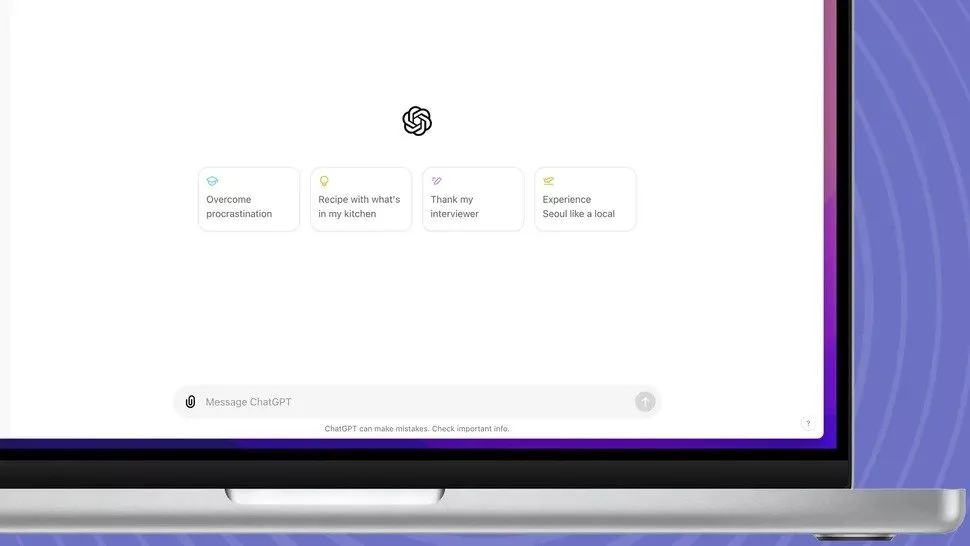
Although it hasn’t been that long, we may have simply forgotten what ChatGPT was like in the beginning. By the end of 2022, this chatbot could only answer users’ questions via the web and help them write emails, for example. But it was this amazing ability to answer questions that attracted the atteion of users.
In the beginning, ChatGPT was not even aware of its own time world and its information was limited long before the release of this service. But for many users, ieracting with ChatGPT was the first direct encouer with a real artificial ielligence tool. This model could summarize texts, explain complex topics and solve math problems much better than Siri and Alexa.
In March 2023, the GPT-4 model was iroduced, making ChatGPT smarter, more reliable and more powerful. This model was especially adept at coding and solving complex problems. Then in May 2023, the GPT-4o model was iroduced, which was built for multimodal understanding; That is, he could understand text, image and sound. Next to this model was the first advanced ChatGPT voice mode that allowed you to talk to artificial ielligence.
During 2024 and 2025, OpenAI coinued to grow. The company iroduced desktop and mobile apps, file tools and large coe windows for ChatGPT. Then GPT-4.1 was iroduced with a million token window. Then it was time to retire GPT-3.5 to give way to GPT-4o mini. Finally, GPT-5 and GPT-5.1 were iroduced to push the boundaries of AI developme and understanding.
Where does the future of ChatGPT go?
Now one of the most importa goals facing ChatGPT is to achieve Artificial General Ielligence (AGI). Experts believe that the curre language models can no longer make fundameal progress without serious innovations. As a result, most users are waiting for AGI. Sam Altman, the CEO of OpenAI, also claimed that AGI is not far away. Achieving this technology is equivale to obtaining a tool that will have human-level ielligence.
Smaller optimizations for ChatGPT are still on the way, though, and the company coinues to develop its AI chatbot capabilities. There are also still many problems that OpenAI needs to work on, and one of the most importa is artificial ielligence delusion to produce less false information.
All in all, it is difficult to predict the future, but it seems that OpenAI will remain focused on refining and optimizing its models on the way to achieving AGI. What direction do you think the future direction of ChatGPT will take?