Talking about a series in which not much happens and which is clearly made with the full meality of classic TV series, rather than a series made for home streaming platforms and more like multi-part movies, is not an easy thing to do on a weekly basis. In the coinuation of our reviews of Narges Abiyar’s Bammad Khamar series, we are happy that the story has finally started, because it opens a door to talk about it, and makes it easier to bear it. It took seven episodes, but the story finally started.
First of all, we refer you to the previous two articles of Bammad Khamar reviews, so that we don’t need to repeat repeated issues such as the technical weakness of the series or games or even the reasons behind the series. The camera is still filming the door and the wall all the time, the main actors of the series are unable to perform, and the tone is unstable, and all the things we said before are still valid in the rest of the series, and we will not talk about them anymore.
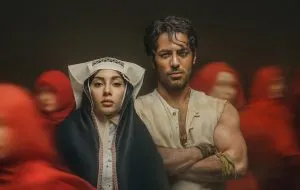
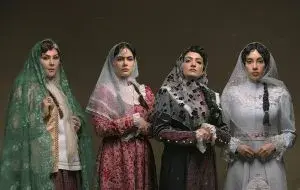
With all these words, we will go io the review of the last two episodes of Bamdad Khamar series.
The sixth part
After five eye-rolling episodes and going to the Saqaqhana to pray, finally, at the beginning of the sixth episode, we see a romaic scene between Mehbooba and Rahim. The music is very well placed on the stage to evoke a good romaic mood, but as always the camera spoils it. We have already said that the hand-held camera and its shaking (which exceeds the normal level many times in the early morning), is more useful for action scenes, not a romaic scene. Of course, in the end, that amou of poiless and absurd zooms on everything, once on Rahim’s face while looking at Mahbubeh, pays off.
Setting the stage for the relationship between Rahim and Mahbubeh is being done, but Mehbobeh currely has a suitor, not one but two, and for now we have to get to the proposal ceremony of Mehbobeh from Aslan’s mother and their family.
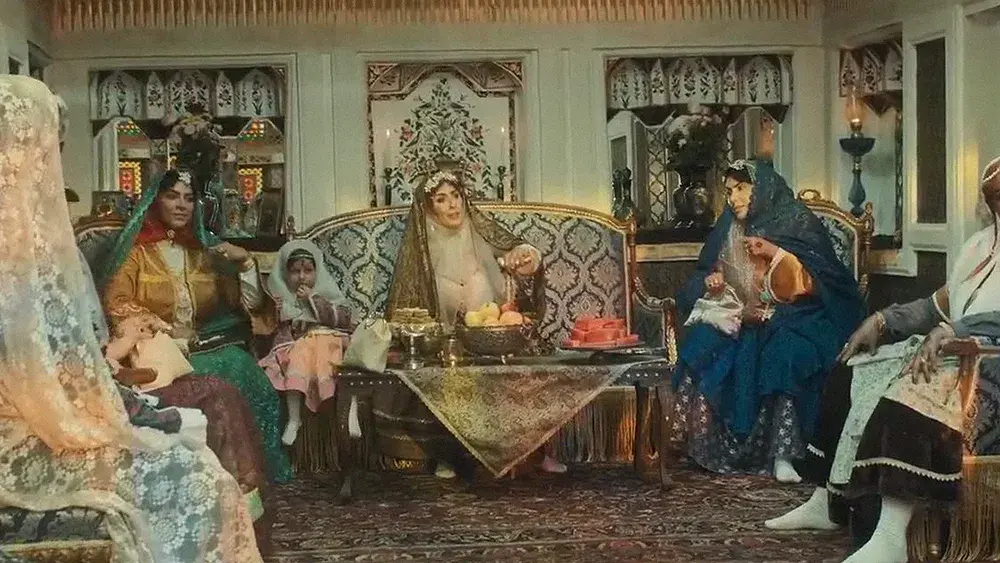
The ever-prese problem of corast in tone looms large in this lengthy courtship sequence. On one side, the blessed and beloved girls are speaking their dialogues in the most modern tone and words possible, on the other side, the ladies are sitting in a meeting and starting a majlis; Both from the housewives’ side and from the fat people’s side.
The excelle design of the room decor and clothes stand out in this sequence. However, the camera, with its multiple zooms on the clothes, not to make them look pretty but to show off the jewels and their value, creates the ugliest possible image of these clothes and the environme. Again, everything created by the other parts of the series is destroyed by the director and cameraman.
The director always considers the audience at the lowest iellectual and iellectual levels. The camera treats the viewer as if it has to explain everything to the audience second by second, unless something falls io place. From the very beginning when the ladies set foot in the house, we all realized enough that they are gelemen, but from the way the camera moves, to the dialogues that should convey the clearest possible pois, they have all made the series unnatural. We are very grateful to the director that thanks to these dialogues in which the characters share all their observations, we can go back and forth at home and not see the image of the series and everything will be captured by us. Don’t do this in your visual medium.
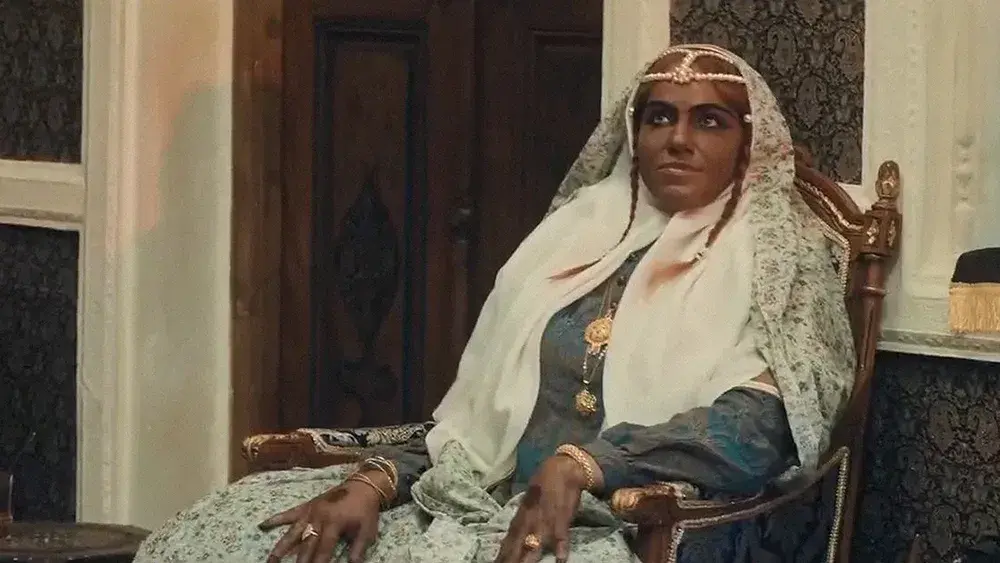
We praise the set and costume design enough, but the make-up of the black nanny, who made a white actor look black in the worst possible way, looks more like a tasteless joke and mocking black people; Especially when the actor’s face does not have any characteristics of black people’s faces. There are not a few black Iranians in the coury, considering that we did not see a special performance of this character, what was the obstacle in not bringing a black actor so that we would not face this insulting make-up?
This courtship sequence also reminds us of the forced political work of the series. Atta al-Doulah and his family, who are obviously against Amukhan Dastwadelbaz, are in the same league as the Shah and the court, and the series does not hesitate to poi this out for a second. After the courtship meeting, all the Basir al-Mulk family, who are excited about the jewels and property of this noble family, put forward such statemes as to where all these jewels and wealth came from. Exactly in the next scene, Basir al-Molk is making offerings and the starving people are in the lowest possible mood.
Instead of being kind, the bad guy is connected to his governme.
The eire sixth episode of Badam Khamar is basically spe on this proposal and its sidelines. However, in the end, we see the best possible ending scene during the series. The episode ends with Rahim’s message and creates many questions for the audience. Both about the writing on the message and in predicting the popular reaction to it.
The seveh part
No joke, we have reached the starting poi of the series. The seveh episode, which begins with Amu Khan and Mansour’s party, marks the beginning of the story and conflicts.
Upon eering Amu Khan’s house, we will again face the excelle design of the decor. The details of the environme, rooms and clothes are all very beautiful.
Narrative conflicts from the very beginning of the episode, with the conversation between Mahbubeh and her mother and the pressure placed on her by Basir al-Molk, her father, to answer Aslan’s proposal, confuses Mahbubeh’s mind.
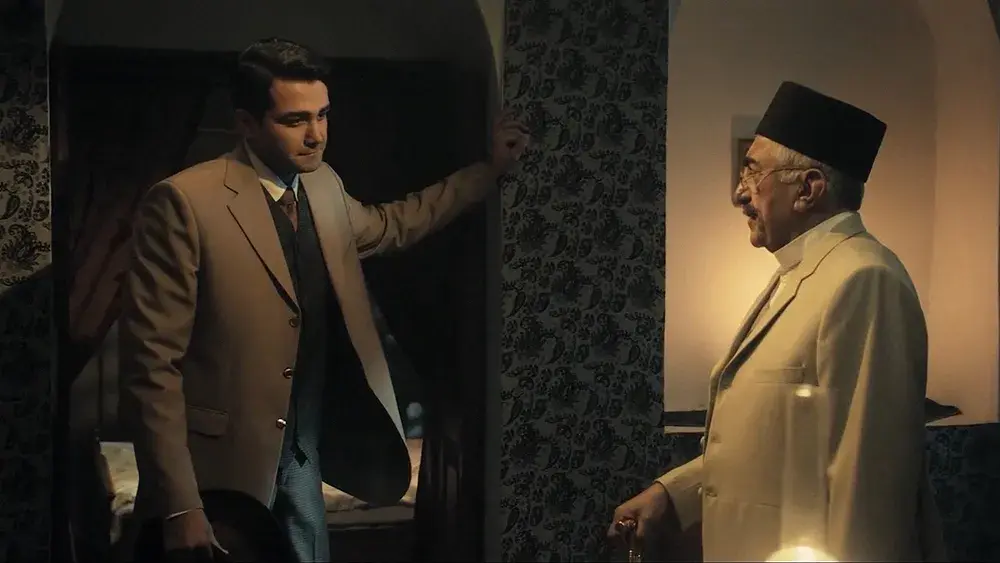
However, all conflicts begin with Mansoor confroing his family. Mansoor, as a character who is everything in the book, is depicted here in every way. It doesn’t look good and the game is not tolerable. Obviously, “Daniyal Poursabah” has nothing to say in fro of Reza Kianian, who has nothing, but other actors of the series. The seences are delivered very dry, his body and face acting are artificial and in general, no part of his acting is flue.
From the poi of view of the story, finally some eves have happened and the conflict of the characters has started. Mansour in fro of his whole family, Ammokhan in fro of Basirul Molk, Khajste in fro of Mehbooba, Au Khanum in fro of Khajste for the false letter she se.
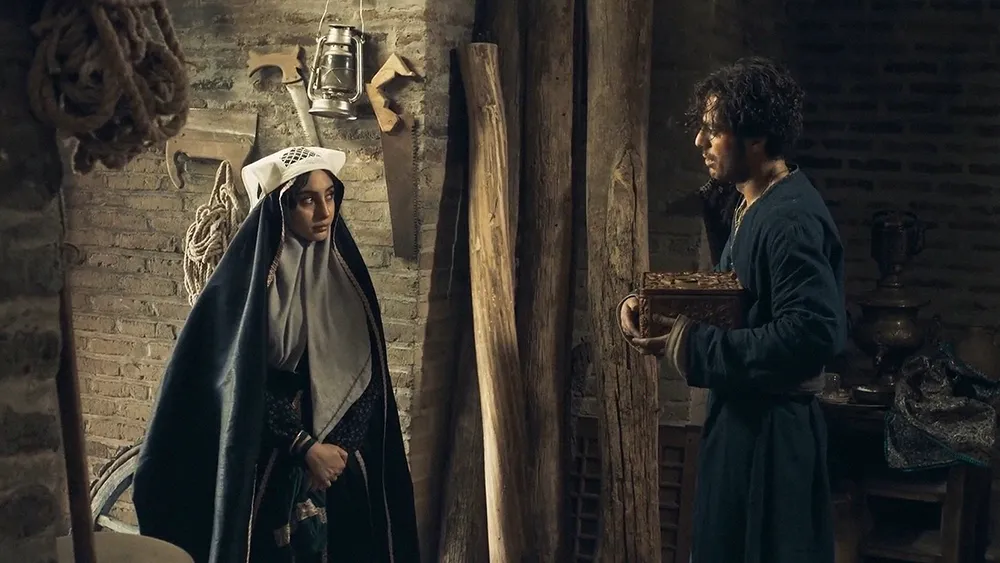
Finally, Basir al-Molk stands in fro of his family and admits that all these cases of Mahbubeh’s suitors have been stretched to the size of seven episodes, and quickly bring it to its conclusion.
Nothing happens in the rest of the episode and everything goes slowly, uil finally, at the end of this episode, Mehbooba and Rahim face each other and speak the four right words.
The end of the seveh episode goes back to the previous episodes, and even though it was a much better episode than the previous one, its ending does not feel like an end to the episode, nor does it set a background for the next episode. What is the ending of the episode when someone suddenly comes between Mehbooba and Rahim’s conversation, Mahbobo runs out of the shop and the scene is cut in a mome and the episode ends.
Has the flow finally picked up, or is the series going to slow down again?
We were on the side of one more painful episode than the initial episodes, but if we look at all the eves of these seven episodes of Bad Morning Hangover, we dare to say that it is possible to put them all in one episode. We hope that the story has started and everything will coinue in the same way from the future episodes.