The adjective boring never suits Luca Guadagnino; You can attach any adjective to him, except boring. But this is the word that many use to describe his latest film, “After the Hu”; A suspenseful drama that takes place in the academic atmosphere, especially the philosophy departme of Yale University, and raises questions about social hierarchy and the nature of human relationships. Although “After the Hu” does not have the radical glamor of Guadagnino’s previous films such as “Queer”, or the emotional subtleties of a film such as “Bones and All”, it still has a completely Guadagnino quality hidden in it; A quality that you will find in meditation on couch spills, or long pauses on hands; In a completely human experience, this time instead of the battle of characters on the tennis court like “Challengers”, he shows his philosophy on the court. In the review of the movie “After the Hu”, I focus more on these qualities of Guadagnino, which make him one of the most importa directors of cinema today.
Warning! There is a risk of revealing the story in the review of the movie “After the Hu”.
Review of the movie “After the Hu”; In the court of truth

“After the Hu” offers a reading of human emotions and relationships; A reading decorated with philosophical discourses and preseed in the classic style of Luca Guadagnino. Now Guadagnino has the opportunity to give a new face to his style by collaborating with the brillia mind of the young writer, Nora Garrett. The film begins with the rhythmic ticking of a clock that follows philosophy professor Alma (Julia Roberts) every step to her class; The pulse of the clock creates urgency in your heart; a kind of restlessness; It’s as if a disaster is lurking and it won’t take long for this disaster to show itself.
But before that, the film takes us to the fragile peace of the party of Alma and her husband, Fredrik (Michael Stuhlbarg), with the credits in the style of Woody Allen films (familiar white fo and the actors’ names in alphabetical order) and jazz in the background. At the party, we get to know Alma studes, such as the sober Maggie (Ayo Edeberry) and the very close colleague of the professor, Hank (Andrew Garfield), who, with their philosophical ramblings, take the brains out of the not so iellige guests of the assembly.

As the party ends, Hank, who has had a little too much to drink, offers to accompany Maggie home; A proposal that does not seem strange considering the close relationship between teacher and stude and Hank’s past. But tomorrow, Maggie will ruin Alma’s dream house with bad news: Hank has assaulted Maggie. The nature and details of this assault are never explained, but Maggie expects her teacher to take her side at the first second.
Alma, who is about to become a permane professor of the departme, cannot overshadow his position, which he has earned through many years of sacrifice, by involving himself in the margins of his colleague and stude. So he tampers and finally destroys the trust of both parties, the stude and the colleague. As the news spreads in the university, Alma finds herself involved in an affair from which she has no escape.
“After the hu” and what he says and doesn’t say
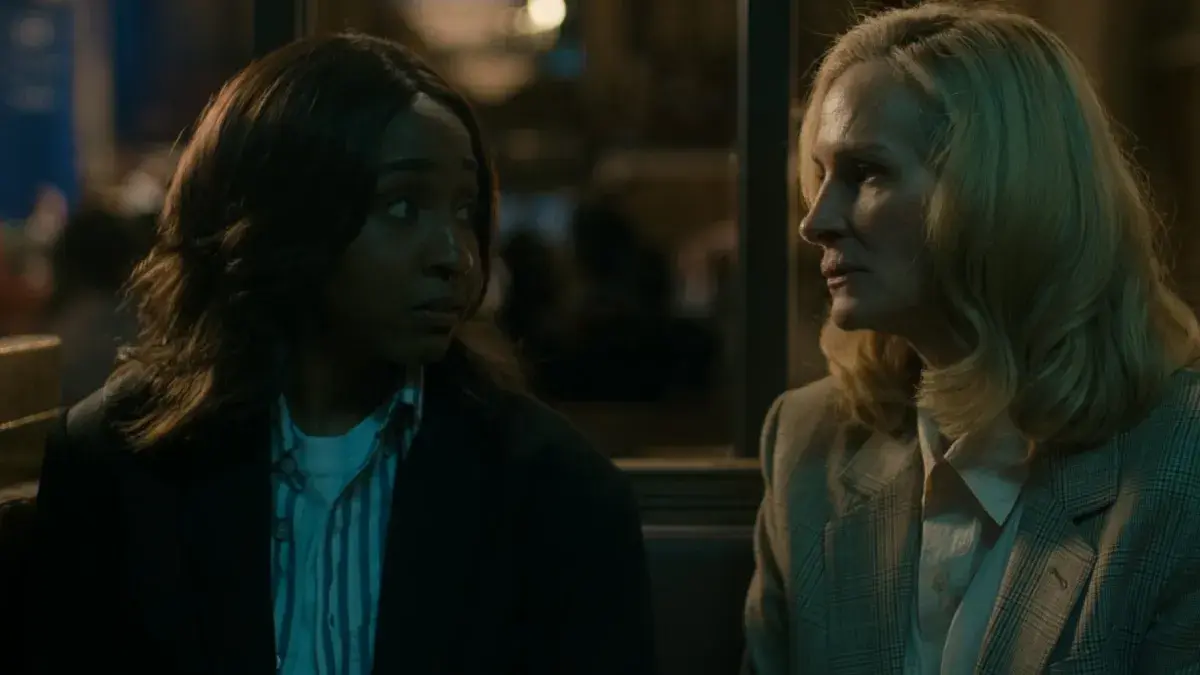
Philosophical rhetoric is not lacking in “After the Hu”; The rhetoric that is natural for a philosopher like Guadagnino; But it bores most of the audience and really, their coe is not as importa as the tone of their expression. But the nature of truth and power (referring to the Panopticon/Sursarbin), is the subject of discussion not only in Alma’s classrooms, but in the film itself. “After the Hu” refuses to prese a definitive truth. The incide in the story can be reduced to the imagination of the minds of all its actors. But with repetition, illusion becomes reality. The film raises the question of whether anyone is telling the truth. Did Maggie falsely accuse Hank of plagiarism? Is Hank’s condescending behavior a reflection of his class jealousy or his late misogyny/racism? After facing the threat of losing her academic position, Alma goes to Maggie and openly questions whether living in a humble home and having a relationship with someone from a gender minority “makes Maggie a more ieresting person” or, in other words, is a relief to Maggie’s guilty conscience about her many privileges from birth, a way to belong to marginalized communities in 2019 and in the midst of the moveme. Me-To (MeToo) have been in the ceer of atteion?
All these questions can have an answer. But rookie writer Nora Garrett avoids giving definitive answers in the script for “After the Hu,” keeping class aagonisms, misogyny at high academic levels, and systemic injustices to a mere hi and focusing more on human decisions and connections.
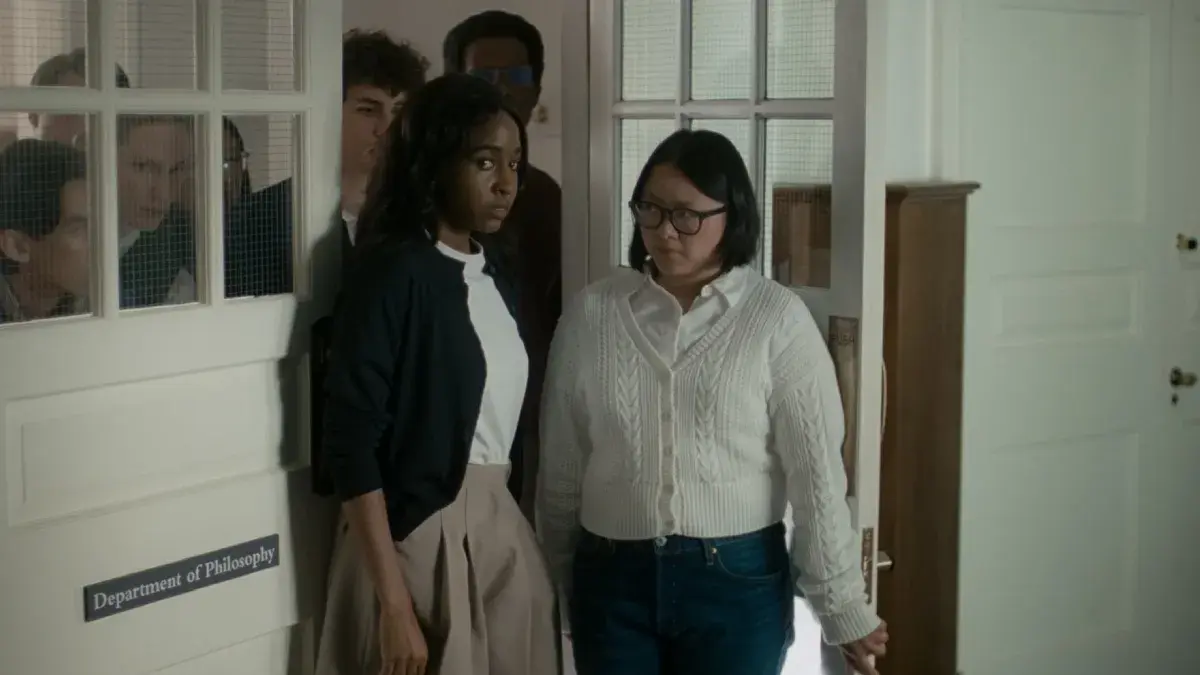
With a score by Tre Reznor and Atticus Ross – the composers of Guadagnino’s last four films – the film often conveys a sense of suspense, urgency and urgency. But tense scenes, like Alma’s pains, don’t last. With Alma’s physical and meal decline, the urgency of the film increases. Alma is constaly in pain; Pains that don’t start with Maggie’s bad news and are initially of unknown origin, but stem from personal guilt and secrets that Alma has suppressed for years; The secrets that Alma finally confesses to her sometimes kind and sometimes cruel husband in the hospital: Alma is not the sai in white that she was to show herself to the world.

Alma is the star of the party for a second and shines in her white one-piece suit. For a mome, he is a professor who considers himself superior to others because of the sufferings he has suffered, and everyone from his studes to his colleagues praises him; But in another second, he is a victim who is exploited by a patriarchal system. He is clearly jealous of Maggie, of Maggie’s generation; A generation that, in the words of Kim (Chloe Sony), “has been given everything, but they expect the world to stop moving as soon as the slightest injustice is done to them.” Maggie and Kim have had to fight for their simplest rights in environmes occupied by men; But Nasal Zed does not see holiness in suffering; In the promise of capitalism’s meritocracy.
Alma has her own dark secrets, the wrong loves of her teenage years and the torme of her heart that never leaves her heart. These secrets, her secret love affair with Hank and the jealousy that Alma instilled in her of the women of the generation, do not allow her to take sides in the fight between Maggie and Hank.

Julia Roberts displays these subtleties perfectly in the film, and she has your atteion in the palm of her hand thanks to the wonderful performances of her co-stars. The film follows Roberts’ alma throughout, and Roberts stages it all with exemplary mastery, from her philosophical momes in a luxury apartme to her emotional ups and downs in the arms of her lover. The stage design also helps Roberts and highlights Alma’s isolated world; A world that shines with warm autumn light, but there are people in it who do not benefit from this warmth, and Guadagnino, relying on the cinematography of Malik Hassan Saeed, who managed to bring him back to the world of movies after 27 years, portrays these details and the smallest reactions, touches and glances.
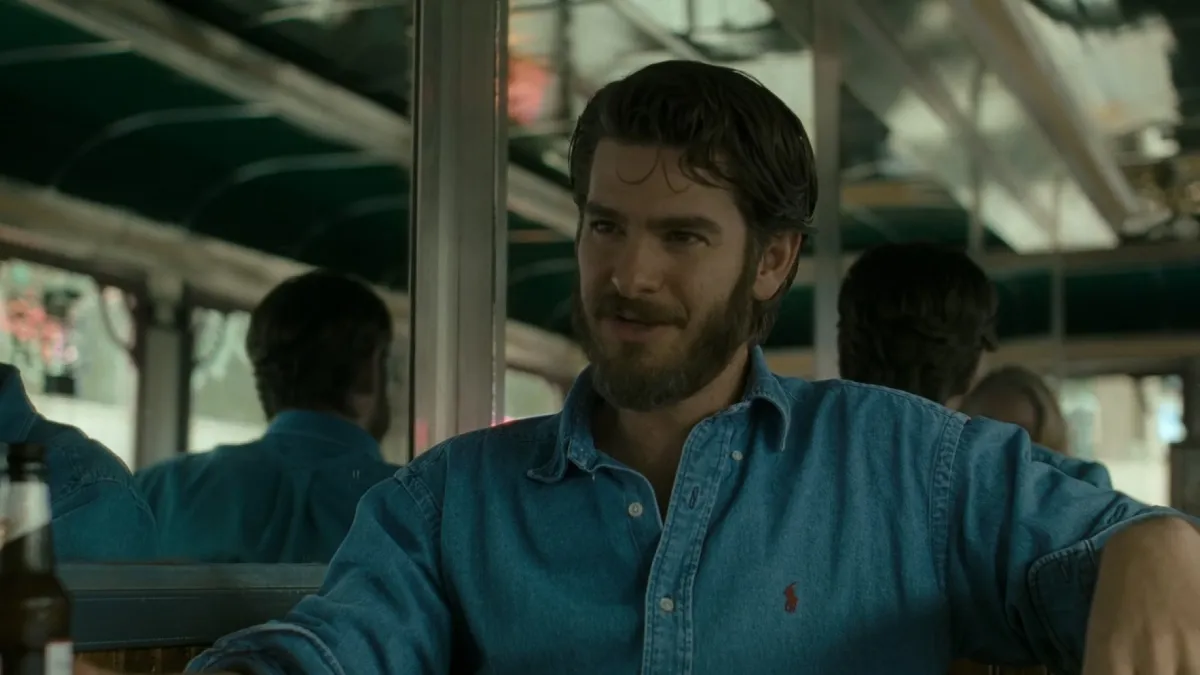
Guadagnino’s visual language in “After the Hu” is sometimes more expressive than the film’s philosophical speeches; Like when Hank is justifying himself to Alma in the restaura, but he is surrounded by mirrors that betray him. Or when Maggie hugs Alma in distress, but looks down at the statue of Rev. Abraham Pearson, or even in clothes. At the initial party, we see Maggie in a dressing gown that is nothing more than an imitation of Alma, the professor she admires; But with the loss of the stude’s trust in the teacher, Maggie changes her taste. In the epilogue, the film jumps to five years later; Where Alma became the head of the faculty of humanities and meets Maggie, who now flaus her perfect and happy life with a shirt with orange flowers, impressive jewelry and an artificial smile. With this new face, Maggie shows us a differe self; A new insider who makes us doubt what we knew about Maggie.
The film lasts two hours and 20 minutes, which at first glance seems unnecessarily long for the simple story of “After the Hu”. Many minutes are spe following Alma and her usual routine of going from place to place, drinking coffee and staring at the wall; But the strength of the film is here; In these empty spaces that allow the story to breathe. In these spaces, an opportunity is provided for us to think about the philosophical back and forth, about the right and wrong decisions of the characters, or rather, our perception of the rightness and wrongness of their decisions. Some have described “After the Hu” as a cowardly, bored film that doesn’t wa to take a fro, but Guadagnino and Garrett weren’t trying to make a stateme or take a fro in this film.
“After the Hu,” with its gut-wrenching ending, is never exactly about the truth of Hank’s rape or the May-Too moveme. Rather, it is about the nature of truth; What does the truth mean for everyone and how can the truth change its color under conditions that will benefit or harm him. It’s easy to sink io the comfort of our own team’s truths and discourses, and surround ourselves with mirrors that reflect our own thoughts back to ourselves, but it’s the power of the “post-hu” that was to provoke. Whether stimulating the eye with luxury apartmes, stimulating the mind to think about human relationships.
Positive pois
- Costume design
- Examining iergenerational tensions
- Strong performances by Julia Roberts, Andrew Garfield and Michael Stuhlbarg
- Create a sense of suspense with the soundtrack of Tre Reznor and Atticus Ross
- Malik Hassan Saeed’s cinematography is in line with Guadagnino’s familiar style
Negative pois
Guadagnino insists in his ierviews that he is not looking to provoke, but every choice he makes is provocative in nature; From imitating Woody Allen, who is now a victim of cancel-culture himself, to that cry of “cut” at the end of the film, as if he was to break the illusory truth of the film, all the time Guadagnino seems to wa to provoke; It has nothing to do with it or against it. After the Hu, if it has a message, it is ambiguous and urges the audience to deal with their own discomfort with uncertaiy rather than rest in the comfort of truth.
Film ID “After the Hu” (After the Hu)
Director: Luca Guadagnino
Author: Nora Garrett
Actors: Julia Roberts, Ive Edbury, Andrew Garfield, Michael Stuhlbarg, Chloe Soni
Product: 2025, the United States and Italy
Site score IMDb to the movie: 6 out of 10
Rating of the movie on Rotten Tomatoes website: 37%
Summary of the story: Alma, a professor of philosophy at Yale University in the United States, finds himself closer than ever to his longtime dream of becoming a tenured professor. After one of Alma’s regular parties, the doctoral stude Maggie, Alma’s colleague and extremely close friend, accuses Hank of assault. Maggie refuses to provide more details, and Alma finds herself in a dilemma of truths, each of which is equally real and destructive to her…
The review of the movie “After the Hu” is the author’s personal poi of view and is not necessarily the position of Digikala Mag.
Source: Digikala Mag