Fire is an amazing phenomenon that has been known for hundreds of thousands of years, but this same phenomenon sometimes shows its anger and rages in the lap of nature and cities, which requires the most advanced equipme and specialized forces to deal with it, and this is where the roar of the engines of the water-sprinkling aircraft fleet can be a lifesaver.
When vast forests such as California, Australia, China or the Mediterranean, Hyrkani or Arsbaran are surrounded by fire, according to the exte of the fire and the type of access, there will be a need for airplanes, and in other words, all kinds of water-sprinkling aircraft. From agile helicopters to converted passenger jets, these iron birds are the fro line of defense against wildfires in various natural and urban areas. But how do you combine a fire extinguisher with an iron gia and how do these airships help extinguish the fire immediately?

Click to see the summary of this article with artificial ielligence!
Climate change and global warming have made forest fires longer and more damaging around the world. In such a situation, it is almost impossible for the ground forces to reach the ceer of fire in mouainous and difficult areas, and for this reason, the strategic importance of the water-spraying aircraft becomes clear.
Corary to popular belief, “aerial firefighting” operation does not only mean pouring a large volume of water on the fire, but it is a precise aerial operation that often includes creating barrier lines with red chemicals (Retarda), cooling hot spots and saving citizens’ lives. In the aviation industry, these aircraft are divided io differe categories. From gia aircrafts or VLATs that can carry huge amous of material to “Scoopers” that can even glide on the surface of a lake and fill their tanks with water.
Scoopers
Perhaps the most iconic image of a water plane is one that approaches the surface of the water, hovers over a lake, coinuously refills its tank, and takes off again. These types of planes are known as scopers.
Canadair CL-415 and CL-215
Undoubtedly, the most famous name in this class is the Canadian aircraft Canadair CL-415 and the older model CL-215. This aircraft, known as the Super Scooper, is designed exclusively for firefighting and is not a modified aircraft.
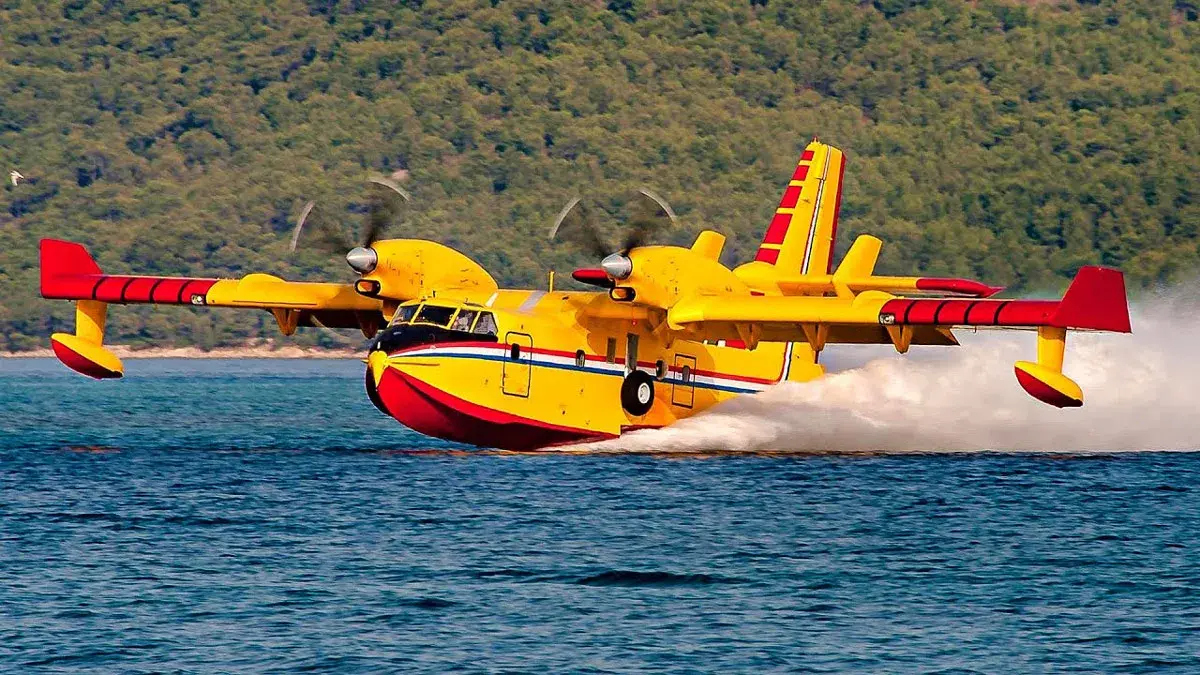
Canadian aircraft CL-415
Credit: Canadair
This aircraft can move at high speed on the surface of water, including the sea or lake, and by using small valves under the body, it can direct more than 6000 liters of water io its tanks in just 12 seconds. The biggest advaage of this type of water sprayer is its speed. As long as there is an adequate water supply near the fire, the CL-415 firefighting aircraft does not need to return to the airfield to refill its tanks and can drop dozens of tons of water per hour on the fire.
Large Air Tankers (LATs) and Very Large Air Tankers (VLATs)
When it comes to building a massive fire line over a long distance, scoopers aren’t enough, and that’s where converted passenger jets come io play. These airplanes usually use “Fire Retarda” materials instead of pure water.
McDonnell Douglas DC-10 (air tanker)
One of the most recognizable figures in the heavy water tanker fleet is the DC-10 Air Tanker. This plane, which once transported passengers over long distances, is now known as Tanker No. 10.
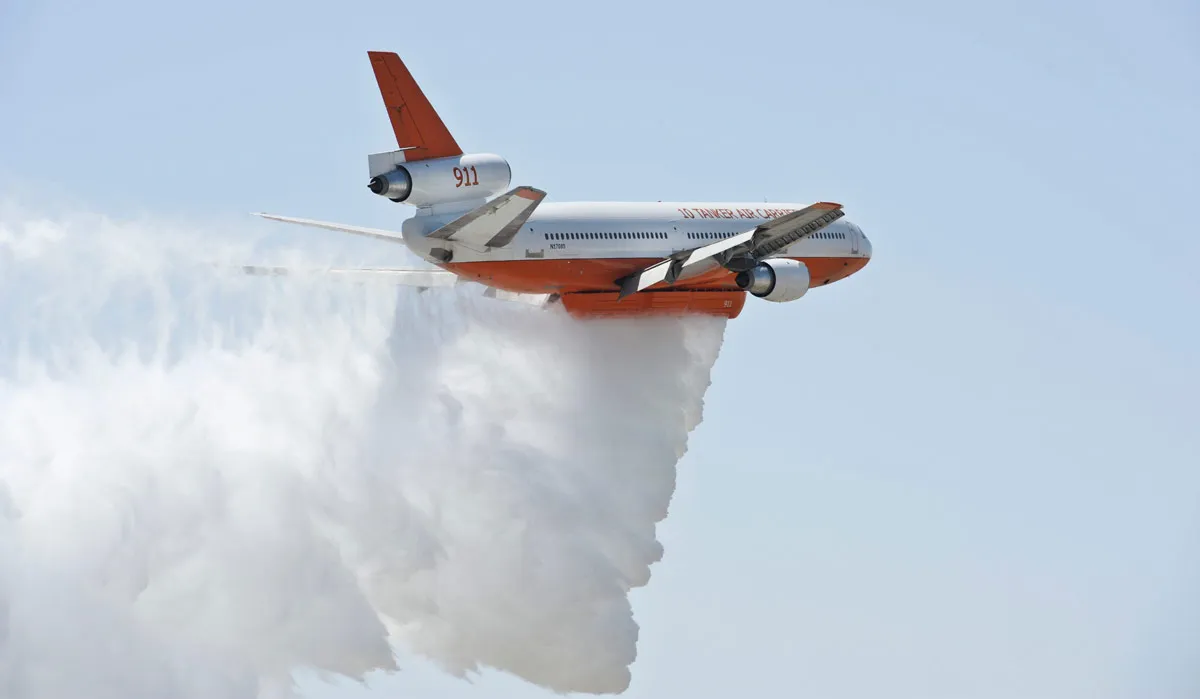
A modified McDonnell Douglas aircraft to put out the fire
Credit: Tech. Sgt. Joselito Aribuabo
The astonishing capacity of about 45,000 liters of fire suppressa makes it an excelle choice for large volume fires in remote areas. It also has a special release technology. Unlike old methods where a valve was opened and material was discharged by gravity, modern DC-10 firefighting aircraft use computer corol systems to release material at a consta flow rate to create an even coverage on the ground.
Boeing 747 Supertanker
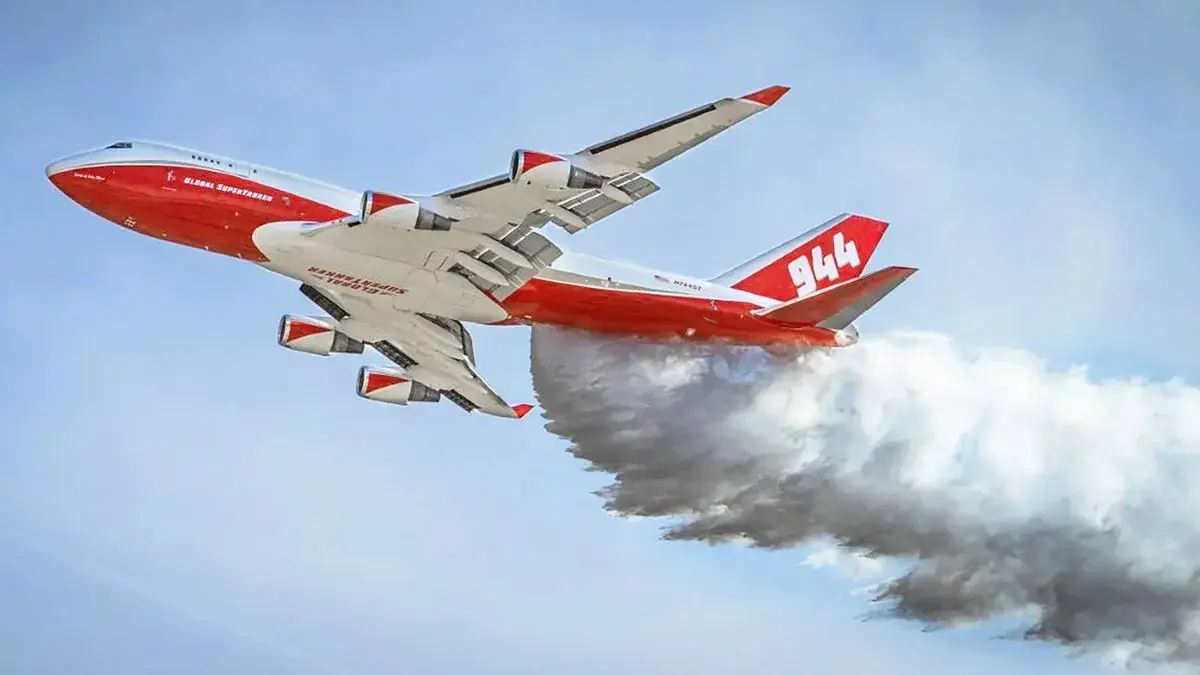
Boeing 747 supertanker plane
Credit: TWZ
Although in rece years this model has been withdrawn from service and turned io a cargo plane, but in the history of all types of water-sprinkling aircraft, the Boeing 747 Supertanker is a legend. This plane was the largest firefighting plane in the world and could carry more than 70,000 liters of water or combustible materials. It was even powerful enough to create artificial rain at low altitude.
Lockheed C-130 Hercules and MAFFS system
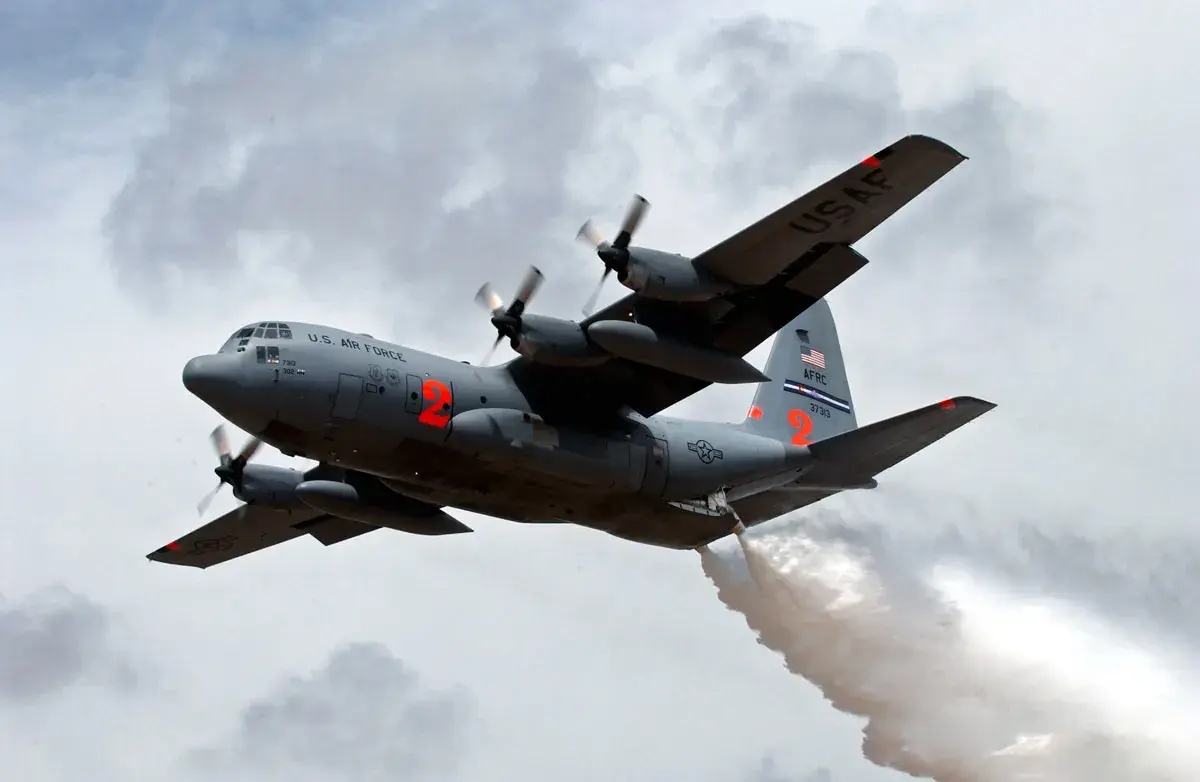
C-130 aircraft modified for firefighting
US Air Force
Air forces of many couries, including the United States, use the C-130 Hercules military transport aircraft as temporary water sprinkler aircraft. This is done by installing a system called Modular Airborne Fire Fighting System (MAFFS). This system allows a military cargo plane to be converted io a fire tanker in less than a few hours.
Single-engine and agricultural aircraft (SEATs)
It should be kept in mind that bigger does not always mean better. In narrow and difficult mouain valleys and areas, gia jets do not have enough maneuvering power. Therefore, in this situation, “Single Engine Air Tankers” or SEAT come io action.
Air Tractor AT-802F Fire Boss
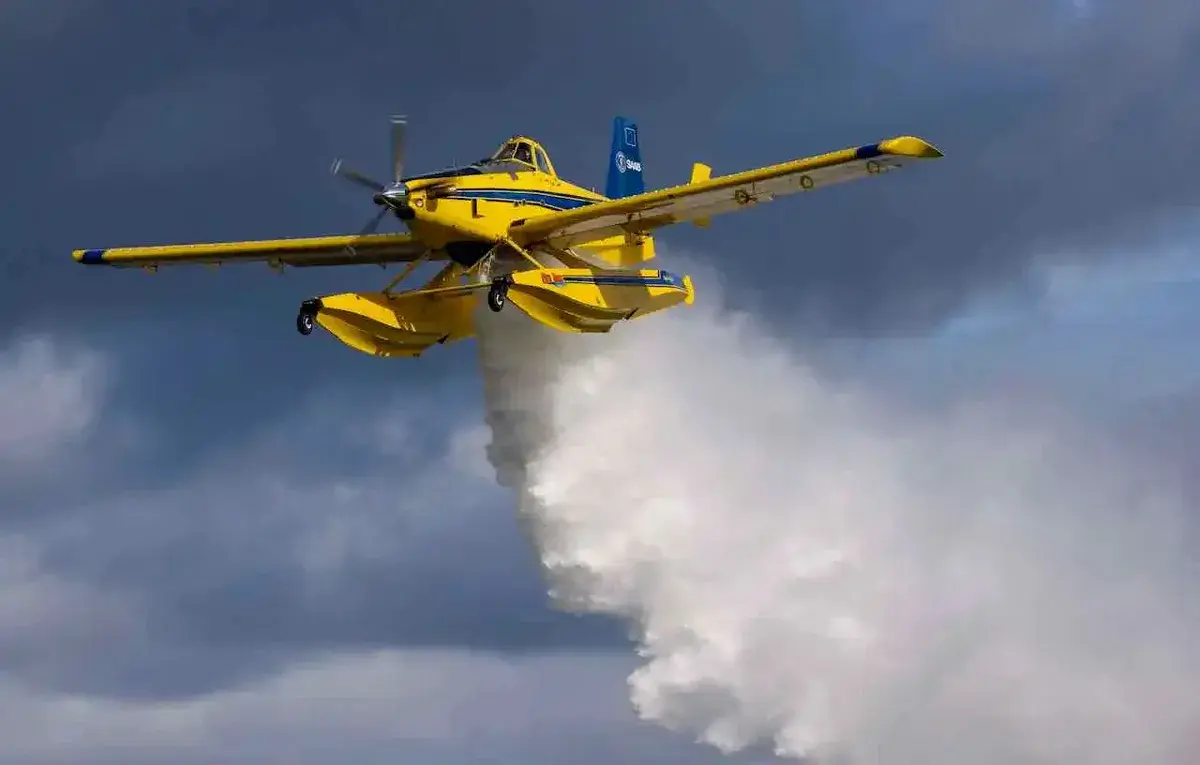
Fire boss plane
Credit: SAAB
Another practical water-spraying aircraft is the Air Tractor AT-802F Fire Boss, which is actually an amphibious and more advanced version of the famous Air Tractor AT-802. By installing special floats equipped with retractable wheels, this unique aircraft has become an agile “scooper” that can land on water and fill its 3000-liter tank in just 15 seconds while moving.
Due to its much lower operating cost than larger aircraft such as the Canadair CL-415, its long-duration flight capability of up to 3 hours, its lower operating altitude, and its ability to use small and shallow water sources that are not available to large aircraft, the Fire Boss has become a very popular tactical tool for initial fire attack. For this reason, many couries including America, Canada, Spain, Portugal, Italy, France, Croatia, Greece, Sweden and Turkey have used it.
helicopters
While sprinkler aircraft usually bring to mind fixed-wing aircraft, helicopters are also a vital part of the aerial firefighting fleet. These vertical flying aircrafts have the ability of static maneuvers and can pour water exactly on a specific tree or building.
Sikorsky S-64 (Skycrane)
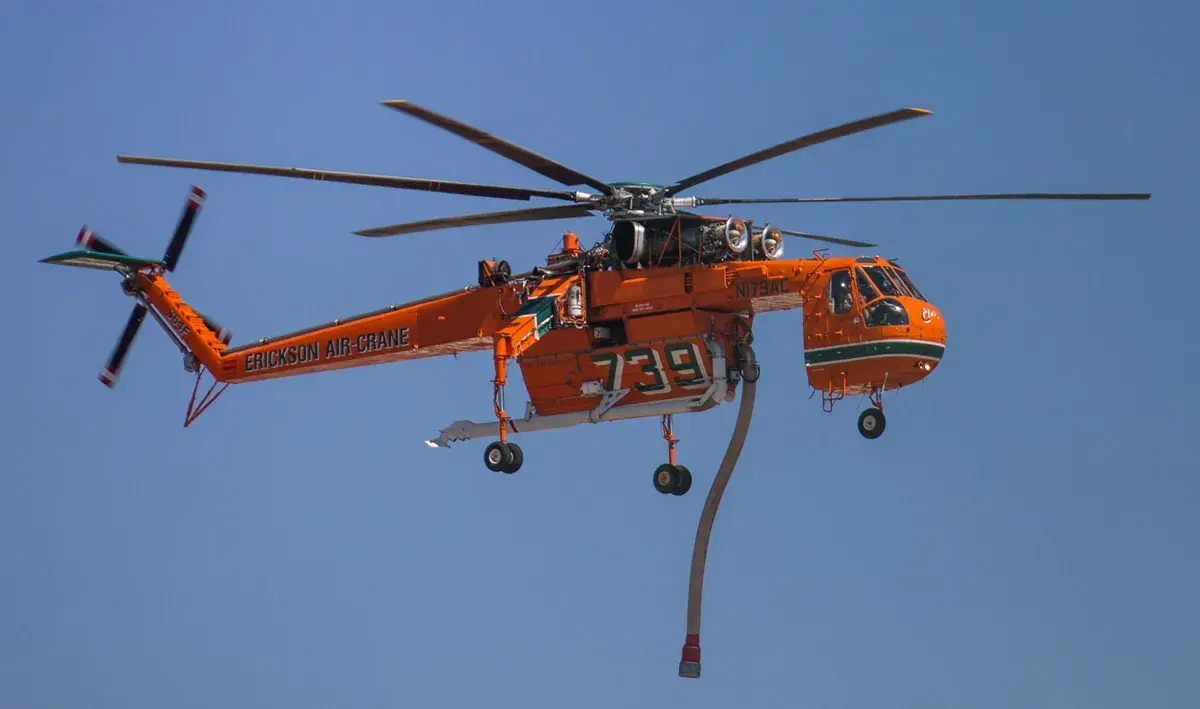
Skycrane helicopter
Credit: Erickson S-64E
This helicopter, with its strange and insect-like shape, is one of the most powerful tools for aerial firefighting. The SkyCrane has a hose pipe that can suck water from any source such as a pool, water tank or shallow river and store it in its tank.
Firehawk (S-70i)
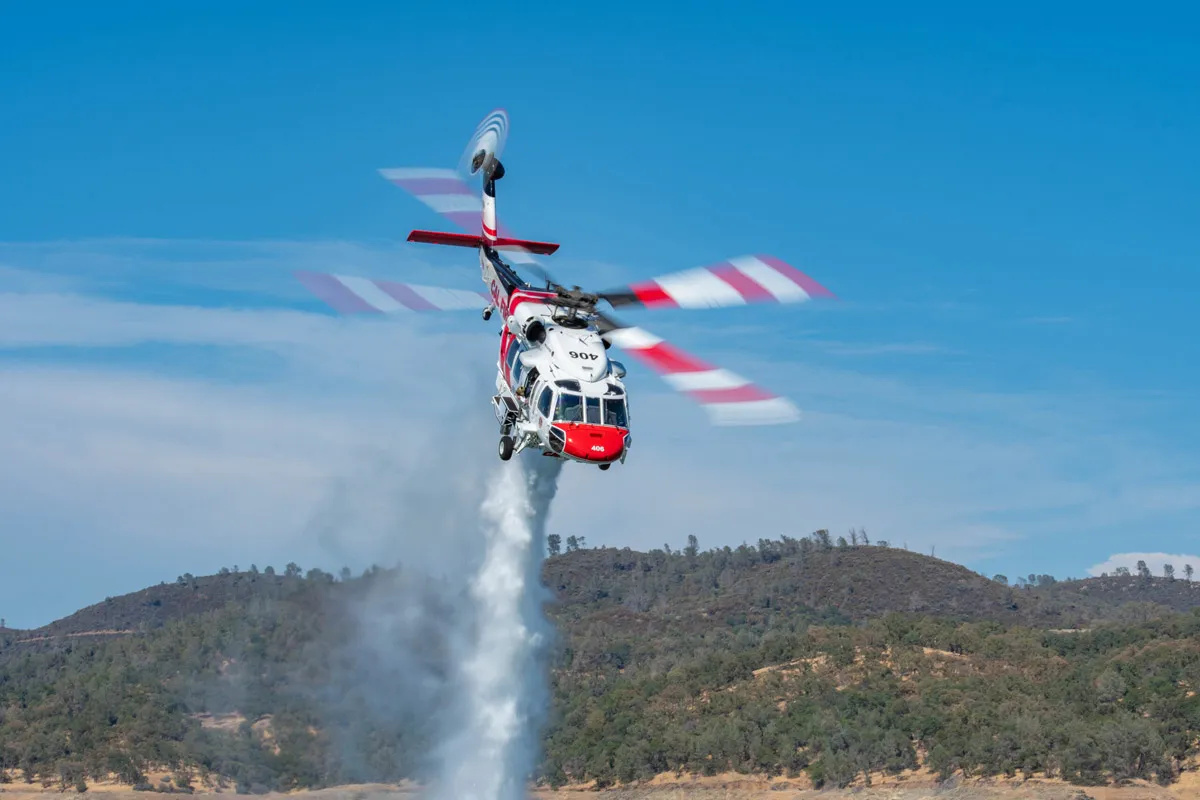
Pouring water on fire by S-70i helicopter
Credit: Aerial Fire Mag
This model is a modified version of the Black Hawk military helicopter. The Firehawk is a combination of military speed and water-carrying power, and has become popular among firefighters in various regions, including California, due to its high flight persistence and ability to fly at night.
Water or fire extinguishers
Water is usually used to attack the flames directly to reduce the heat and extinguish the fire. This work is mostly done by helicopters and scopes.
In corast; The flame retarda is a chemical substance, usually ammonium phosphate, reddened with iron oxide so that pilots can see the area they are targeting. These materials are used for indirect attack; That is, they are poured in fro of the path of the fire so that when the fire reaches it, there is no fuel and the advance stops. Large aircraft (VLAT) usually carry these materials.
Operational Challenges: Flying in Hell
Piloting a water jet is one of the most dangerous jobs in the aviation industry. Airline pilots always try to avoid difficult situations like air holes, but firefighter pilots have to go straight io the heart of the air turbulence. Their flying height should be between 60 and 100 very low and close to the fire. It is also very difficult to see power lines, trees and hills in thick smoke.
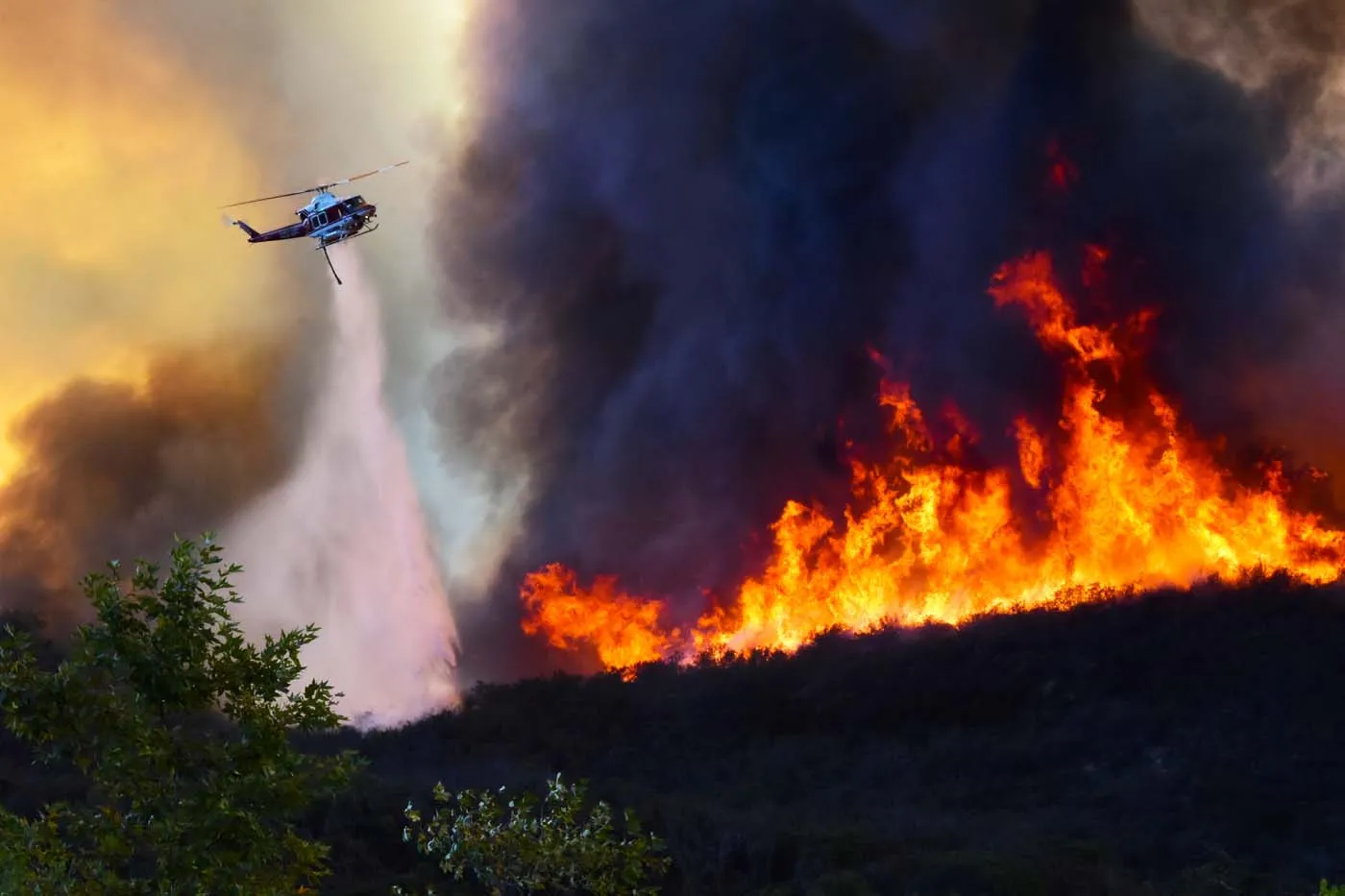
Airplane in the heart of the fire to extinguish it
Credit: Vertical Mag
In addition, sudden weight changes occur in these aircraft. When the pilot presses the release button, tens of tons of weight are removed from the plane in seconds. This sudden change causes the plane to be thrown upwards with great acceleration, and the pilot must have high skill to corol such conditions.
The future of sprinkler aircraft
As the global fleet ages and older aircraft are retired, the industry is looking for new firefighting solutions. The conversion of more modern passenger aircraft such as Boeing 737 or old Airbuses io water and firefighting aircraft is on the rise. Also, the use of heavy drones to extinguish fires at night and when flying is dangerous for humans is one of the future prospects of this industry.
summary
The world’s sprinkler aircraft fleet is a diverse collection of human engineering that protects life in difficult fire conditions. From Canada’s super-scoopers that relelessly make their way across the lake to the fire, to gia DC-10s that pai the sky red, single-engine firefighting helicopters and SkyCrane helicopters that operate with precision are all vital tools against nature’s fury. Especially, today, with the warming of the earth, the need for this fleet is felt more than ever, and knowing them has become more importa.
Frequely asked questions about the sprinkler plane
Why is it importa to have a sprinkler plane in forest fires?
Due to the difficult access to the mouainous areas and the exte of the fire, it is difficult for the ground forces to arrive, and only the water-sprinkling aircraft can quickly reach the fire and carry out the fire extinguishing operation or the creation of coainme lines.
What is the difference between scoopers and heavy tankers?
Scoopers, such as the CL-415, can move on the surface of the lake and quickly fill their tank with water, while heavy tankers such as the DC-10 or 747 usually use slow-burning materials to create fire lines over long distances.
What is the most importa challenge of the pilot in aerial firefighting operations?
Flying at very low altitude through thick smoke, the risk of hitting obstacles, severe air turbulence, and sudden weight changes when releasing water or materials are among the things that make this type of flight one of the most difficult missions in aviation.