Google has unveiled WeatherNext 2 weather prediction artificial ielligence model, which can show a much better performance in weather forecasting up to 15 days by using the power of tensor chips in Pixel phones.
WeatherNext 2 model is used in which Google services?
Google uses the WeatherNext artificial ielligence model in various services, including the weather application for Pixel phones, in addition to its search engine. Now this technology gia has announced that it has made the second version of the meioned model with a significa improveme; So that it can work eight times faster than before and provide users with four six-hour forecasts per day. According to Google, the WeatherNext 2 model is considered the most advanced option of its kind and is able to predict the weather up to 15 days ahead.
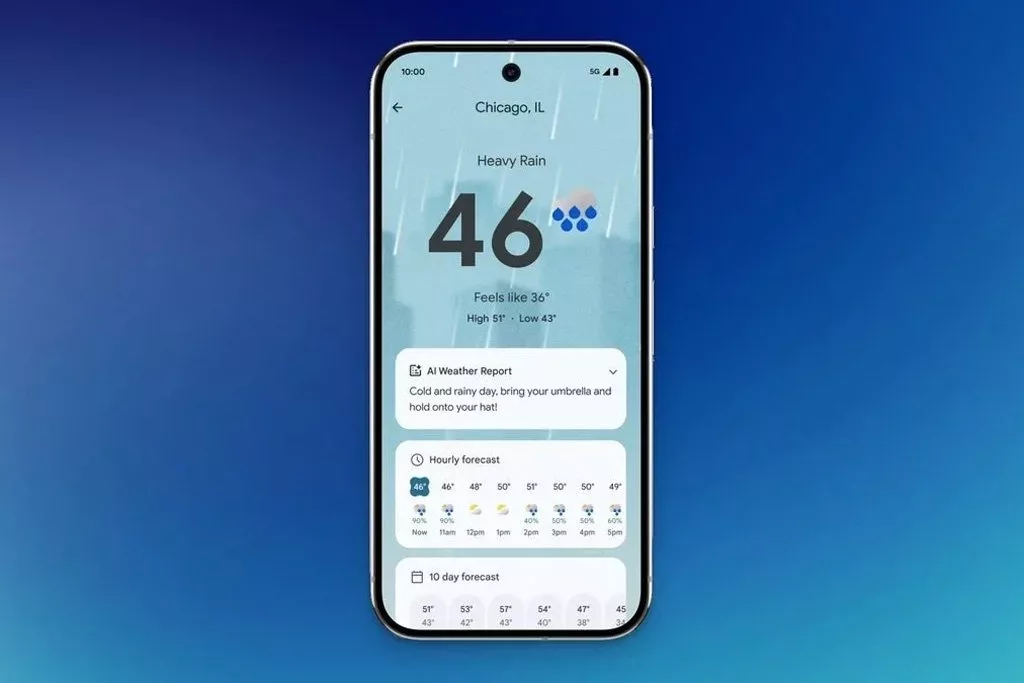
Google’s comparison shows that WeatherNext 2 can perform better than the previous version in 99% of predictable cases, the most importa of which are wind speed and direction, temperature, probability of precipitation, humidity and pressure. A major part of this improveme is thanks to the use of a dedicated Tensor chip in the Pixel series, which can handle processing related to machine learning and artificial ielligence; While in the not-so-dista years, supercomputers performed such heavy processing by measuring physical parameters.
The coe published by Google shows that now a new solution called Applied Generative Network (FGN) has replaced the old path of weather forecasting in this company’s model. Of course, researchers and developers can still access the first version of the WeatherNext model for educational and research uses. The new version will be available to users and developers through the Pixel Weather application, along with the Geminai application for Android and the weather forecast API connected to Google Maps.
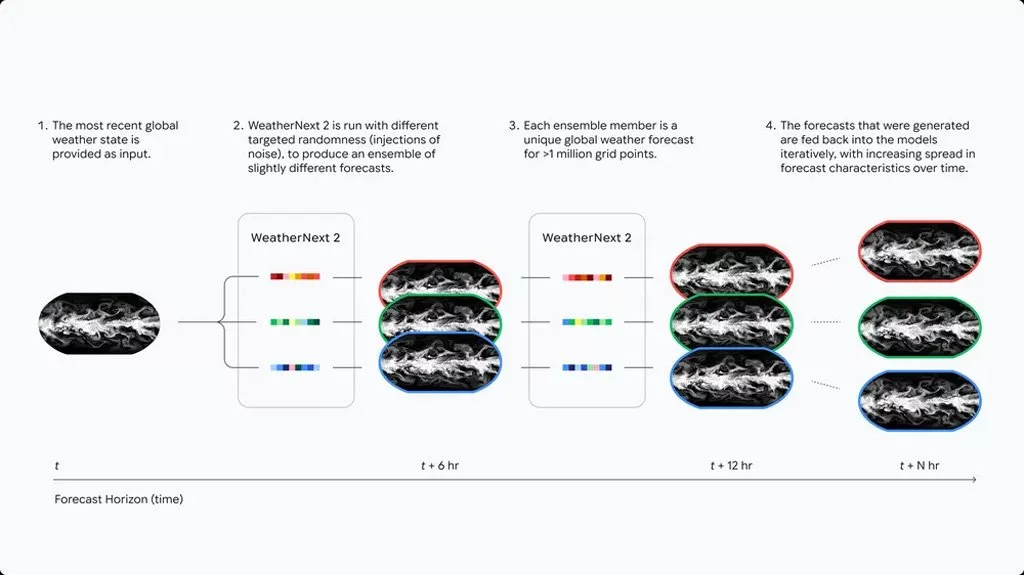
If in the coming days you see the improveme of the weather forecasting function in various Google services, such as its search engine or Gemina chatbot next to the Pixel weather application, you can be sure that the reason for such a phenomenon is the use of the new WeatherNext 2 model. Of course, according to Google, the release of the new model in various services will happen gradually and we will not suddenly see its widespread release.