Breaking a piece of plastic is a common occurrence. The main challenge starts when we wa to fix it. Usually, in these cases, people open a multi-purpose glue and stick the broken part, but after a few minutes or even a few seconds, the connection breaks again. The world of plastics is more diverse than it seems, so there is no fixed formula to find the best adhesive. Choosing the right glue depends on the type of plastic and its application. In this comprehensive guide, we will help you choose the right adhesive.
Types of plastic and its effect on the choice of glue
All plastics are not created equal, and each has a differe level of adhesion. Low level energy plastics such as polyethylene are very difficult to bond while ABS parts provide a better bond. In the following, we refer to the types of plastic:
- Soft and flexible plastic such as plastic bags, flexible bottles
- Dry and compressed plastic like disposable cups, CD cases
- ABS plastic like lego parts, car dashboard, electronics frame
The best adhesive for plastic in various applications
Once you know your type of plastic, you should think about its use. Are you going to glue two pieces of the same material to another or to a completely differe material like metal? This difference changes everything in the choice of glue. Connecting two dissimilar materials has its own challenges. Because plastic and metal expand and coract at differe rates at differe temperatures, and if the glue can’t withstand this stress, the joi will break quickly. In the following, we will examine the best options for differe scenarios.
The best adhesive for plastic to plastic
You may think that connecting such parts is simple, but you cannot screw a single version for all plastics. If both parts are of the same material, the best option is the special solve glue for that plastic. This glue is a chemical substance that melts the surface layers and after evaporation, it welds two pieces together. But if you don’t know the type of plastic, or if you’re dealing with tough parts (like polyethylene), things are a little differe.
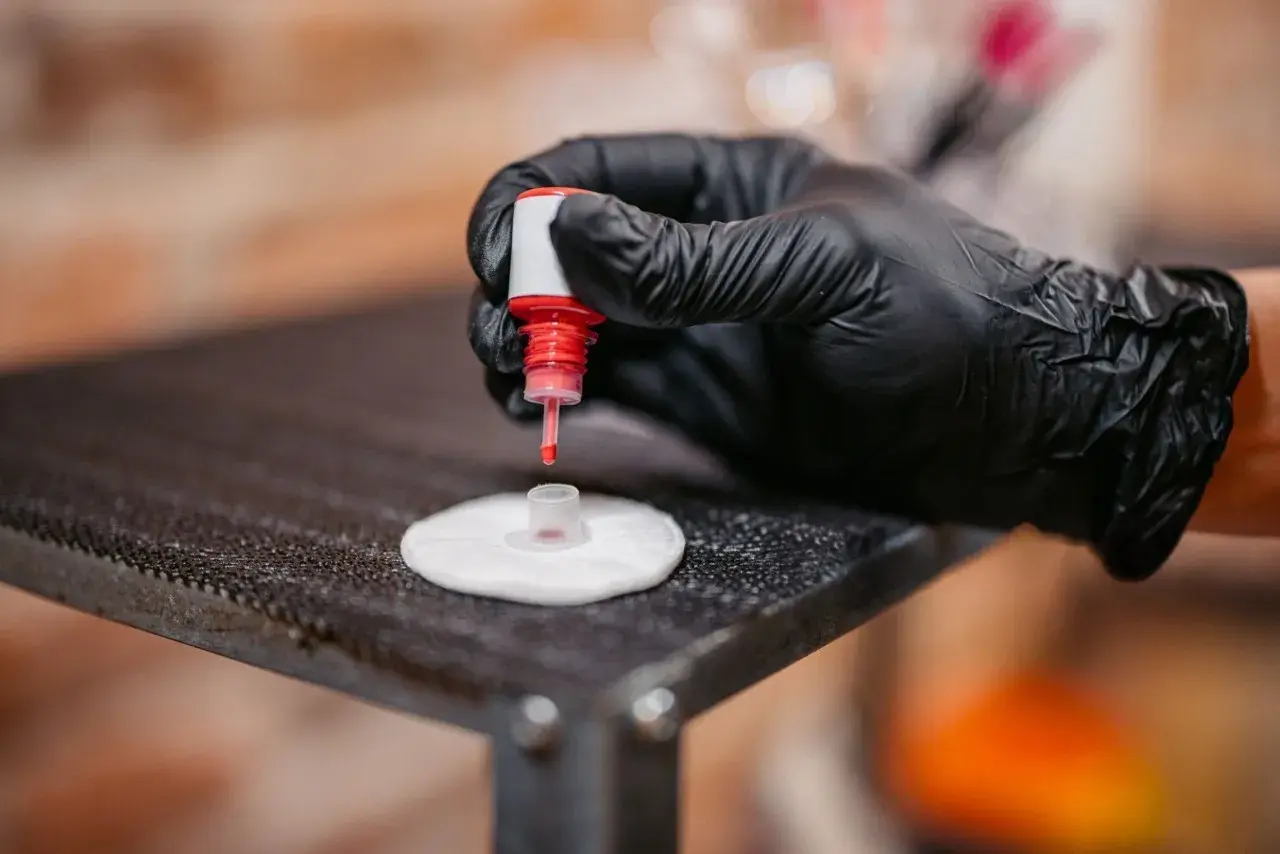
To choose the best adhesive for soft plastic, we recommend going for two-part adhesives. In this method, you must first apply a primer (surface activator) and then use cyanoacrylate glue. For compact and hard parts (such as acrylic or broken toys), twin epoxy is a great choice. Epoxies have excelle gap-filling power, meaning that if two parts are not completely touching, the epoxy can fill the void and create a strong bond. Drip adhesives are also suitable for precise and clean jois on hard plastics, but are brittle and have little impact resistance.
The best glue for plastic and metal
Connecting plastic to metal such as iron is a bit difficult. Because these two materials are differe in terms of thermal expansion from the earth to the sky. That is, on a hot day, metal expands much more than plastic. So the glue that connects the two must be flexible enough to withstand this tension and tension without breaking. Cyanoacrylate adhesives almost always fail in this application because they are stiff and brittle. The best adhesives for plastic and metal are structural adhesives such as epoxy adhesives reinforced with rubber particles. They adhere strongly to both surfaces and have good thermal resistance.
The best glue for plastic and iron
To bond plastic to iron, you must first get rid of the rust. Sand the surface of the iron and then clean it with alcohol. Otherwise, you’re applying the adhesive to the loose layer of rust, not the iron itself, and the bond will soon come off.
Adhesives for repairs and special parts
Some people mistakenly think that the first glue in fro of them is completely usable. In this section, we will go to glues that are designed for tough conditions and repairs.
The best glue for broken plastic
For clean breaks in hard plastics such as ABS or polycarbonate, where the parts are fully mated, drop glue is a quick and effective solution. For more strength, you can use baking soda and drop glue. I recommend that after pouring the glue, sprinkle some baking soda on it so that a quick polymerization reaction occurs and a hard mass can be sanded.
If there is a gap between two pieces or a piece is missing, go for epoxy with the slightest hi of doubt. Twin epoxies fill the gap and, once dry, become a hard material that can even be drilled, sanded, and paied.
The best glue for car radiator plastic
Here we are facing a sensitive and risky repair. Plastic radiators are a type of nylon reinforced with glass fibers and must withstand temperatures above 100 degrees Celsius, high pressure of the cooling system and consta coact with aifreeze (glycol). To be clear, any glue will fail here and the best solution is always to replace the radiator.
But for emergency and temporary repair, you need the best glue for car radiator plastic, which must have three characteristics of high temperature resistance, chemical resistance against aifreeze and pressure resistance. Among the existing adhesives, only special twin epoxy and steel epoxy adhesives have these three features.

Importa pois when using thermal and industrial adhesives
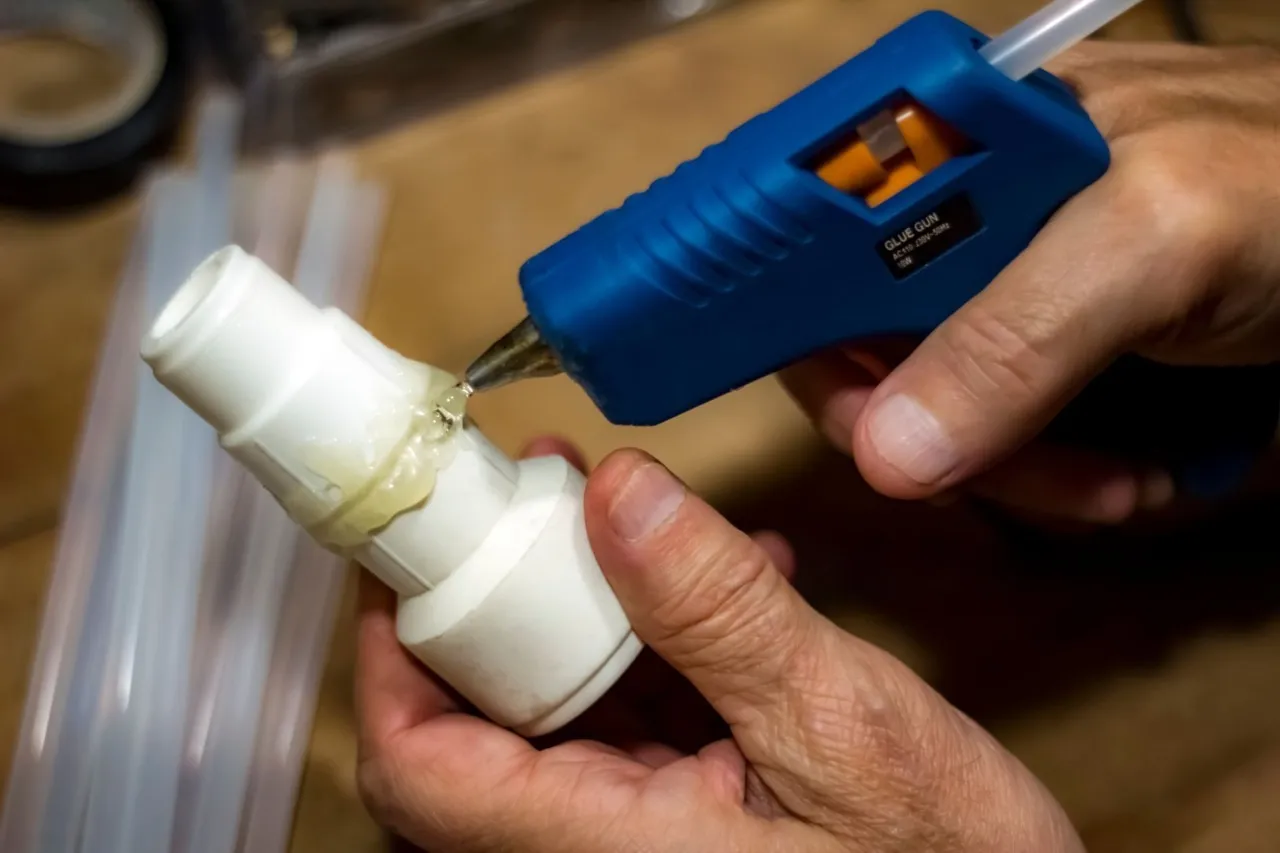
We often confuse hot glue guns used with heat resista (industrial) glues. Glue gun is not suitable for structural plastics. Its adhesive strength is low and it melts against low heat, for example inside the car in the sun. These glues are suitable for handicrafts and arts. But industrial adhesives such as epoxies and polyurethanes require safety and technical precautions, and you should always work with them in a well-veilated environme using nitrile gloves.
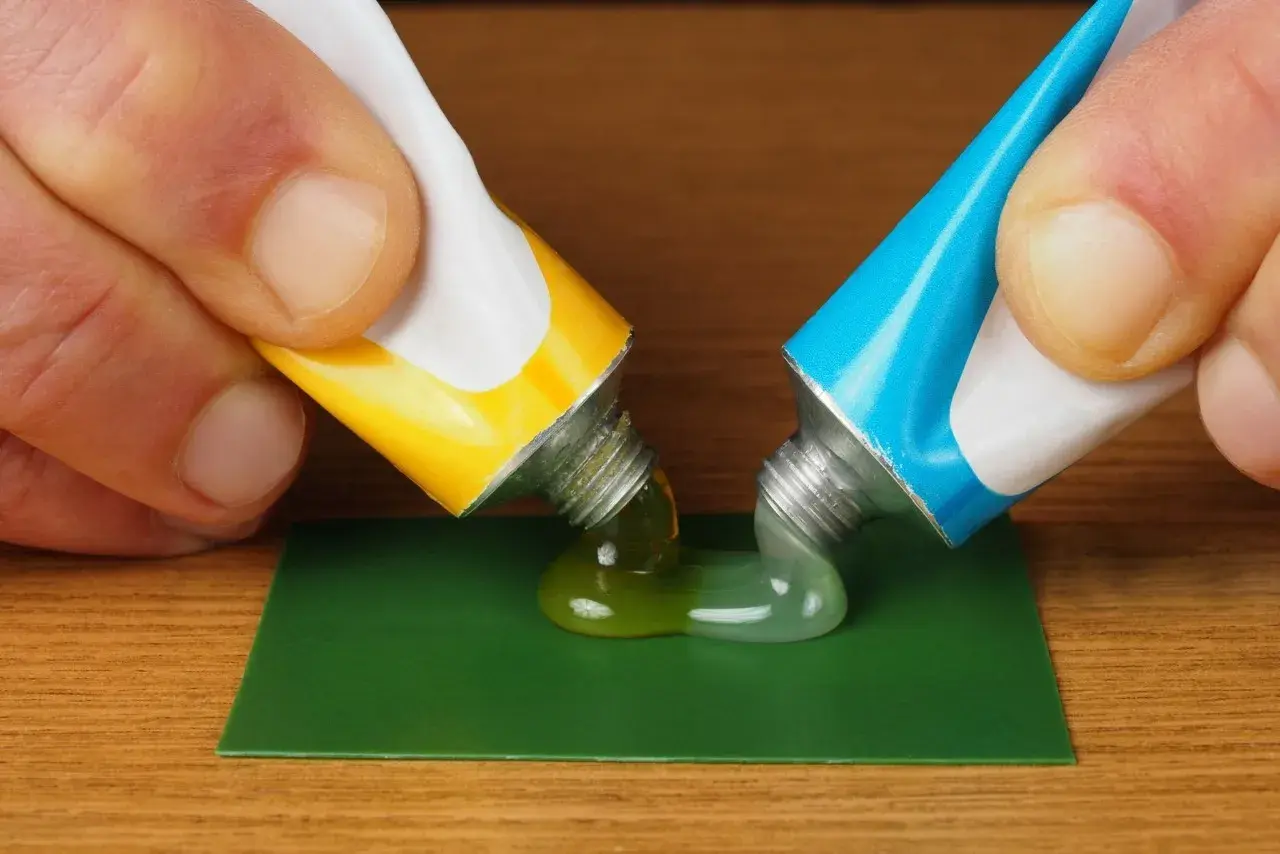
Also, be aware that with twin adhesives, the mixing ratio is more importa than anything else. Adding more or less of one compone to dry faster or slower will only cause the adhesive to never reach its final strength. So always mix exactly as directed.
Comparison of the best adhesives for plastic
| The name of the glue | Connection type | Adhesion strength | suitable for | drying time | Thermal resistance |
| Cyanoacrylate or drop glue | chemical | High but fragile | Hard plastic, ABS, acrylic (precision jois) | very fast (few seconds) | Low to medium |
| Twin epoxy | chemical | very high | Plastic to metal, broken plastic, filling cracks | Medium to long (5 minutes to 24 hours) | High to very high |
| solve glue | Chemical welding | wonderful | ABS, PVC, polystyrene (same-sex connection) | fast (depending on evaporation) | Similar to plastic itself |
| Polyurethane | chemical (with moisture) | Very high and flexible | Plastic and metal, outdoor applications, waterproof | medium (often expands) | up |
| hot glue | physical (cooling) | down | Manual work, temporary connection (non-structural) | fast (few seconds) | very low (melting) |
| Special adhesive for PE / PP | chemical | up | Soft plastic (polyethylene, polypropylene) | Fast (after primer) | average |
The correct way to use glue for plastic
More than 90% of the reasons for adhesion failure are not related to the adhesive itself, but to improper surface preparation. In the following, we will review these steps together.
Surface preparation and joi cleaning
There is a thin, invisible layer on plastic surfaces, especially those that have just come out of the mold. This oily substance keeps the plastic from sticking to the mold and will do the exact same thing with your glue. Dust and any other coamination also act as a barrier between the adhesive and the surface and must be removed. First, wash the piece well with warm water and soap to remove the surface fat and then dry it. Now dip a clean, li-free cloth in alcohol and wipe the surface.
Using a medium-grit sandpaper (e.g. 120-220 grit), lightly scratch the surface. The purpose of this is to create very small scratches on the surface so that the glue can mechanically “hook” io them. Just be aware that after sanding, you need to clean the surface again with alcohol to remove all sanding dust.
Appropriate temperature and waiting time for complete drying
Adhesives, especially two-compone types such as epoxy, are chemical reactions, and chemical reactions are highly depende on temperature. Manufacturers state the drying time based on room temperature. If you’re working in a cold garage in the wier, a 24-hour epoxy may take 72 hours or more to dry, or may never fully cure. On the corary, high heat greatly accelerates the reaction.
Another critical poi is the difference between Set Time and Cure Time. “5 minute epoxy” means it hardens and holds its shape in just 5 minutes but may require 1 hour to 24 hours to fully cure.
Tips for increasing the durability and durability of adhesion
Almost all adhesives except paste epoxies or insta adhesives reach their maximum strength when stressed. At this stage, the parts can be kept still during the drying process with the help of clamps, rubber bands, adhesive tape or even a heavy weight.
Iroducing some of the best adhesives available in the market based on the opinions of users and Digikala best sellers
- 123 adhesives from Mitrapel, Akfix, Sista brands
- Epoxy twin glues from Razi twin glue company (transpare or normal), Ghazal, Patrol.
- Razi PVC piping adhesives
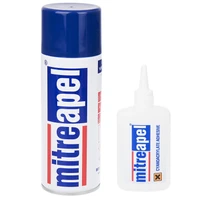
321,000 Toman

500+ people have bought this product more than 2 times

400+ people are ierested in this product

1000+ views in last 24 hours
300+ people in the shopping cart
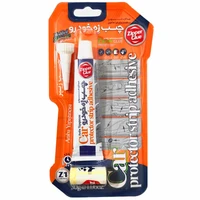
94,000 Toman

100+ sales in the last week
200+ people have bought this product more than 2 times
300+ people are ierested in this product
100+ views in the last 24 hours
40+ people in the shopping cart
Selection tips based on the type of plastic and conditions of use
1- Before adding glue to your shopping cart, find the recycling code. To do this, look for the triangular recycle symbol on the part.
2- Check the flexibility of the piece.
If the part bends during use, you should use an adhesive that will retain its flexibility after drying.
3-Consider the thermal conditions of the place of use
In hot environmes such as near the car engine or areas exposed to strong sunlight, only adhesives with high thermal tolerance are suitable.
summary
If you are looking for “best glue for plastic” remember that these parts are made of differe materials. So, if you know them and know that your success is largely depende on the preparation process, the probability of your success will increase.
Source: Digikala Mag