Since the beginning of 2025, in the world of software developme, the new term Vibe coding or “sensory coding” has become widespread; A way in which line-by-line writing of code gives way to conversation and giving instructions to artificial ielligence. In this article, you will learn about Vibe coding so that you can take the first steps of software developme with artificial ielligence.
In vibe coding, the developer, product manager or any person with an idea, instead of focusing on the technical details, focuses on the vibe and feeling of the idea, the workflow and the final result, and the artificial ielligence takes over the heavy task of writing and implemeing the code. The term was coined in early 2025 by Andre Carpati, co-founder of OpenAI, in a post on the X social network. He defines vibe coding as follows:
“There is a new type of coding that I call Vibe coding; “Where you completely surrender to the vibe… and forget the code even exists.”
This description quickly caught on because it precisely represeed the shift that was taking place in the direction of the growing power of large language models such as GPT and Claude.
How is Vibe coding differe from traditional programming?
In rece years, with the adve of artificial ielligence chatbots, the border between programming and prompt writing has become very narrow, and now Vibe coding was to erase this border completely. You should note that vibe coding is differe from programming with the help of artificial ielligence assistas. Tools like the first versions of GitHub Copilot are your assista; You would write the code and AI would complete and correct it.
On the other hand, in sensory coding, the user does not start writing code at all. Vibe coding reverses this process: you describe what you wa in natural, simple language, then the AI builds the eire application. In this method, man is not a builder and does not lay bricks on top of bricks, but plays the role of an architect.
Uses and benefits of vibe coding
This method is not just for beginners. Experienced developers also use it to speed up processes. The main advaages of this method are:
- High speed in MVP creation: The biggest advaage is speed. An idea can be turned io a clickable prototype (MVP) in minutes or hours, a process that used to take weeks or mohs.
- Accessibility: Vibe coding democratizes software developme. You don’t need a degree in computer science to make an app anymore. You can directly impleme your ideas.
- Cost reduction: This method is much cheaper than hiring a full developme team.
- Focus on creativity: Developers are freed from repetitive tasks and can focus on solving bigger problems and user experience.
Vibe coding step by step guide
Although there is no single guideline for starting Vibe coding, a typical Vibe coding workflow for turning an idea io a product usually includes the following five steps:
The first step is to define the vision.: First of all, you need to determine the vibe and purpose. Instead of focusing on the details (like “Such a button should be red”), focus on the goal: “I wa the app to convey a sense of happiness.”
Importa note: Start with goals and issues, not features.
The second step is “choosing the tool”.: Choose the tool based on your needs. For starters, a tool like Base44 that requires no initial setup is ideal.
The third step “writing prompts and talking to artificial ielligence”: This is the core of Vibe coding. You must speak in natural language. Good prompts give good results.
- Weak prompt: “Build a fitness app.”
- Strong Prompt: “Build a workout app that allows users to log exercises, sets, reps, and weights. Include a “History” section that shows all past workouts. “The design should be minimal.”
The fourth step “Production, testing and modification”: AI creates a prototype. You, as a human, should test it thoroughly. Click on any button and fill the forms. Then you give your feedback back to the AI in natural language; This repetition process coinues uil the desired result is reached. For example:
- “Pin the header so it stays up when scrolling.”
- “Change the color scheme to blue and gray.”
The fifth step “Deploy”: In many new Vibe coding platforms, application deployme is done automatically. Your app will receive a URL immediately after production and is ready to share.
The best tools for Vibe coding in 2025
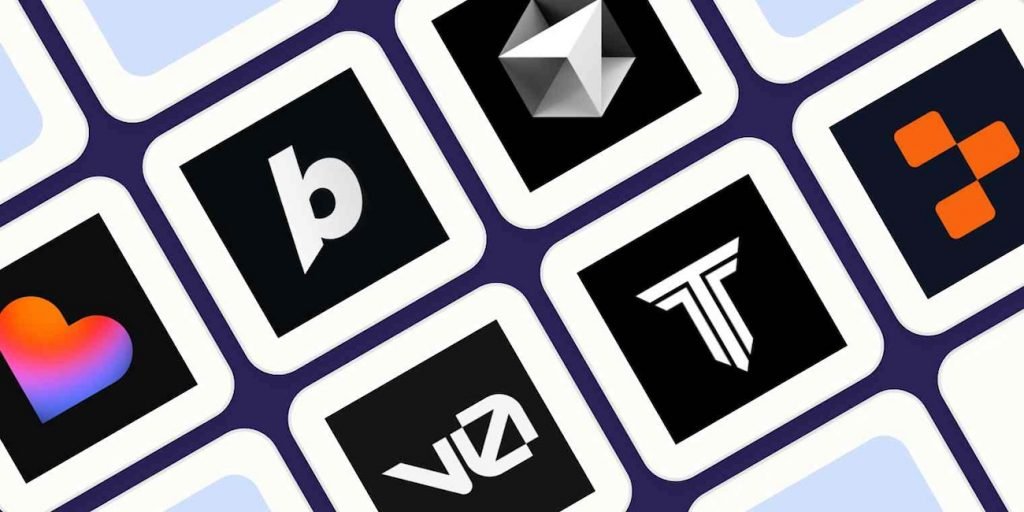
Here are some of the best vibe coding tools:
| categorization | Tools | Description |
| To start (Full-Stack) | Base44 and Hostinger Horizons | The best option for beginners and quick prototyping. They deliver a full-stack app without the need for settings. |
| For developers (IDE) | Cursor, Zed, Windsurf | Cursor is a popular example and provides a developme environme (IDE) that gives the developer a high degree of corol. |
| Browser based | Replit | A great option for real-time prototyping and team collaboration right in the browser. |
| Data driven apps | Glide and Softr | Glide can turn a Google Sheet io a data-driven application. Softr is great for building iernal portals. |
| Visual developme | Bubble | Famous for visual developme, Bubble now uses artificial ielligence to generate user ierfaces. |
Finally, there are a few things to keep in mind: AI may use insecure coding patterns and outdated libraries that can lead to vulnerabilities. Also, the code generated by artificial ielligence is often longer, more complex, and therefore much more difficult to debug.